The brief from a Benoni print shop
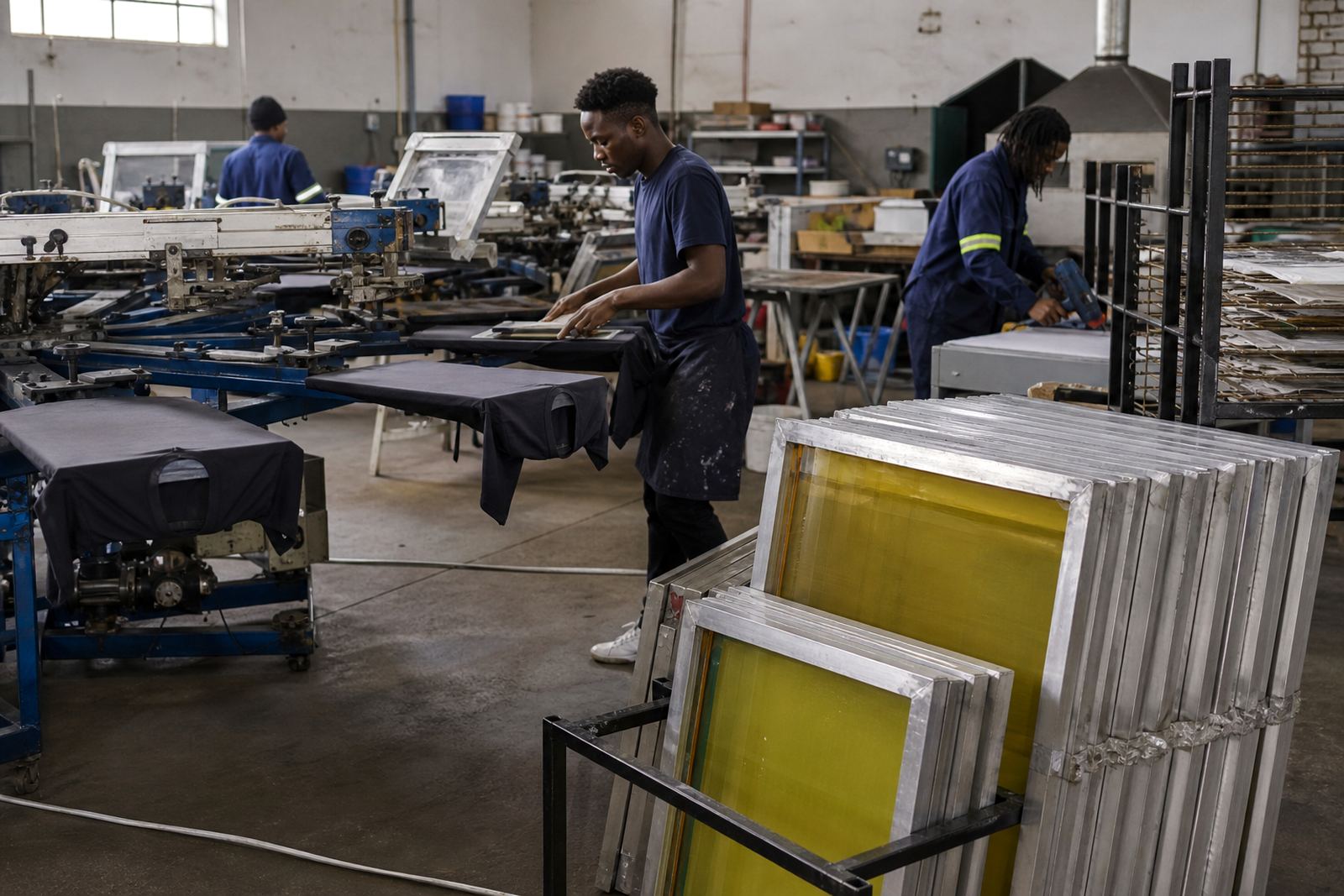
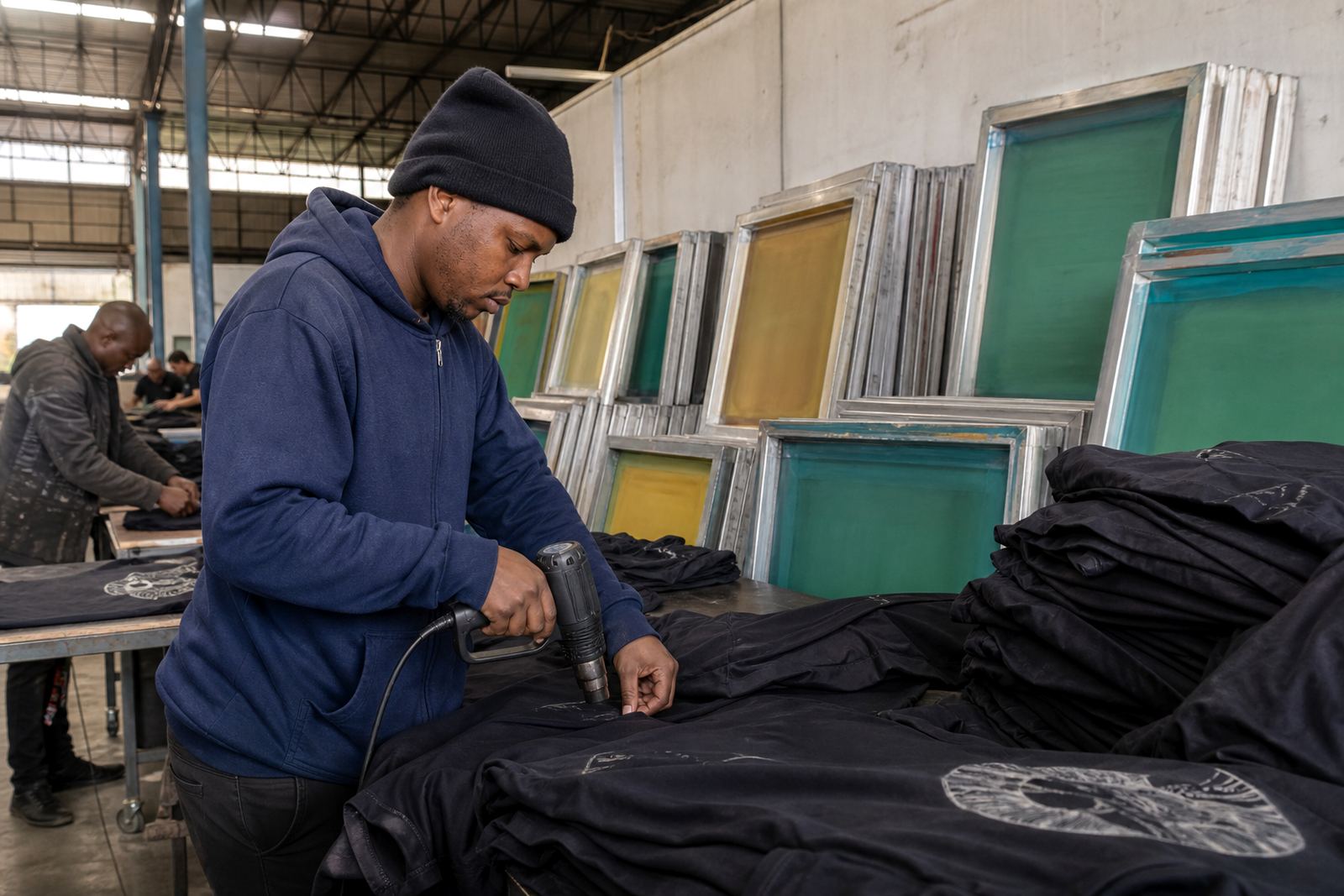
The client was a poster printer in Benoni working with repeated retail and promotional orders that moved quickly from artwork approval to print. Their screen room had a mix of frame sizes, different mesh counts and a storage problem caused by too many one-off frames hanging around after each run.
The brief was straightforward: standardise frame sizes where possible, match the mesh to common poster work, and make setup more predictable for the press team. They wanted frames that would hold tension well, stack neatly, and fit a repeat job pattern without wasting time on last-minute adjustments.
- Town: Benoni, East Rand
- Client type: poster printer serving retail and promotional work
- Goal: cleaner workflow and easier screen storage
- Main need: consistent frame sizes and matched mesh counts
What was holding the room back
The workshop had a practical problem many screen printers know well. Frames were coming back from older jobs in mixed conditions, some with tired mesh, some with uneven stretch, and some that were still usable but not ideal for repeat orderes. That made it harder to keep a tidy stockroom and slowed down screen selection before each print run.
They also needed better control over mesh choice for poster work. Coarser counts are useful where heavier ink deposit is needed, while finer counts suit sharper detail and cleaner edges. Without a standard system, the team had to keep checking and re-checking screens instead of moving straight into production.
- Mixed frame sizes causing storage clutter
- Inconsistent mesh counts for repeat jobs
- Uneven tension across older screens
- Extra handling time at setup and breakdown
What we supplied and how we set it up
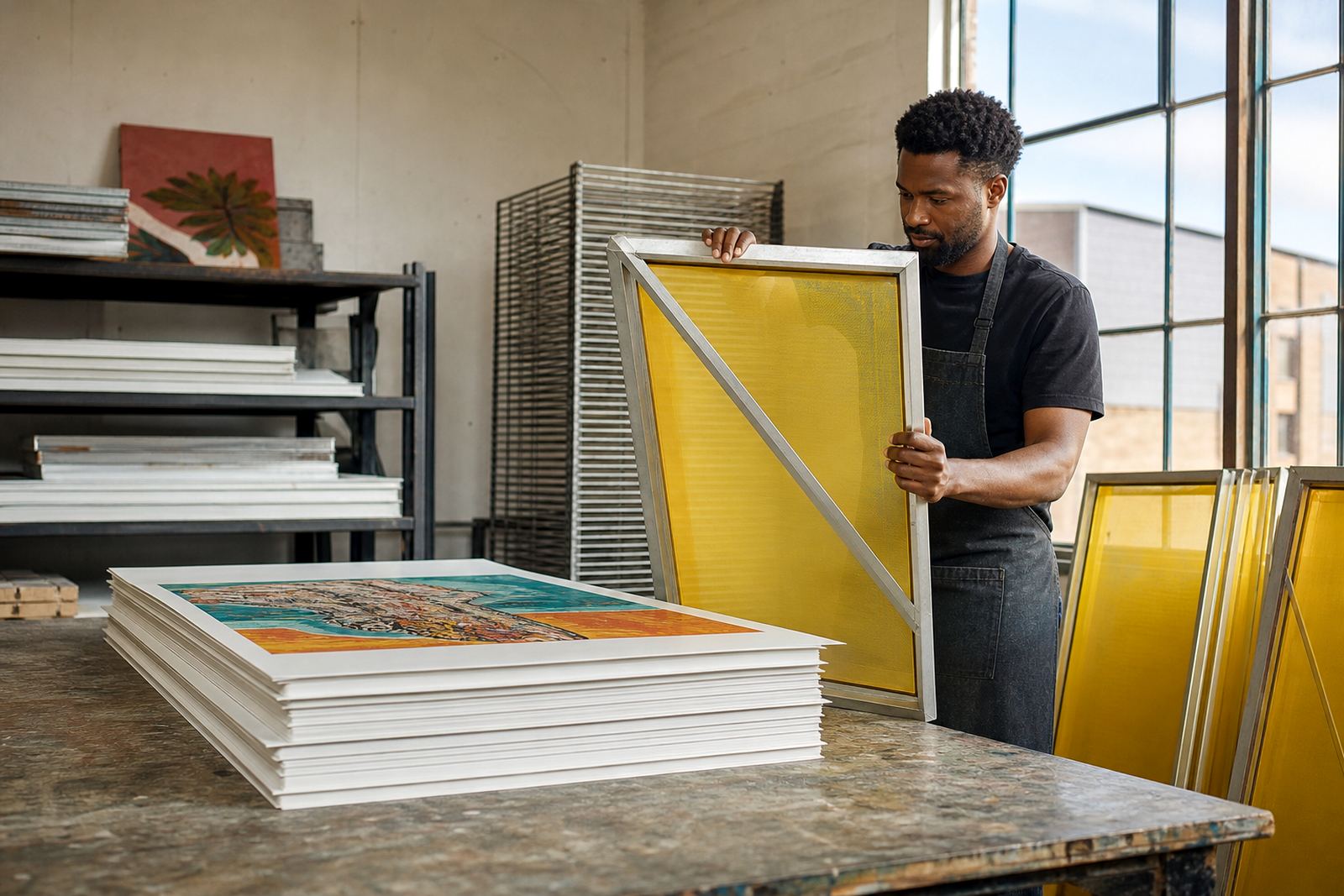
We supplied pre-stretched aluminium frames in a set of practical sizes that suited their most common poster formats. The intention was not to force every job into one frame size, but to reduce the number of variations enough that the team could group work more cleanly and store screens by format.
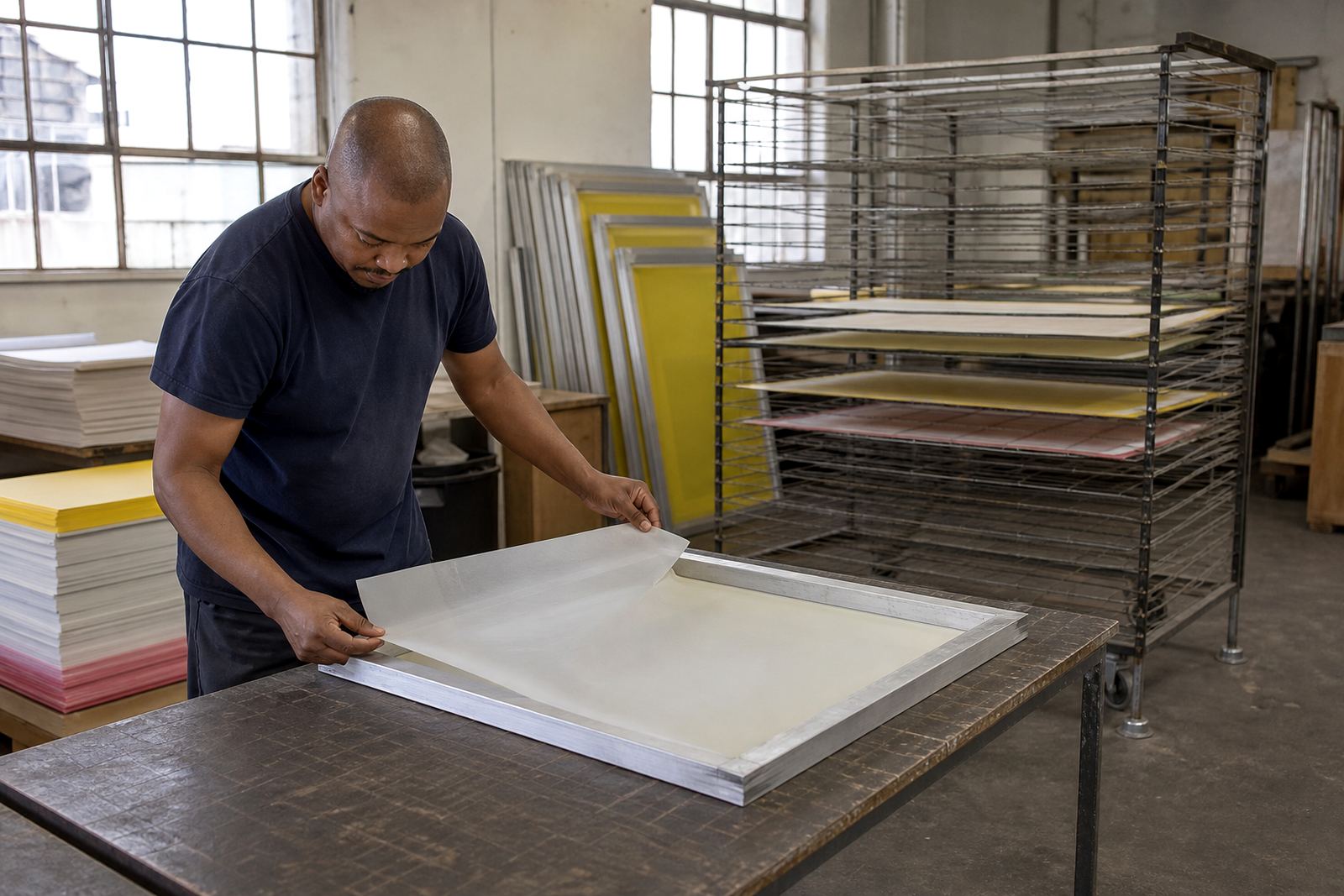
Mesh count matching was done around their usual print requirements, with counts chosen for the balance between ink flow and image detail that poster work often needs. We also checked tension before dispatch, and where needed we adjusted the frame prep so the screens arrived ready for use. That meant less guesswork on site and a more dependable starting point for each screen.
- New frame stretching for repeat-use sizes
- Mesh count matching for common poster applications
- Tension checking before dispatch
- Frame clean prep to reduce contamination at setup
- Dispatch packing for safer transport through Gauteng and beyond
Working to a three week rollout
The project ran over three weeks from first measurements to final delivery. Week one was for confirming the current frame mix, common screen sizes, and which jobs were worth standardising first. Week two covered stretching, matching and inspection. Week three was used for packing, dispatch and a final check on repeat-order handling so the team could place future screens into the same system.
Because the client is in Benoni and prints for a busy schedule, timing mattered. We kept the process tight so their production team would not be left waiting on new screens while the old stock was already making the room harder to manage. The handover was planned to fit around their working day, with minimal disruption to the print floor.
- Week 1: measurement and job mapping
- Week 2: stretching, matching and inspection
- Week 3: packing, delivery and handover
What changed after the standardisation
Once the new frames were in circulation, the workshop had a simpler way to sort screens, store them and bring them back into production. The team could group like-with-like instead of keeping odd sizes aside for special handling. That helped the screen room feel less crowded and made repeat jobs easier to plan.
Print setup also became more consistent. With the mesh counts matched more closely to the work, the printer had fewer surprise variables at the point of use. The team could inspect a screen, pick the right size, and get moving with less stopping and starting. For a poster printer that works across short lead times, that kind of order matters.
- Cleaner storage by standard frame size
- Less handling time when selecting screens
- More predictable mesh choice for repeat jobs
- Better flow between pre-press and print stages
What we would do again for a similar printer
We would use the same approach for any poster printer in Gauteng or elsewhere in South Africa that wants fewer frame variations and a tidier screen room. Start with the common jobs, map the sizes that get used every week, then stretch frames around those formats first. That keeps the change practical rather than disruptive.
For coastal areas like Durban or Gqeberha, we would also pay close attention to storage conditions and handling, because humidity can affect screen prep and how materials are kept between runs. In inland areas such as Benoni, Johannesburg and Pretoria, load-shedding planning matters too, especially where screen prep and dispatch need to keep moving even when the power is off for a few hours.
What worked here was the mix of standard sizes, careful tension checking, and repeat-order structure. It gave the client a cleaner way to work without overcomplicating the room.
How the Benoni team now places repeat orders
The client now uses the enquiry form on our contact page to request repeat frames, replacement screens and matching advice when a new poster format comes in. That keeps the record of sizes in one place and helps the team avoid mismatched orders later on. It also makes it easier for us to keep their common formats aligned over time.
For a print shop, that is often the difference between a screen room that always needs sorting and one that supports the work properly. The Benoni job showed that frame standardisation does not need to be complicated, it just needs the right sizes, the right mesh counts, and a practical plan from the start.
- Repeat orders handled through the enquiry form
- Size records kept for future matching
- Advice available for new poster formats
Key facts
| Project type | Poster printer frame standardisation |
|---|---|
| Town | Benoni, Gauteng |
| Client need | Cleaner workflow and storage |
| Supplied | Pre-stretched aluminium frames and matched mesh |
| Key process | New Frame Stretching, Mesh Count Matching, Tension Checking |
| Timeline | 3 weeks from measurement to handover |