Why school wear printing needs the right mesh count
School wear printing is usually about repeat consistency, not one-off artwork. You may be printing house colours, club names, sports day graphics or learner numbers on cotton polos, polycotton shirts, hoodies and tracksuits. The mesh count you choose affects ink deposit, detail and how cleanly the print clears after each stroke.
Lower mesh counts suit heavier ink deposits for bold text, block logos and spot colour work on darker garments. Mid-range counts are often used for general school branding where you need solid coverage with clean edges. Finer meshes are better when the artwork includes small type, thin lines or halftones, especially on lighter garments where the print needs to stay sharp.
For many school clothing runs, shops keep a few mesh options ready rather than forcing every job through one screen type. That helps when the same order includes a large back print, a small chest crest and a name panel on the sleeve. Matching the mesh to the job saves time and reduces reprints, which matters when term dates are tight and deliveries cant slip.
Typical screen setup for repeat school orders
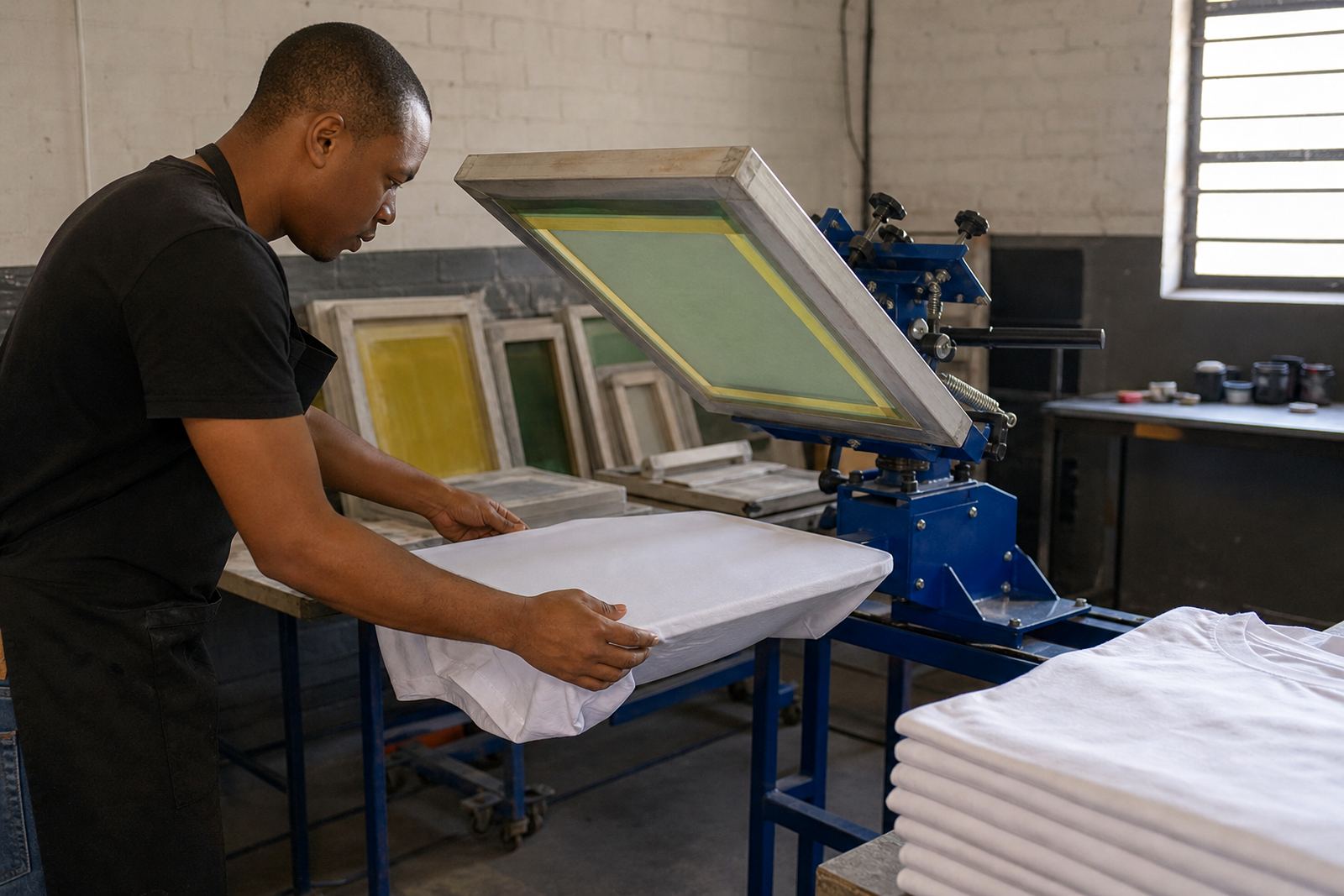
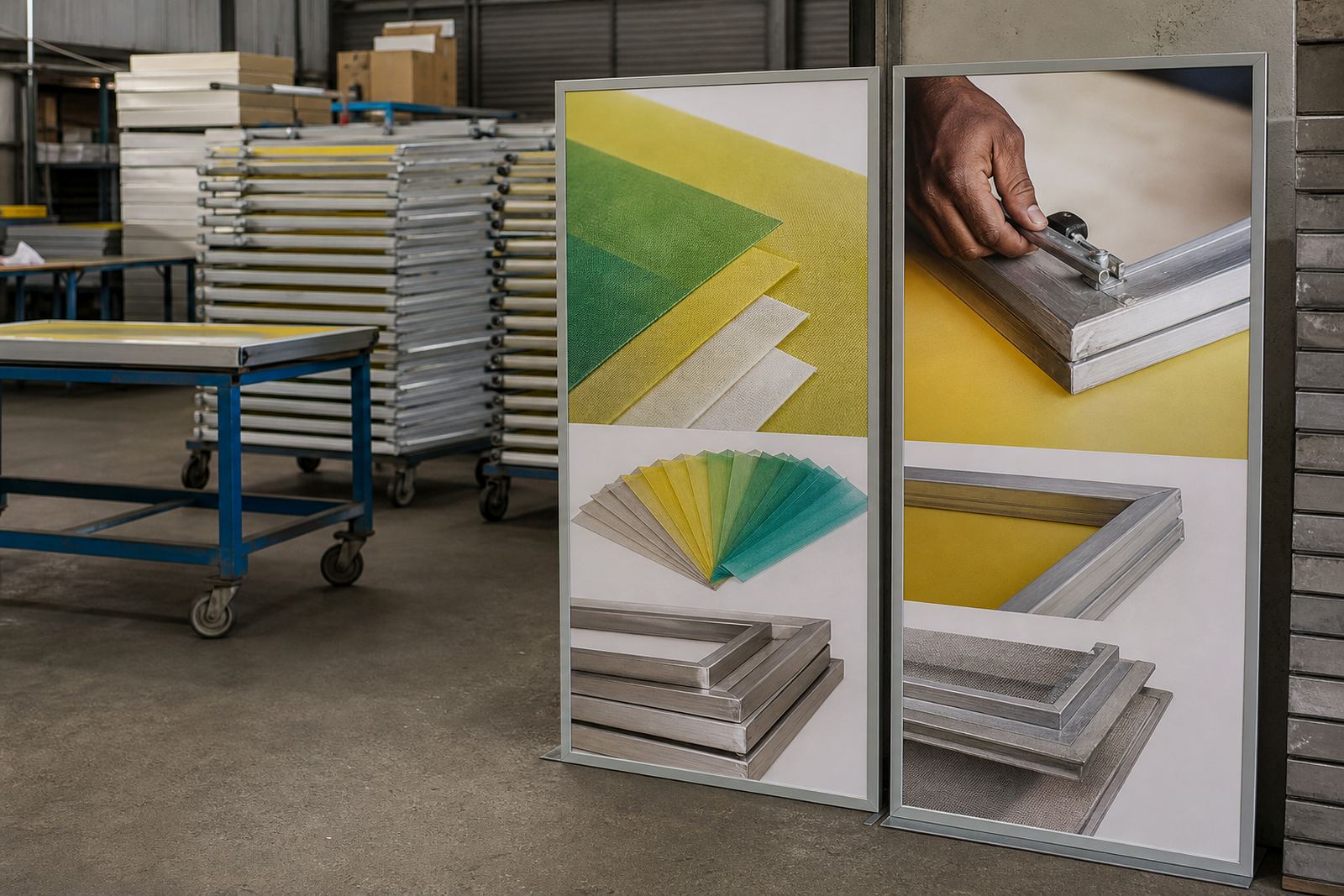
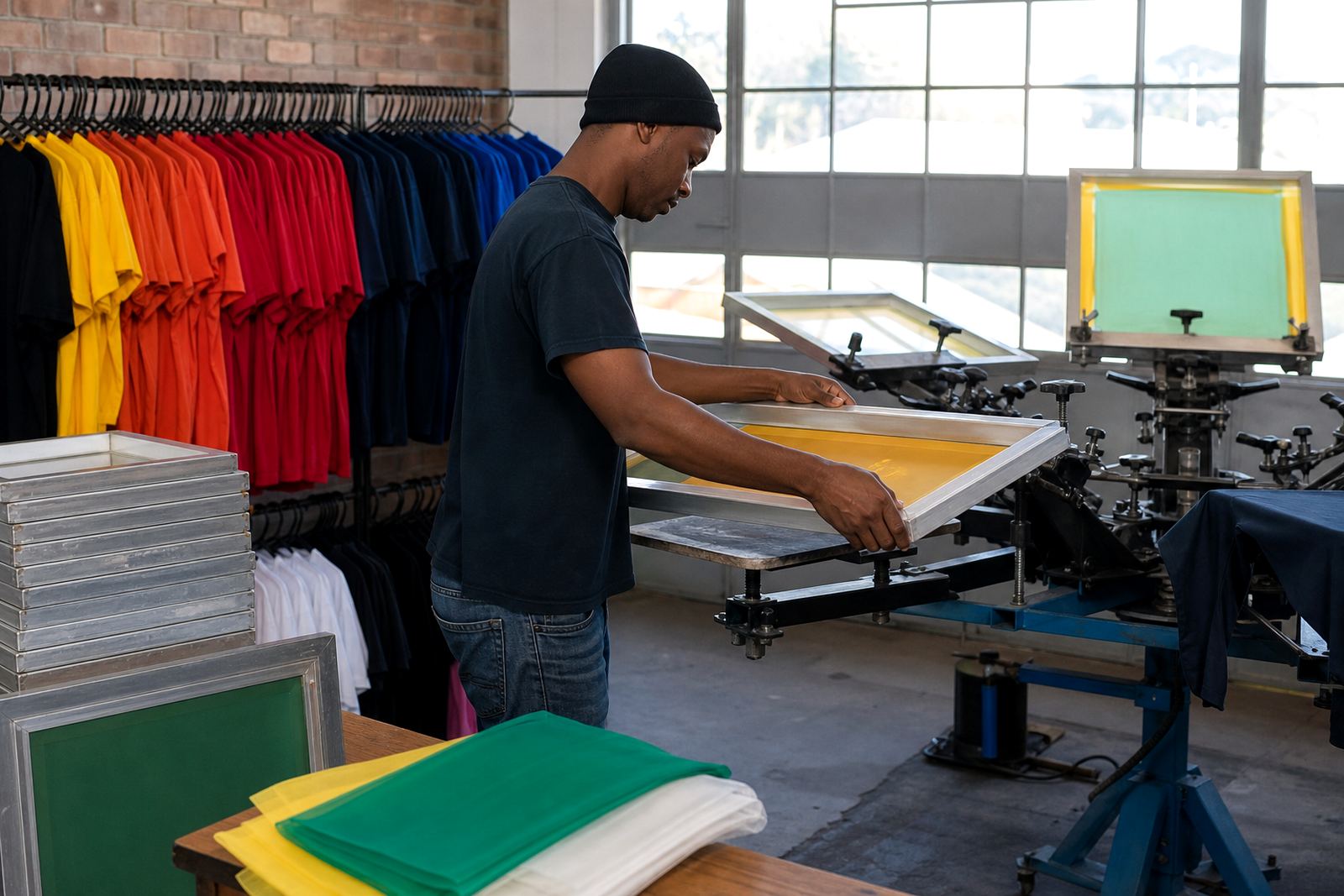
Most school wear work depends on a simple, dependable screen set. You need frames that stay true, mesh that remains evenly tensioned and screens that can be reclaimed, cleaned and re-used without losing shape. Pre-stretched aluminium frames are a practical choice because they are light, stable and easier to handle on a busy floor.
When a print shop is running the same school artwork week after week, screen prep needs to be orderly. Mesh tension should be checked before the first print and again after cleaning, storage or transport. If the screen has dropped tension, registration can drift and small lettering starts to blur. That is where tension checking and re-stretching become part of normal production, not an afterthought.
- Pre-stretched frames for front, back and sleeve prints
- Matched mesh counts for solid areas and finer lettering
- Clean screen edges for better emulsion contact
- Consistent tension for repeat registration on multi-colour jobs
- Screen inspection before dispatch or reuse
Planning layouts for uniforms and school garments
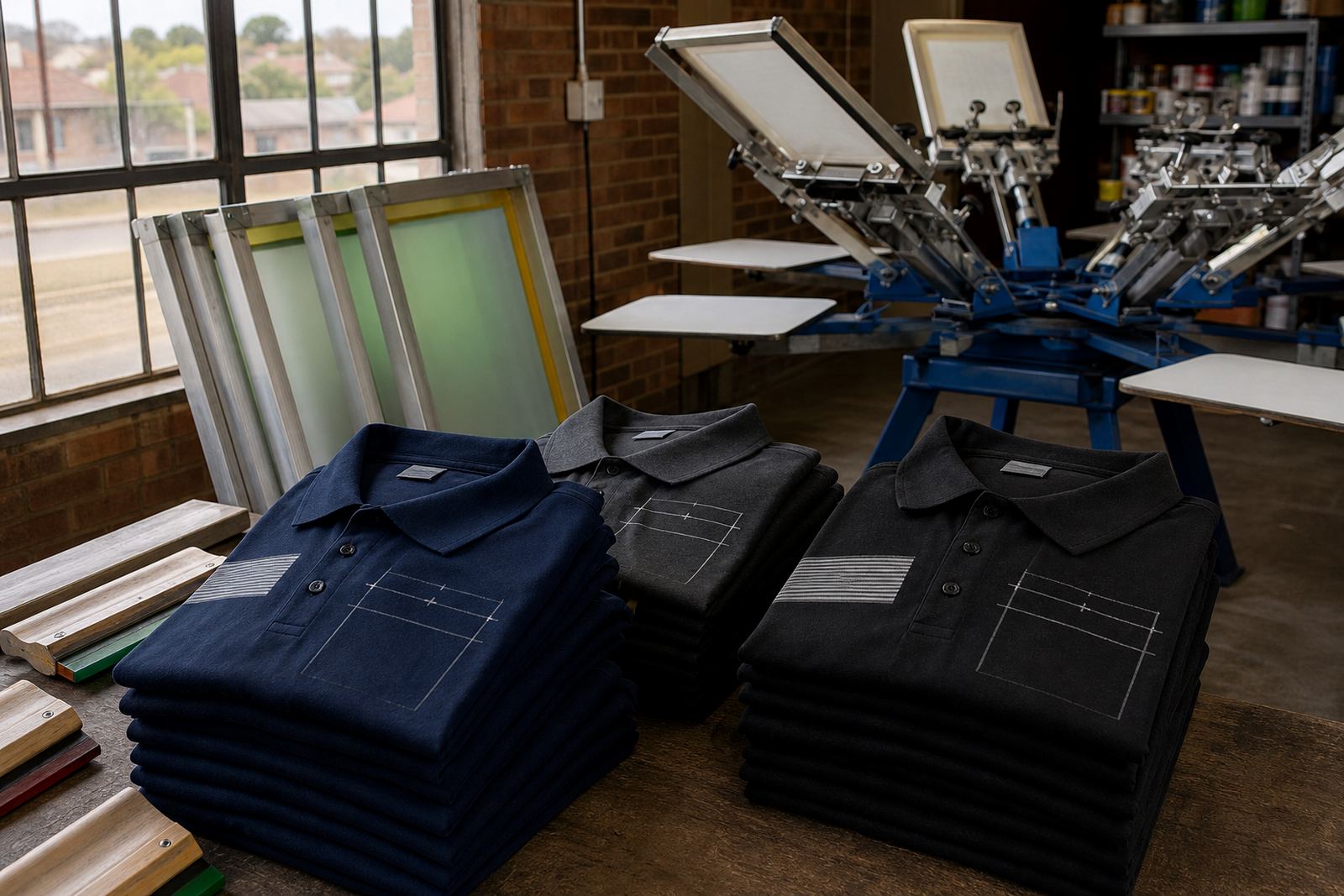
School wear layouts need to respect garment size differences and placement rules. A small primary school polo does not behave like a larger rugby shirt or a senior tracksuit top. Before production starts, it helps to confirm print size, garment colour and where the logo must sit on each size range. That avoids awkward rework later.
For chest branding, many shops keep the artwork simple and compact. Larger back prints need enough open area to avoid seams, collars and stitching lines. Sleeve prints are usually small and work best with finer details kept to a minimum. If the job includes learner names, set those up as a separate screen or a controlled manual changeover so the main artwork stays accurate.
Good planning also means checking how the garments are packed and labelled. School orders often arrive by size, house or class, and a missed bundle can hold up the entire run. Clear batch screen prep and dispatch packing keep the work moving, especially when orders are leaving Germiston for Johannesburg, Pretoria, Durban, Cape Town or Gqeberha.
Common mistakes on school wear jobs
The most common errors are not complicated. They usually come from choosing the wrong mesh, rushing screen prep or assuming one screen will handle every garment in the order. A screen that is too coarse can flood fine details and make text look heavy. A mesh that is too fine may not release enough ink for dark garments, leaving the print weak or patchy.
Another mistake is ignoring frame condition. A warped frame or uneven tension can cause registration issues, pinholes and poor edge definition. In school wear work, those faults show up quickly because the same logo is repeated across many garments. If one screen is out, the whole batch starts looking inconsistent.
- Using one mesh count for every part of the job
- Skipping tension checks after storage or transport
- Overlooking seam placement and garment size variation
- Printing without a proper screen inspection first
- Keeping old screens in circulation after tension loss
Budget ranges for school wear production in Rand
School wear work usually sits in a careful budget range because the order may be large but the margin per garment can be tight. Many print shops plan their screen costs around how often the artwork repeats. If the same school order comes back through the year, a dependable frame and mesh set can pay for itself through fewer reworks and better consistency.
As a working guide, shops often separate spend into screen prep, frame replacement, re-stretching and backup screens for peak terms. A small setup for straightforward school branding may only need a few active screens, while a shop handling multiple schools at once will keep more on hand for different garments and sizes. It is worth budgeting for spare screens too, because a rushed reprint in the middle of term can cost more than a properly prepared backup.
If you are comparing options, think about the full use cycle. A frame that holds tension longer, cleans well and handles repeated use is usually better value than a cheaper screen that needs constant correction. That is especially true for school wear, where repeat orders are common and colour matching needs to stay steady from one batch to the next.
How MeshMaster supports repeat school clothing runs
MeshMaster works with print shops that need screen-printing mesh and pre-stretched aluminium frames for school wear production across South Africa. From Germiston we supply shops in Johannesburg, Pretoria, Durban, Cape Town and Gqeberha, with support for East Rand and Midrand orders too. Our team helps with mesh count matching, frame stretching, re-stretching and screen setup advice so your screens are ready for repeat work.
We also handle frame clean prep, tension checking, mesh bonding, batch screen prep and dispatch packing. If a school order needs a fresh screen, a replacement frame or a matched set for different garment sizes, the goal is the same: keep production steady and the prints consistent. For shops working through term-time deadlines and load-shedding interruptions, that kind of preparation saves time on the press and in cleanup.
Clients reach us through the enquiry form on our contact page, and we quote according to the job requirements and screen setup needed. Whether you are running a one-off school event or a term after term order, the right mesh and frame combination makes the work easier to manage, and the results cleaner.