
Retail displays need strong colour and steady registration
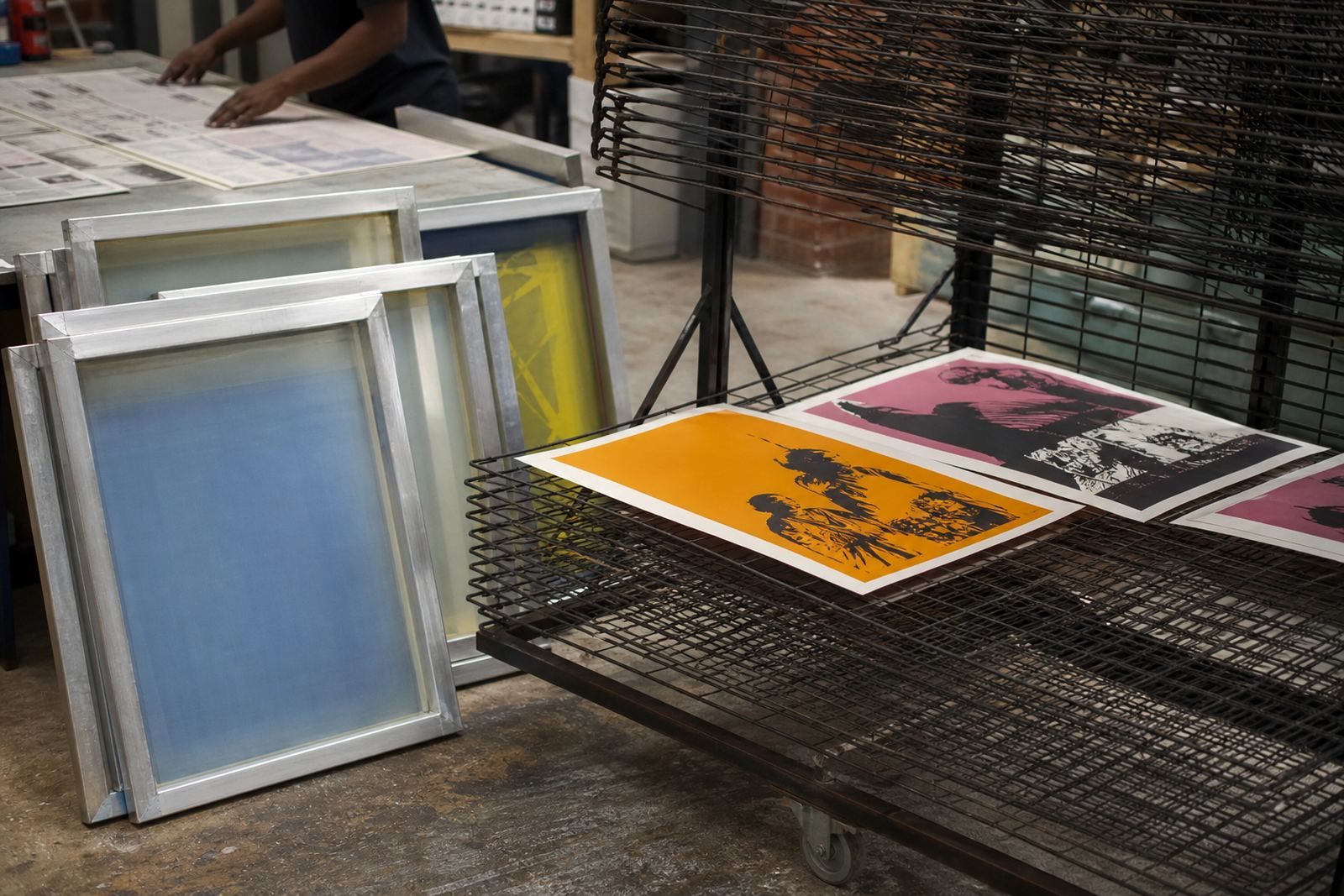
Point of sale printing sits in a busy part of the shop, so the artwork has to read fast. Shelf talkers, wobblers, price cards, counter signs and small display cards all benefit from mesh that can hold sharp edges and lay down the right ink deposit without flooding fine type. In Gauteng and coastal centres alike, the print has to look the same on the first sheet and the last, even when the job is rushed for a promotion change.
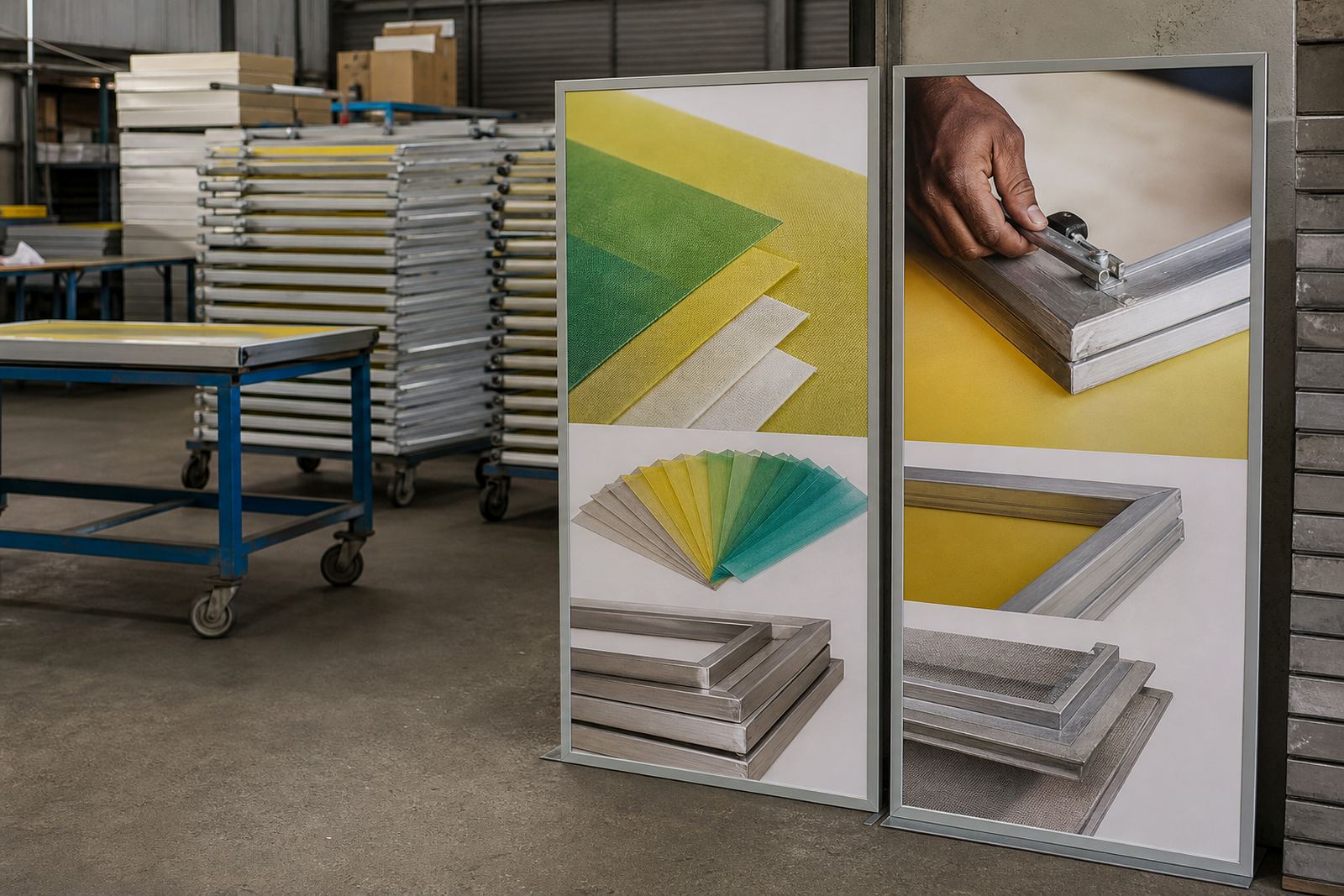
For this kind of work, screen mesh count matters. Lower mesh counts are used when you need more ink deposit for solid colours, block areas and heavier coverage. Higher mesh counts suit fine text, small logos and detail that must stay crisp on coated board or smooth synthetic stock. Choosing the right mesh is not only about the artwork, but also the ink type, the substrate and how much detail the display piece carries.
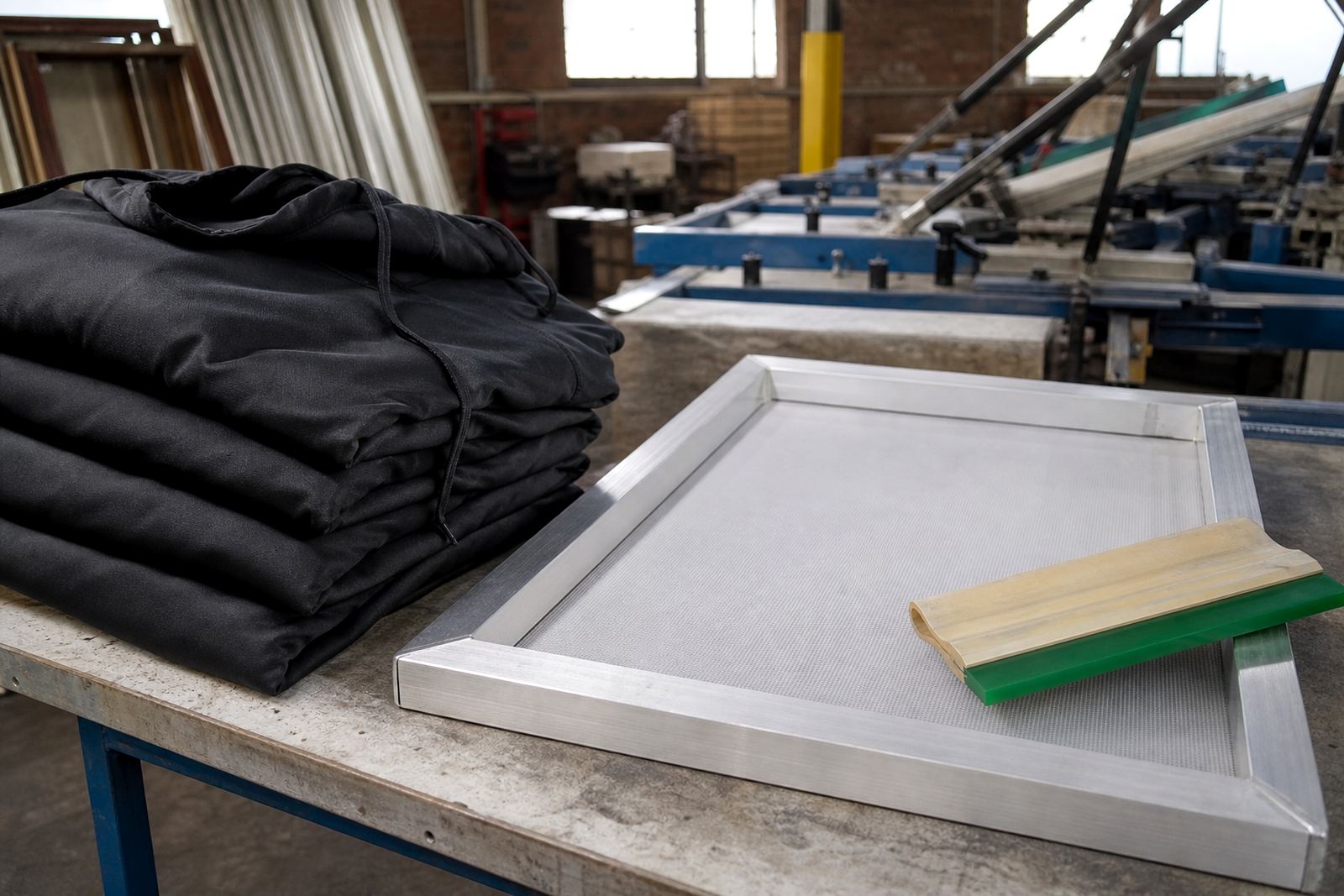
Pre-stretched aluminium frames make repeat jobs easier because the tension is already set and more predictable. That helps when you are printing sets of matching signs for multiple stores, or when one run has to match another printed days later. A frame with even tension can save time on setup and reduce waste from misalignment or soft edges.
Typical point of sale setup in a print shop
A practical POS print set-up usually includes a few mesh counts rather than one all-purpose option. Shops often keep one mesh for bold solids, one for mid-detail retail graphics, and one higher count for finer type or small screen areas. That lets the printer match the screen to the job instead of forcing every design through the same mesh.
For planning, think in terms of the finish the customer wants. If the display piece will sit near the till, on a counter or in a window, colour strength and legibility are usually more important than ultra-fine detail. If the job includes small product names, barcode panels or tight wording, a finer mesh and careful exposure planning will help keep the image clean.
- Lower mesh counts for strong solids, opaque colours and heavier ink laydown
- Mid-range counts for general retail graphics and standard text
- Higher counts for fine lines, small type and sharper detail
- Aluminium frames for stable tension on repeat print runs
- Matching mesh to ink and substrate before the first pull
Where shops work in humid coastal conditions, especially around Durban or Gqeberha, storage also matters. Mesh and prepared screens should stay clean and dry, because moisture can affect handling and the way emulsion behaves. In Gauteng the issue is often dust, which means clean prep before coating and a tidy storage area make a real difference.
Layout and planning for multi-store retail jobs
Retail campaigns often need one design printed across different formats: hanging signs, shelf strips, cards and small display inserts. The layout stage should decide which parts need the strongest colour and which parts need the finest detail. A good screen plan will separate those needs so the printer does not end up overworking one mesh count for everything.
When the same graphic must be used in Johannesburg, Pretoria, Durban, Cape Town and Gqeberha, consistency becomes a production issue. Frame tension, mesh count and screen prep should be kept as close as possible between batches. That way the print shop can repeat the job later without chasing the setting again. It also helps when the customer reorders a display after stock changes or a promotion gets extended.
- Set the mesh count by the smallest detail on the artwork, not the biggest colour block
- Use one screen per colour where possible to keep registration simple
- Keep frame sizes consistent for recurring retail formats
- Check tension before exposure if the job needs exact repeatability
- Plan batch screens so the last units look like the first, not different
MeshMaster supports this with mesh count matching, tension checking, custom frame sizing and batch screen prep from Germiston, with delivery support into the East Rand and across major city routes. That makes it easier for print shops to keep retail work moving without stopping for avoidable rework.
Common mistakes on point of sale work
One of the most common mistakes is choosing mesh that is too coarse for the artwork. This can leave text soft, edges heavy and small graphics harder to read under shop lighting. Another frequent issue is using a screen with uneven tension, which can cause registration drift on longer runs. That problem may not show up on the first few pulls, but it can become obvious when the stack is already under pressure for dispatch.
Another mistake is not considering the final surface. Retail display pieces can be printed on coated board, PVC, self-adhesive stock or other smooth materials, and each one behaves differently under the squeegee. A screen that works well on one surface may dump too much ink on another. If the print shop skips a quick test, the result can be poor detail or drying issues.
There is also the practical side. Poor frame prep, leftover adhesive and dirty screens slow down the shift and make repeat jobs messy. A clean frame with proper mesh bonding and a quick inspection before production usually saves more time than it costs. In some shops, that small bit of care is the difference between a calm day and a late pack-out.
Budget ranges for retail display screening
Point of sale budgets usually sit in a practical band, because the work needs enough quality to look good on the shop floor but still has to make sense on repeat promotions. The frame and mesh choice will depend on whether the job is a one-off retail run or a recurring programme across several stores. Budgeting should also allow for setup time, screening consumables and any re-stretching work needed to bring older frames back into service.
For a smaller retail display job, the spend is often driven by a few good screens rather than a large inventory. For ongoing work, it makes more sense to invest in pre-stretched aluminium frames and a consistent set of mesh counts that can be reused for similar jobs. That approach helps keep unit costs steadier over time and reduces the risk of last-minute surprises. It also suits print shops that are handling changing retail campaigns across different towns.
If a job needs custom frame sizing, batch prep or screen setup advice, it is worth factoring that in before quoting the customer. The cheapest screen is not always the one that prints cleanly, and poor preparation can cost more in reprints than a proper screen ever would.
Working with MeshMaster on repeat retail orders
MeshMaster works from Germiston, Gauteng and supplies print shops across South Africa, including Johannesburg, Pretoria, Durban, Cape Town and Gqeberha. For point of sale work, the useful part is not only the mesh supply, but the practical screen support around it: new frame stretching, frame re-stretching, mesh count matching, tension checking, frame clean prep, mesh bonding and dispatch packing.
That support matters when a retail customer wants the same display again next month or when a chain store changes artwork mid-campaign. A consistent screen setup helps keep the colour and detail close from batch to batch. It also makes it easier to move work through the shop even during load-shedding periods, when production windows can become tight and every setup has to count.
Clients reach us through the enquiry form on our contact page, and the team handles replies and order coordination from there. For point of sale printing, the goal is simple: the right mesh, a well tensioned frame and a screen that is ready to produce clean retail work without fuss.