Why uniform printing needs repeatable screen setup
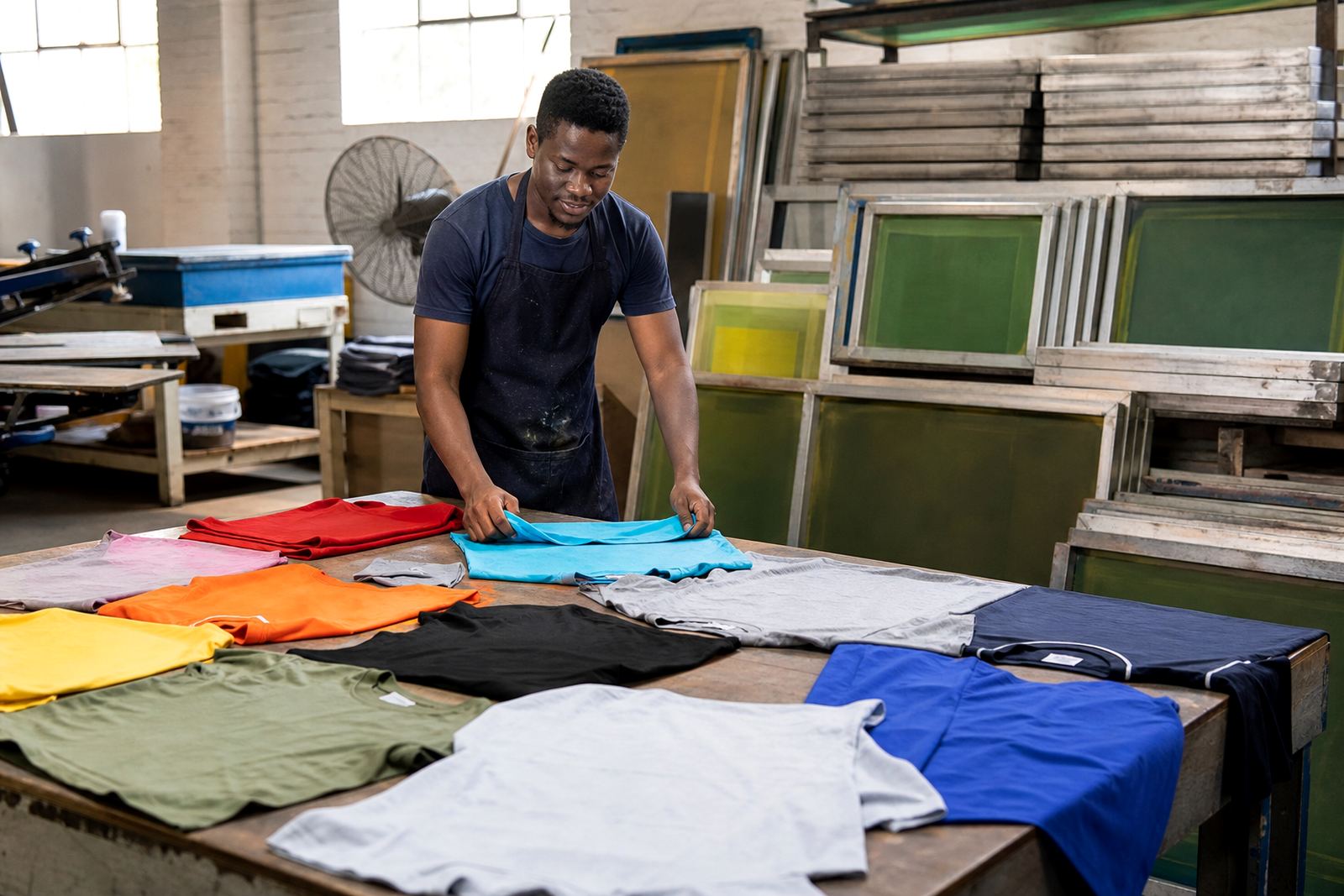
Branded workwear is usually printed in batches, not as one-off fashion work. That means every screen has to behave the same way from the first garment to the last, whether you are running polos for a warehouse team in Germiston or jackets for a site crew in Durban. If the mesh count, tension and frame size change from batch to batch, registration shifts and ink deposit changes, which shows up straight away on logos, names and back prints.
For uniform printing, consistency matters more than speed on its own. A screen that is properly stretched and matched to the artwork will hold fine details, sharp edges and even ink flow. That helps print shops keep repeat orders simple, especially when the same client returns each quarter for new staff issue or replacement garments.
Choosing the right mesh count for workwear artwork
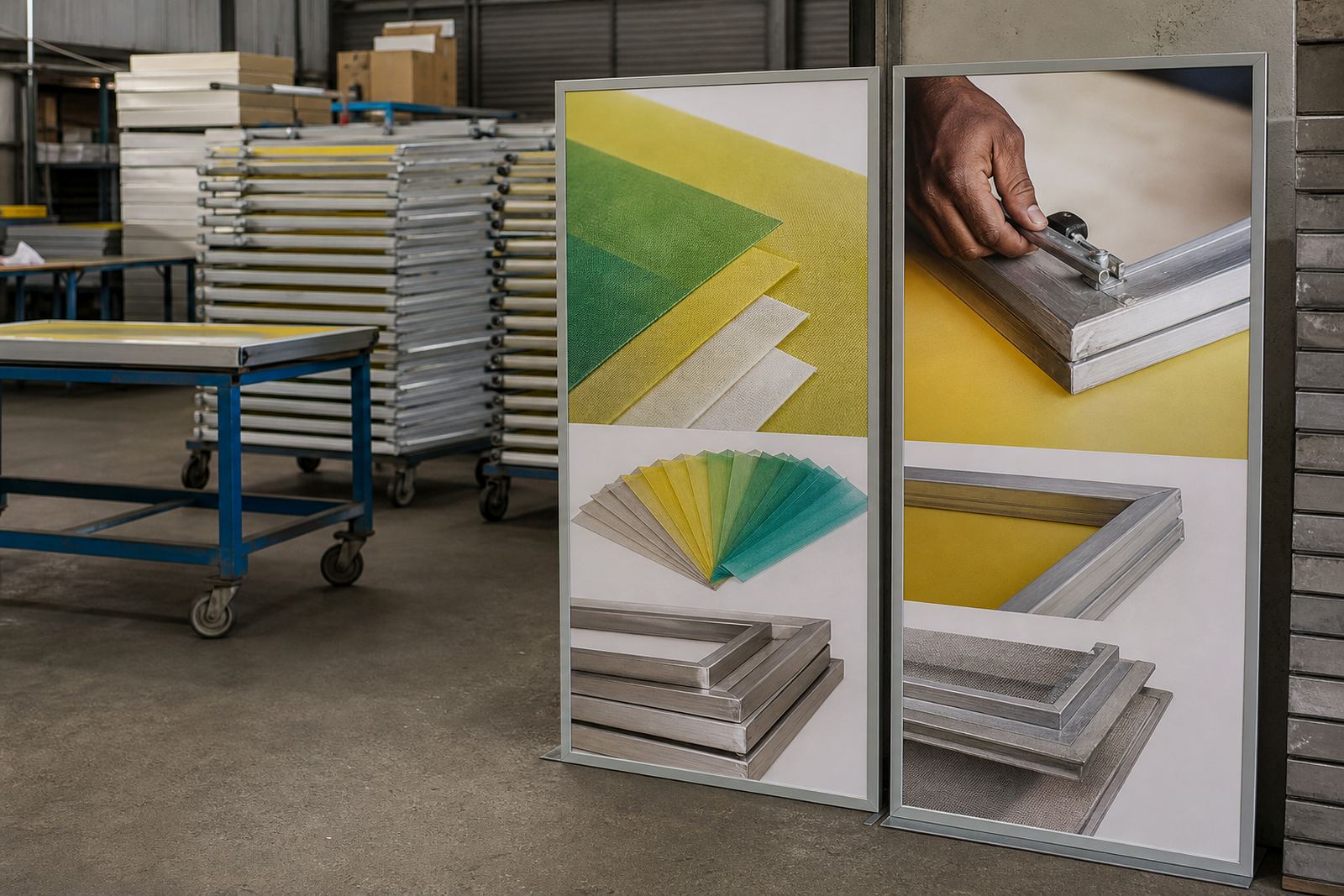
Mesh count should follow the detail in the design and the ink system being used. Lower counts suit heavier ink deposits for block logos, athletic numbers and bold spot colour prints. Medium counts are commonly used for most corporate uniforms where there is a balance between coverage and detail. Higher counts suit finer text, small marks and cleaner halftone work, but they need better control on stencil thickness and pressure.
- Lower mesh counts: stronger ink deposit for bold logos and underbase work.
- Medium mesh counts: a practical choice for most branded shirts and staff garments.
- Higher mesh counts: better for fine text, sharp outlines and more detailed marks.
- Consistent mesh count matching: useful when the same design must print the same across several screens.
In South African print rooms, especially where load-shedding and temperature shifts can affect routine, matching the mesh count to the same job every time saves setup time and reduces surprises. It is also a practical way to keep repeat orders looking the same across seasons and different garment lots.
Frame size, tension and stretch quality
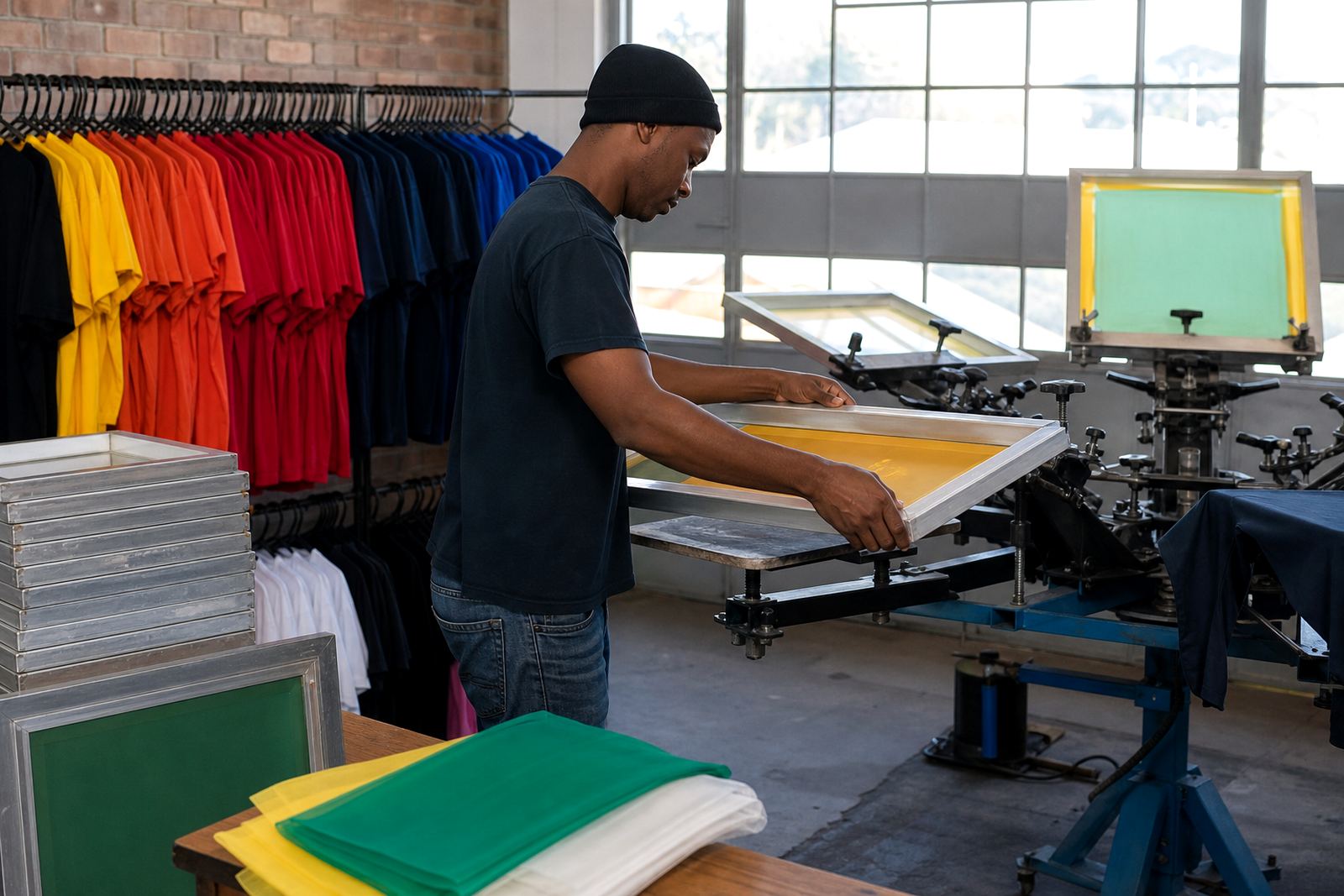
Frame size should suit both the artwork and the press set-up. A uniform print may only need one chest logo, but staff garments often need front, sleeve and back placements, so the frame must give enough clearance for clamps, hinges and flood stroke movement. Pre-stretched aluminium frames are popular for this because they stay square and hold tension well when handled properly.
Tension affects everything from print feel to clean release off the screen. If tension is too low, the screen can drag, the print edge can blur and fine detail may close in. If tension is uneven, one side of the image may print heavier than the other. For shops that handle repeated orders, stable tension is worth more than a quick stretch job that loosens after a few runs.
MeshMaster supplies new frame stretching and re-stretching for shops that want a dependable screen setup, plus tension checking and frame clean prep so the screen is ready for production. In humid coastal areas like Cape Town and Gqeberha, good storage and proper drying matter as much as the initial stretch, because moisture can affect the mesh and the stencil edge if screens are left sitting around too long.
Planning layout for repeat staff garment runs
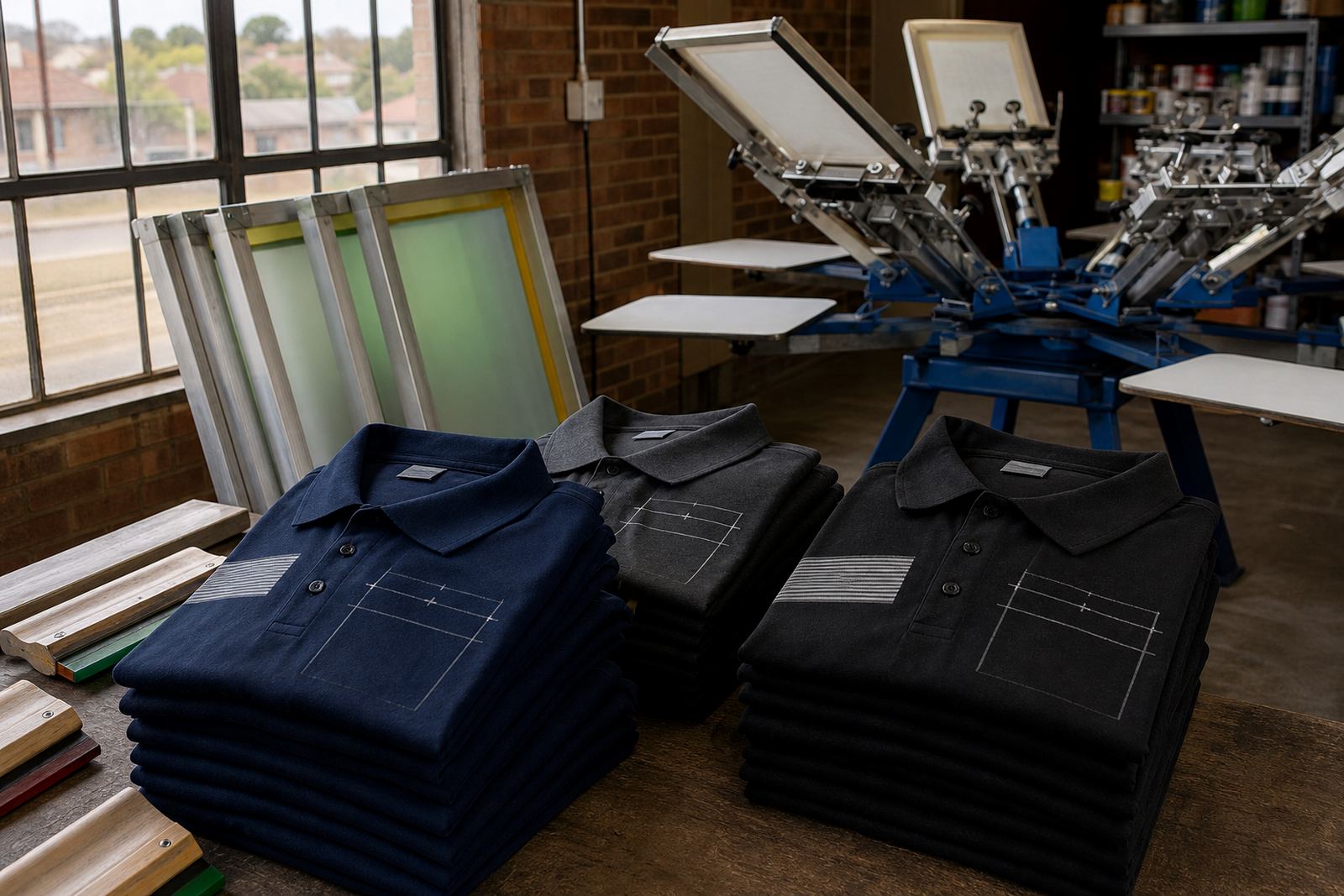
Workwear jobs often run better when the whole layout is planned before the first screen is made. That means checking garment sizes, print placement and the number of screens needed for each colour layer. A clean layout reduces extra handling on press and helps the team keep the same position across small, medium and large garments.
- Keep chest logos at a fixed distance from the collar line for each garment type.
- Allow for buttons, seams and pockets before final screen sizing.
- Use separate screens for each colour layer where fine alignment is needed.
- Match screen orientation to the press and the operator's workflow.
- Prepare batch screens together when the same order will repeat later.
Good planning also helps when different branches need the same brand setup. If a customer in Pretoria later reorders the same uniform print for another site, the screen notes should already show the mesh count, frame size, tension check and artwork position. That saves time and avoids the common problem of starting over from scratch.
Common mistakes that affect uniform print quality
Most problems in uniform printing come from avoidable setup issues. A screen with the wrong mesh count can hold too much or too little ink. A frame that is not true can cause off-register prints. A screen that has not been cleaned well may leave residue that breaks the stencil, especially on repeat jobs where the same screen is pulled out again after storage. And if the screen is not inspected before dispatch, a small fault can turn into a full re-run.
Another common mistake is treating every garment as if it prints the same. Cotton, poly-cotton blends and heavier workwear all behave a little differently under pressure and heat. A print shop in Johannesburg might get away with one setup for a short run, then struggle when the same setup moves to a different fabric weight or a damp garment batch. It pays to test properly and keep notes on what worked. A missed note today can cost a full morning next week.
Budget ranges for screen mesh and frame work
Budgets for uniform printing setups depend on the size of the screen, the mesh type and whether you need new stretching or re-stretching. A simple run with one or two screens can be kept tight if the artwork is straightforward. Larger staff garment orders may need several screens, extra prep and repeat testing, which pushes the cost up. The main thing is to budget for consistency, not only for the first print run.
As a working guide, shops often allow for separate costs across mesh supply, frame preparation, tension checking and batch screen prep. If a client expects repeat orders through the year, it makes sense to invest in screens that will hold their shape and be ready for re-use. For businesses supplying uniforms across Gauteng and beyond, that can keep dispatch more predictable and help the print room avoid rushed replacements when orders come in late.
How MeshMaster supports repeat uniform orders
MeshMaster works from Germiston, Gauteng and supplies print shops across South Africa, including Johannesburg, Pretoria, Durban, Cape Town and Gqeberha. The service range includes new frame stretching, frame re-stretching, mesh count matching, tension checking, frame clean prep, mesh bonding, custom frame sizing, batch screen prep, screen inspection, dispatch packing, repeat order service and screen setup advice.
That support is useful when a client needs the same uniform print to run again months later. With the right screen record in place, the next order can move faster through production and there is less guesswork at press. For shops handling branded workwear every week, the aim is simple: screens that are ready, repeatable and fit for the job, without extra faff.