
What promo garment work asks of a screen setup
Volume promotional apparel jobs usually mean short lead times, repeated artwork, and a mix of fabrics in one week. A shop might print 50 logo tees in the morning, then switch to workwear or event shirts in the afternoon. That puts pressure on screen count, frame condition, mesh tension, and how quickly screens can be cleaned and set again.
For this type of work, the screen needs to hold detail without slowing down the press room. Fine line logos, small text, halftones, and solid underbases each ask for a different mesh count and tension level. If the screen is under tension or the mesh count is too loose for the image, edge sharpness drops and ink deposit becomes harder to control.
In Gauteng, especially where production spaces deal with dust, load-shedding, and warm afternoons, stable frames matter. Aluminium frames help keep the screen square and easier to handle during repeat jobs. For print shops in Germiston, Johannesburg, Pretoria, Durban, Cape Town and Gqeberha, that consistency is worth more than chasing the cheapest option.
Typical mesh counts for T shirts, hoodies and blended garments
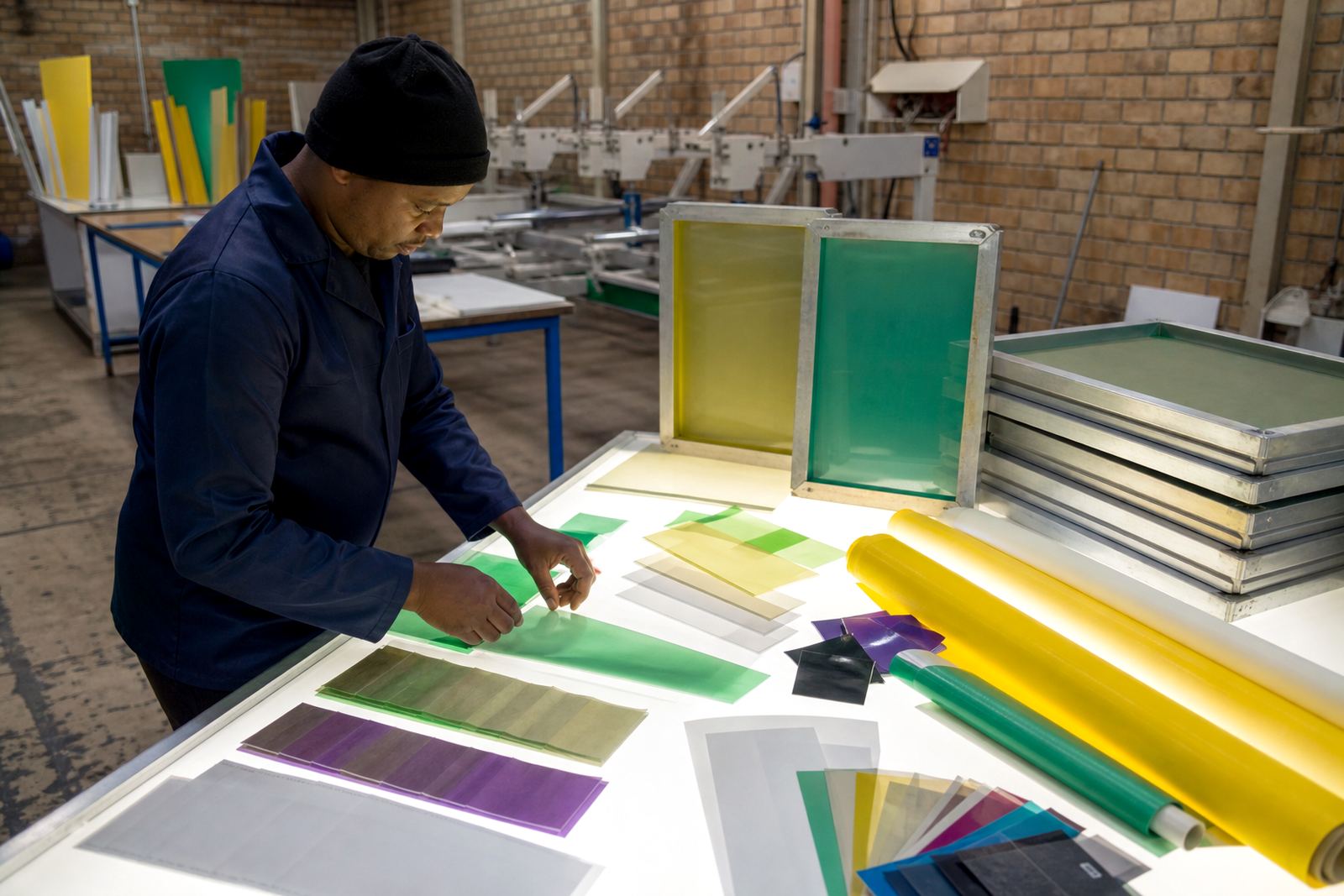
There is no single mesh count for promo apparel. The right choice depends on the artwork, ink type, garment colour, and whether the shop is printing spot colour or finer detail. Still, there are common ranges used in day-to-day production.
- Lower mesh counts are often used for heavier ink deposits, bold spot colours, and opaque underbases on dark garments.
- Mid-range counts suit general logo work, most promotional tees, and artwork that needs a balance of detail and coverage.
- Higher mesh counts are chosen for fine detail, thin lines, softer hand feel, and halftone work where less ink is needed.
- Matching the mesh to the job helps reduce flooding, smearing, and extra pressure at the press.
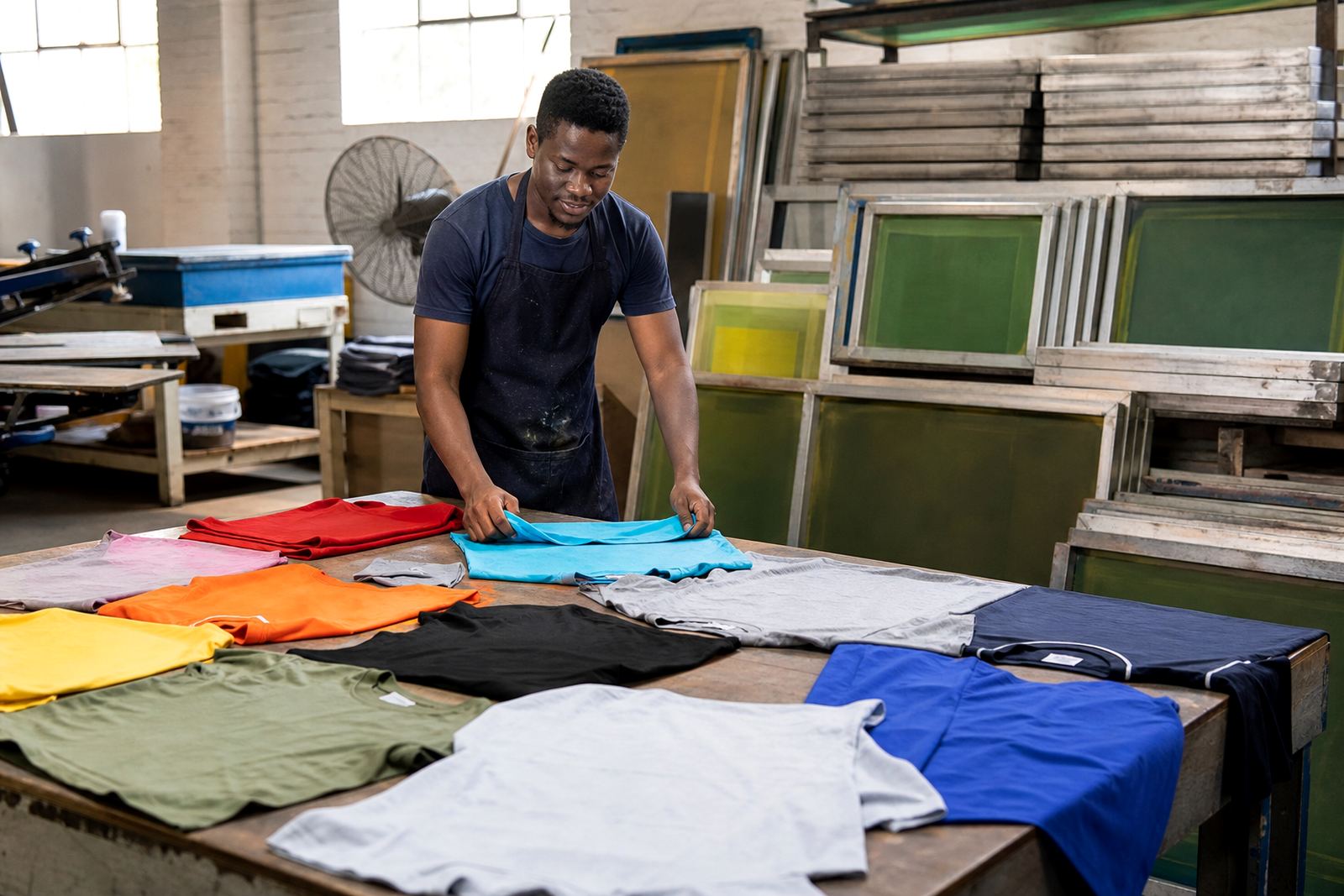
For mixed promo orders, many print shops keep more than one mesh count on hand so they can move between garment types without rethinking the whole screen setup. That saves time when a client wants the same design on cotton tees one day and poly-cotton workwear the next.
Frame sizes and stretching that suit busy production
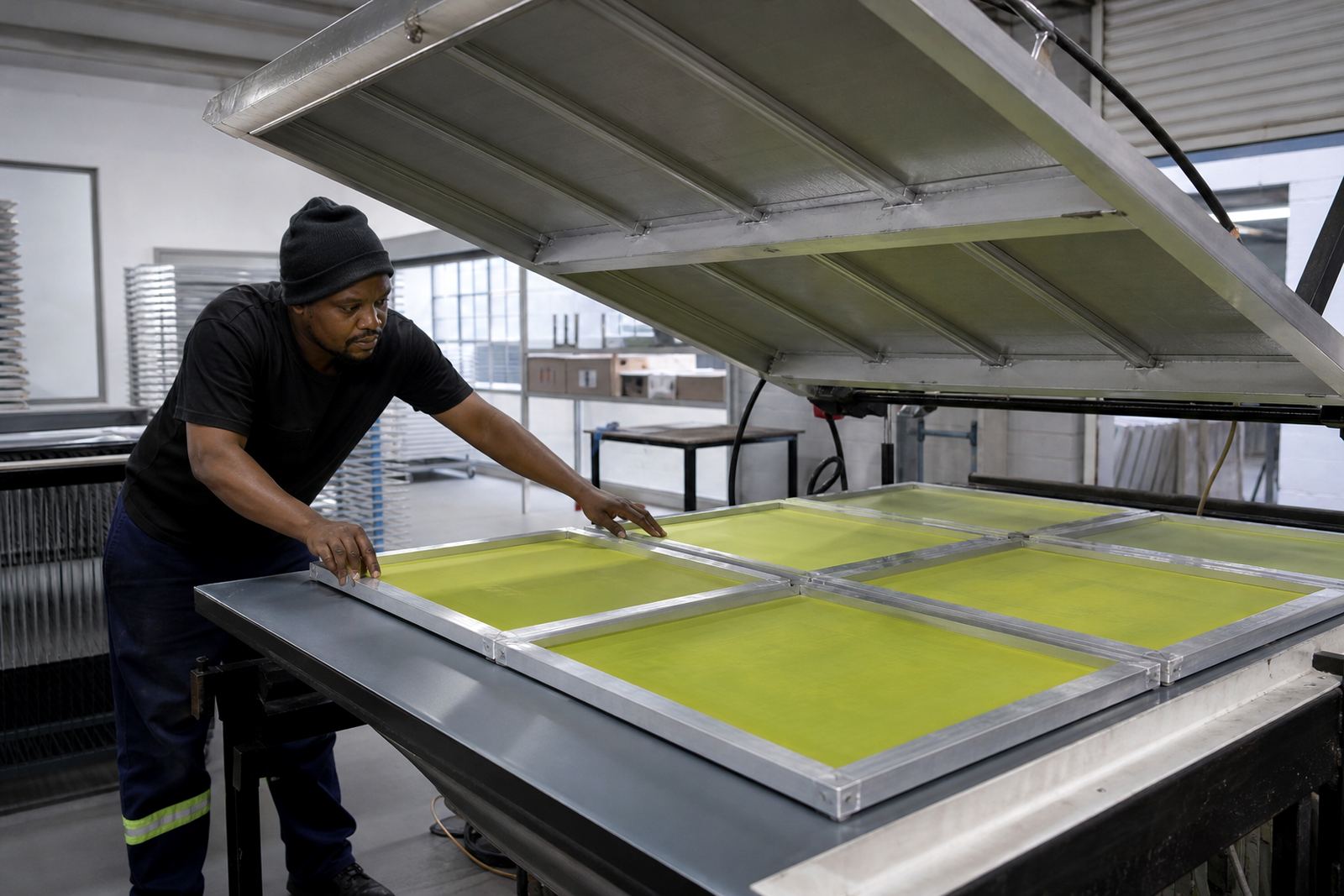
Pre-stretched aluminium frames are useful when a shop needs screens that stay straight and ready for repeat use. The frame should suit the image area, the press size, and the space available for registration. If the frame is too small, the printer has less room for setup and handling. If it is too large, storage and wash-up become awkward.
New frame stretching is the better choice when a job needs fresh mesh and a known starting point. Frame re-stretching helps when existing frames are still sound but the mesh has lost tension or been damaged in reclaim. In both cases, proper tension checking matters because a screen that feels fine on first use may relax after a few runs.
For promo garment work, even tension across the whole screen is important. Uneven stretch can cause ghosting at the edges of a design or a slight shift in print position from one shirt to the next. On high volume runs, those small problems add up fast.
Layout planning for fast shirt runs
A promo garment setup should be planned for speed first, then detail. That means thinking through the print order, flash positions, platen spacing, and how many screens are needed before the first shirt goes onto the press. Good planning helps the operator keep the run steady when the workday is interrupted by power cuts or a tight pickup window.
Screen setup advice is useful when a shop has a new layout, a different press size, or a client order with mixed garment colours. If the artwork includes a white underbase, the screen count and curing flow need to be arranged so the underbase does not slow the whole job. If a job is repeat work, batch screen prep can help keep the screens grouped and labelled for the next order.
- Group screens by colour sequence so changeovers are quicker.
- Leave enough space for flood strokes and safe handling during registration.
- Plan for drying and curing stages before screens are pulled off the press.
- Keep one screen set aside for test pulls if the artwork is finicky.
Common mistakes on volume promo jobs
Many garment runs go off track for the same reasons. The most common one is choosing a mesh count that does not suit the ink or the artwork. Another is using a frame that has lost tension, which shows up as blurry edges or uneven print pressure. Shops also lose time when screens are not cleaned properly and old residue affects the next setup.
Another mistake is trying to push too many sizes through one screen plan. Mixed sizes are normal in promotional work, but the screen layout still needs enough room for registration marks and practical handling. If the frame is too cramped, the press operator ends up fighting the setup instead of printing.
Coastal humidity can also affect handling and drying, especially in Durban and Gqeberha. Mesh that is not stored well can behave differently from week to week. In inland areas like Germiston, Johannesburg and Pretoria, dust and temperature swings can be the bigger issue. Either way, consistent screen inspection before dispatch helps avoid headaches at the press.
Budget ranges for screen setup on promo apparel
Budgeting for promo garment work is usually easier when the screen setup is treated as part of production, not an afterthought. The cost will depend on frame size, mesh count, whether the frame is new or being re-stretched, and how much prep is needed before dispatch. Shops that order repeat screens often plan around the same artwork sizes so they can keep their setup simple.
As a practical guide, smaller promo jobs with basic artwork may only need a modest screen investment, while more demanding work with fine detail, multiple colours, or underbases will need better planning and a higher setup allowance. It is worth budgeting for the screen that suits the job first, then adjusting the print run around that. Trying to force one screen to do every task usually costs more in rejected shirts and wasted time.
For regular clients across South Africa, repeat order service can help keep the screen line moving. That is useful for businesses that run monthly promotions, event merchandise, or staffwear in batches. It also makes it easier to keep spare screens ready for the next run rather than starting from scratch each time.