When decal work needs cleaner edges
Decals are unforgiving. If the mesh count is too open, the print can carry too much ink and soften the edge. If it is too fine, you may struggle to get the deposit you need for solid colours or opaque layers. For print shops in Germiston, Johannesburg, Pretoria and beyond, the usual starting point is to match the mesh to the size of the artwork, the ink type and the surface the decal will sit on.
For fine lettering, registration marks and detailed outline work, a higher mesh count is normally the safer choice. For heavier colour blocks or base layers, a more open mesh may be better. The aim is not only a clean print, but a screen that gives consistent results across a run, especially when you are repeating the same decal panel for signage, packaging or product labelling.
Typical mesh choices for decal screens
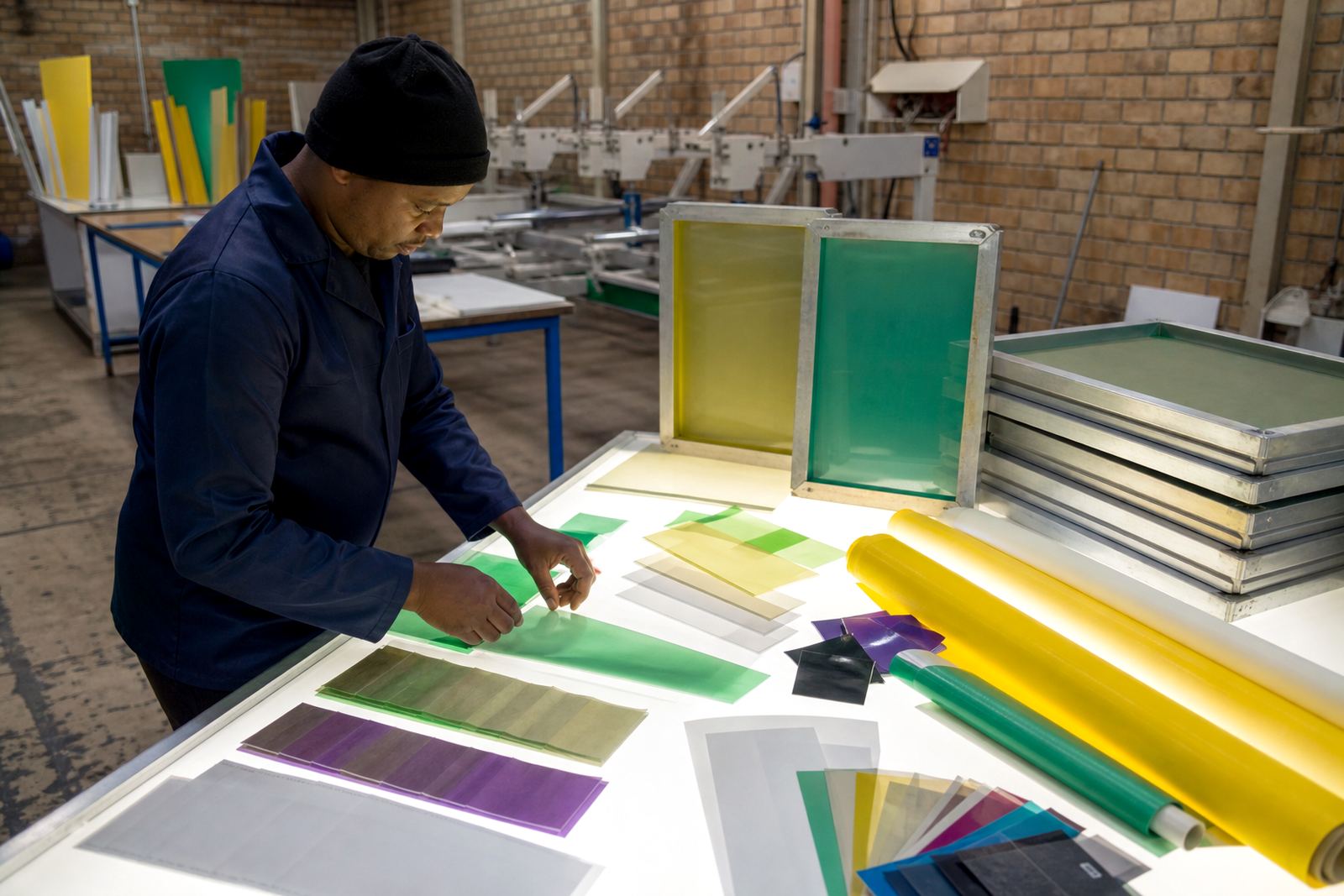
Mesh selection starts with the artwork. A 90 to 120 threads per centimetre range is often used where the detail is fine and the ink needs to sit neatly on the surface. Medium counts can suit general decal production when you need a balance between detail and coverage. Lower counts are usually reserved for heavier ink laydown, underbases or special situations where the print needs more body.
- Fine text and linework: tighter mesh and careful tension control
- Solid colour panels: medium mesh where coverage matters more than ultra fine detail
- Layered decals: mesh count matched to each colour pass, not just the top print
- Outdoor use: choose a setup that keeps edges clean and reduces smudging during handling
Mesh count matching is useful when your shop handles different decal formats in the same week. It cuts down on guesswork and helps your screens behave the same way from job to job.
Frame tension and stretching for repeatable prints
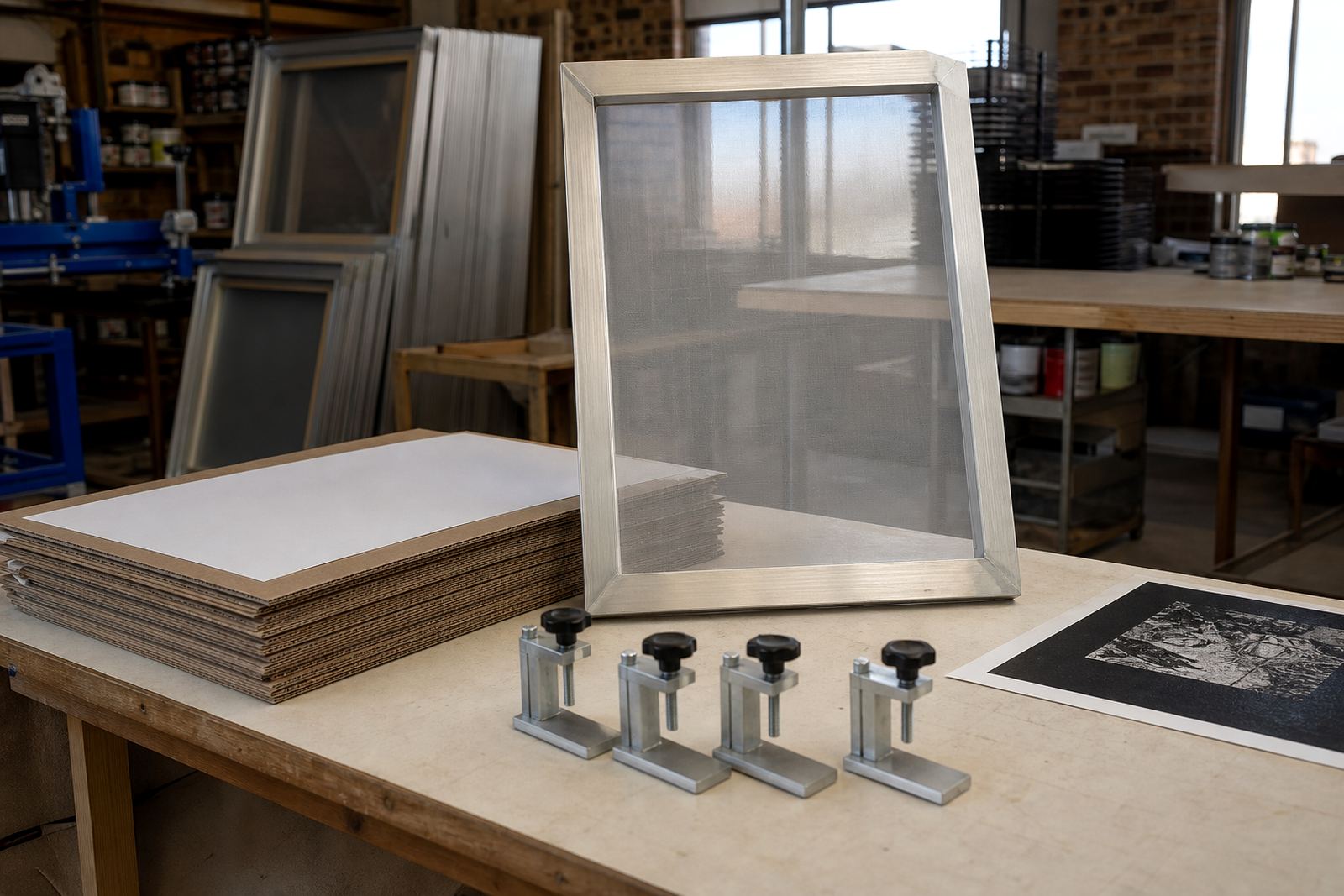
Pre-stretched aluminium frames are a practical choice for decal work because they help hold consistent tension and stay stable during repeated use. Good tension supports a cleaner snap back after the squeegee pass, which matters when you are printing crisp borders or trapping two colours closely together. If the screen is uneven, you can end up chasing registration from sheet to sheet.
For shops in humid coastal conditions like Durban or Gqeberha, frame stability matters even more. Moisture and storage conditions can affect screen behaviour, so a well-prepared frame with proper mesh bonding and inspection is worth the effort. In Gauteng, dusty handling areas and temperature swings can also affect the life of a screen if it is not cleaned and stored properly.
- Use pre-stretched frames for repeat work and consistent registration
- Check tension before long runs and after any re-stretching
- Keep the mesh clean and free of old adhesive or emulsion residue
- Store finished screens flat or properly racked to reduce warping
Planning the layout before the first pull
Good decal work starts before the screen goes on press. The artwork should be separated with the final application in mind, especially if the decal will be applied by hand, wrapped around a product edge or trimmed to shape. Registration marks need to be visible but not intrusive. Gaps between elements should allow for cutting, weeding or post-print finishing without damaging the design.
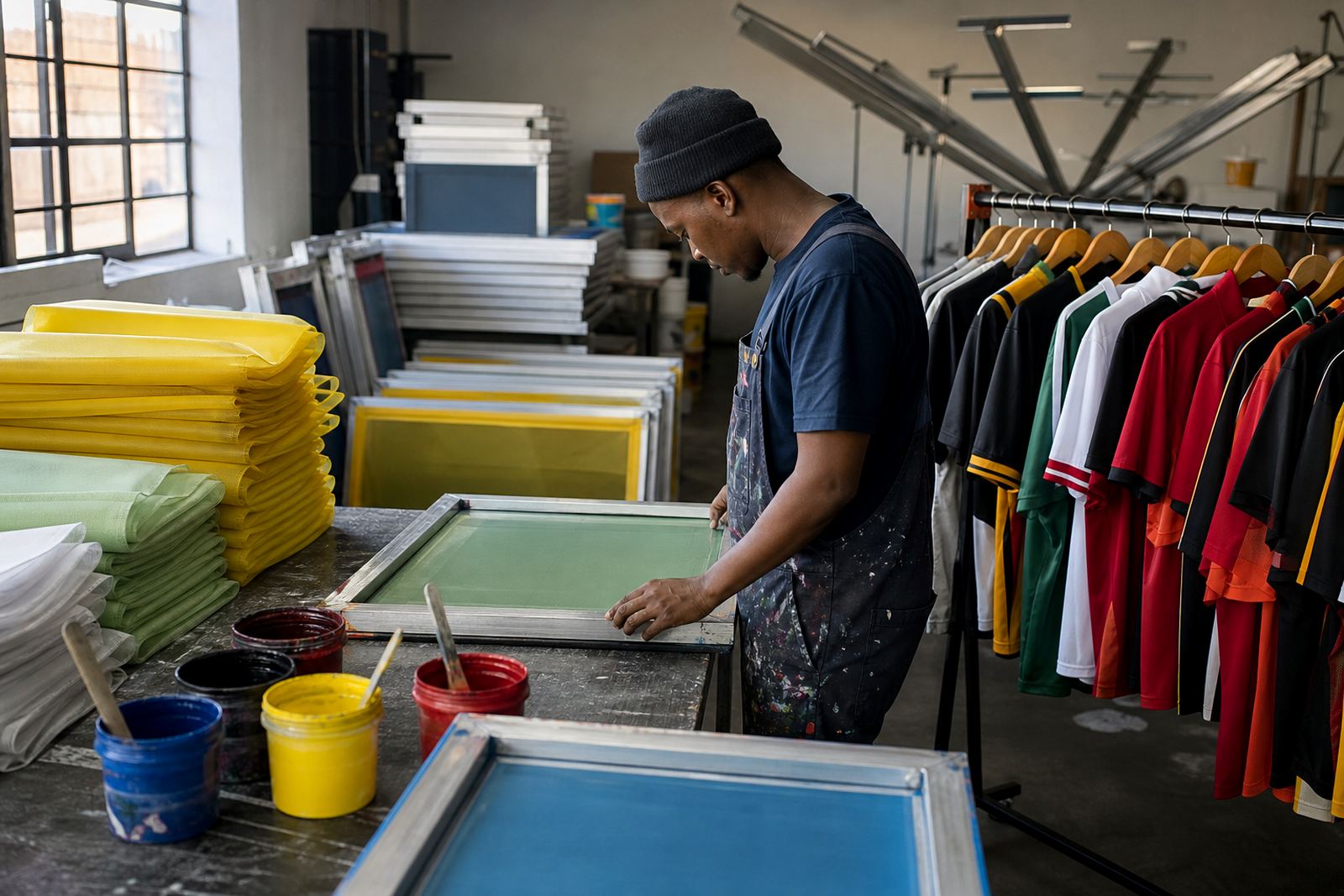
When you are setting up a run, think about the order of colours, drying time between layers and how the finished decal will be handled after print. For batch work, a clean screen setup advice process saves time. It also reduces errors where one colour shifts slightly and throws off the entire sheet.
- Keep fine details away from the very edge of the print area
- Allow room for trimming and sheet handling
- Plan colour order so the lightest or most critical layer has the best registration
- Leave enough border space to prevent accidental ink pick-up on the platen or substrate
Common mistakes that spoil decal detail
Most decal problems start with poor screen choice, rushed prep or inconsistent tension. A mesh that is too open can flood the image, while an overly tight setup can become hard to print cleanly if the ink or squeegee angle is not right. Another common issue is skipping screen inspection before production, which can leave pinholes, blocked areas or old residue in the image.
Bad drying practice is another problem. If the print is handled too soon, the edges can pick up, especially on layered work. Shops also lose time when they use the same screen for a job it was not suited for. That often leads to poor detail, more waste and extra cleanup that could have been avoided.
- Choosing the wrong mesh count for the artwork
- Ignoring tension loss after repeated use
- Rushing cure or drying between layers
- Not checking the screen for damage before dispatch packing
Budget ranges for a working decal setup
For a small to mid-size shop, the budget for decal screens depends on how many sizes you keep in rotation, whether you need new frame stretching or re-stretching, and how much repeat work you handle each month. A basic setup may only need a few carefully chosen mesh counts and one or two screen sizes. A busier operation usually benefits from a wider range, plus backup screens ready for urgent orders.
In Rand terms, the spend can vary quite a bit depending on the frame size, mesh type and the amount of preparation needed. It is sensible to budget for mesh count matching, frame clean prep, tension checking and batch screen prep as part of the normal cost of doing accurate decal work. That way the screen room is not treated as an afterthought when deadlines get tight.
For shops in Johannesburg, Pretoria, Durban, Cape Town and Gqeberha, it often makes sense to keep a core set of screens for your most common decal work, then order more specialised frames only when the artwork calls for them.
How MeshMaster supports decal print shops
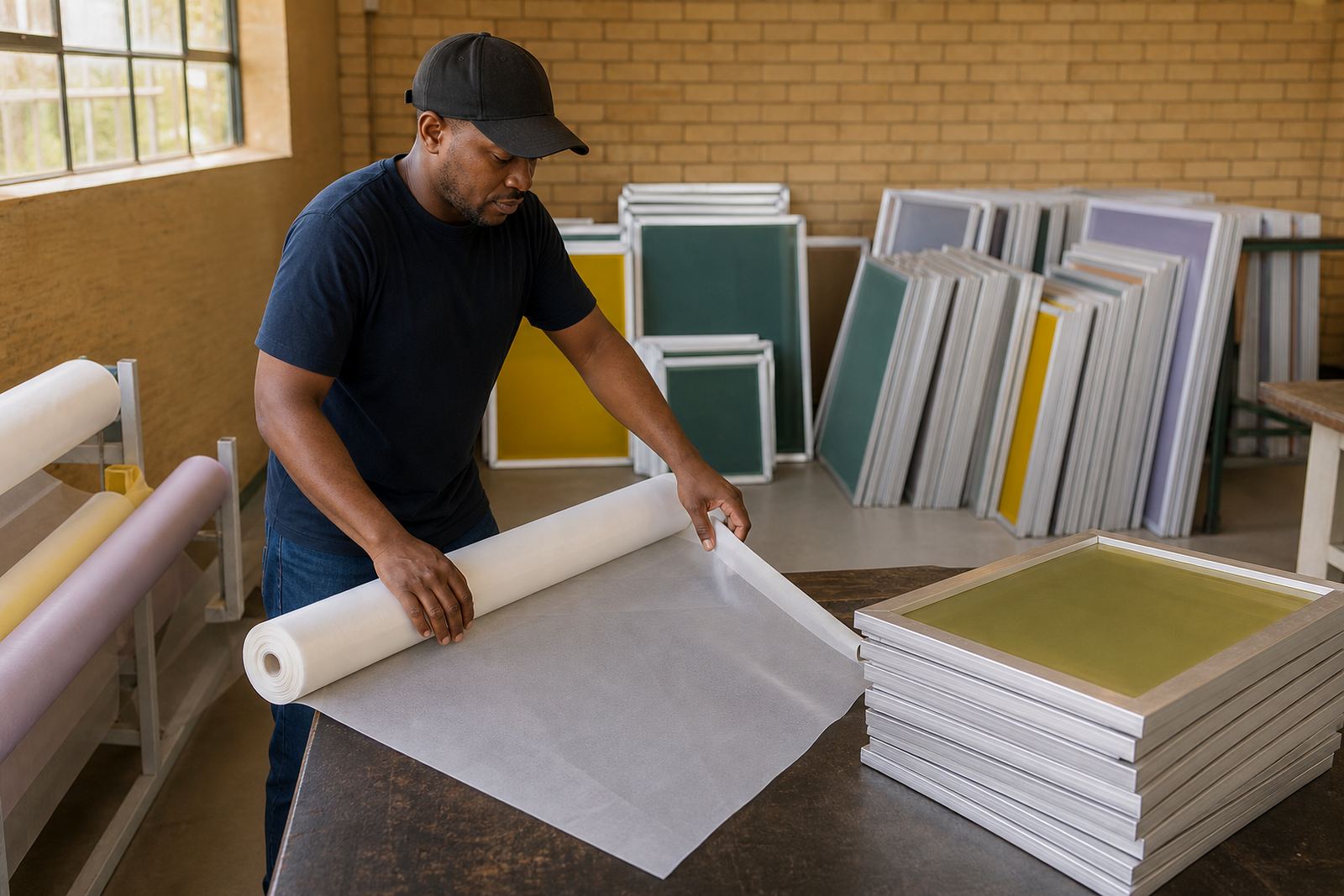
MeshMaster supplies screen-printing mesh and pre-stretched aluminium frames from Germiston, Gauteng, with delivery and supply support to print shops across South Africa. Our team works with new frame stretching, frame re-stretching, mesh count matching, tension checking, frame clean prep, mesh bonding, custom frame sizing, batch screen prep, screen inspection, dispatch packing, repeat order service and screen setup advice.
Whether you are running a small shop in Midrand or handling regular decal orders across the East Rand, the goal is the same: screens that hold detail, print cleanly and keep your process steady. If your decals need sharper edges and less rework, start with the screen rather than trying to fix the result after the fact.