Choosing Mesh Counts for Art Print Detail
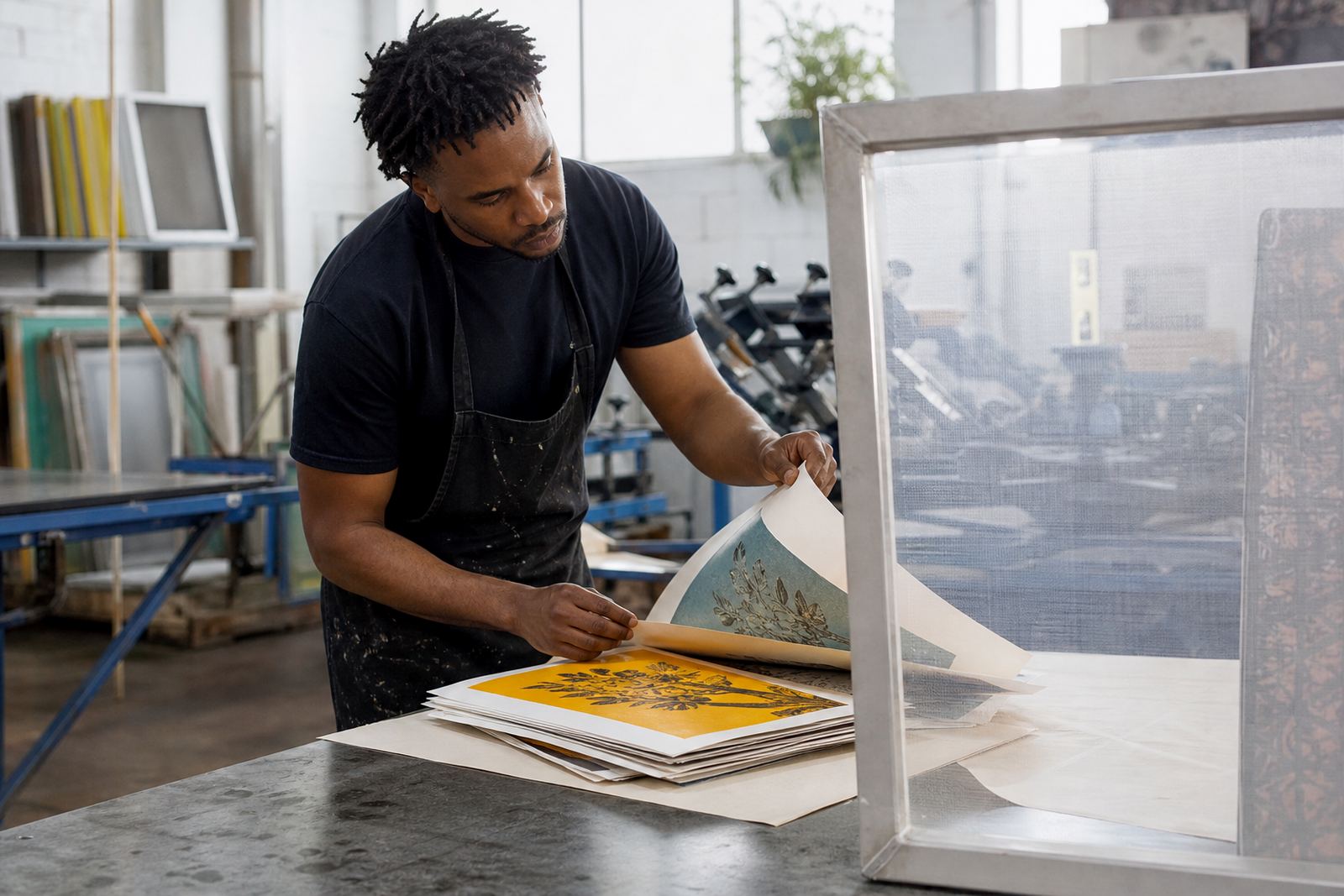
For art prints, the mesh count usually depends on how much ink you want to pass and how fine the artwork is. Lower mesh counts allow more deposit for bold blocks of colour or textured effects, while higher mesh counts are better for line work, small type and detailed tonal work. If you are printing illustrations with clean edges and tight registration, a mid to high mesh is often the safer starting point.
In practice, many print shops keep a few mesh options on hand rather than forcing every job through one setup. That helps when a run includes solid areas, fine line overlays and a light base layer. It also saves time when a client brings in work that looks simple but needs a controlled deposit to stop the image from filling in.
- Lower mesh counts suit heavier deposit and opaque layers.
- Mid counts work well for general art prints with mixed detail.
- Higher counts help with fine lines, halftones and crisp edges.
- Always match the mesh to the ink type and the artwork, not just the paper.
Frame Tension and Why It Matters on Paper Work
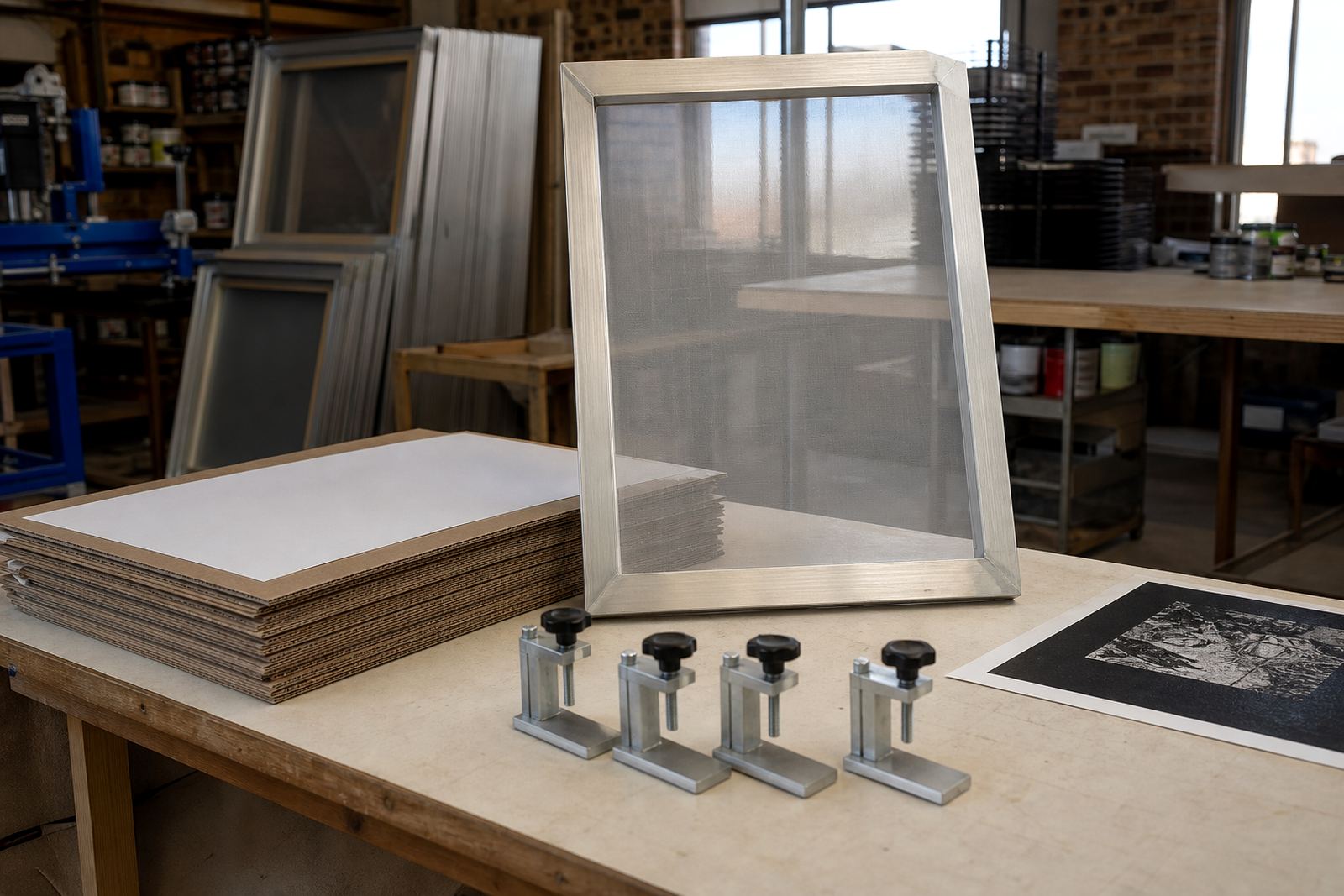
Good tension keeps the squeegee release even and helps the stencil stay sharp over the run. On art prints, uneven tension can show up quickly as fuzzy edges, ink gain or a slight shift in detail from the first print to the last. A properly stretched aluminium frame gives you a steadier screen and makes setup less fussy, especially when you are working with multi-layer artwork.
If you are running detailed prints in a busy shop, pre-stretched frames are useful because they reduce the guesswork at the prep stage. That matters when you are moving between jobs and need repeatable results. It also helps if your team is handling screens in humid coastal conditions or during load-shedding related delays, where screens can sit longer than planned before printing.
- Check tension before exposing a new stencil.
- Watch for loose corners or uneven pull across the mesh.
- Re-stretch screens that have drifted after repeated use.
- Store prepared screens flat and clean to avoid damage before printing.
Planning a Layered Print Setup from the Start
Art print jobs often need a clear layout plan before the first screen is made. If the artwork has underbases, overlays or multiple colours, the mesh choice should follow the full print order. A heavy underbase may need one screen, while a fine top detail layer needs another. This is where mesh count matching and screen setup advice can save a lot of trial prints and wasted sheets.
For shops in Johannesburg, Pretoria, Durban, Cape Town and Gqeberha, planning also includes the practical side of production. Drying space, screen storage, batch size and dispatch timing all affect how well the job moves. If you are printing for galleries, small retail runs or short promotional series, keep the screen count manageable and label each frame clearly so reorders are easier later on.
- Separate solid layers from detail layers.
- Keep registration marks consistent across all screens.
- Plan drying time between layers, especially in cooler or humid weather.
- Use batch screen prep when the same artwork will repeat across more than one order.
Common Mistakes on Fine Art and Illustration Jobs
One of the most common mistakes is choosing a mesh that is too open for the artwork. That can flood small detail, reduce sharpness and leave the print looking heavier than planned. Another issue is stretching a screen well enough for general work but not checking if the tension suits a more delicate art print job. Small faults become visible fast on white paper or coated stock.
Ink choice also plays a part. A mesh that works on one paper may behave differently on another, especially with textured boards or absorbent stocks. If the layout changes late in the job, it is better to stop and recheck the screen setup than push on and hope it will sort itself out. That usually costs more in reprints than in prep time.
- Do not use one screen type for every art print.
- Do not ignore tiny defects in the mesh or frame bond.
- Do not skip screen inspection before a repeat order.
- Do not assume the last successful setup will suit the next job.
When Re-Stretching Makes Better Sense Than Replacing
For many print shops, frame re-stretching is the practical answer when the aluminium frame is still sound but the mesh has lost tension or been damaged in use. It is a good option for teams that want to keep costs under control while still maintaining clean print quality. If the frame is straight and the bond area is still usable, re-stretching can bring the screen back into service without starting from scratch.
That matters for art prints where consistency is important and the same frame may be used across repeat runs. New frame stretching is the better path when you need a specific size or want to standardise your workshop setup. Either way, the screen should be cleaned, checked and prepared properly before it goes back onto the press.
Typical budget planning for art print screens in South Africa often starts around a few hundred Rand for basic prep work and can move into the low thousands Rand when you need custom sizing, repeat prep or multiple frames for a layered job. The final cost depends on mesh type, frame size and how much prep is needed.
South African Supply for Print Shops That Need Repeatability
MeshMaster supplies screen-printing mesh and pre-stretched aluminium frames from Germiston, Gauteng to print shops across South Africa. We work with shops handling art prints, illustration runs, fine detail work and layered colour jobs that need dependable screen setup. If you are in East Rand, Midrand or further afield in Durban, Cape Town or Gqeberha, the goal is the same: screens that arrive ready for proper use and re-use.
For repeat orders, it helps to keep your preferred mesh counts on record and check them against the current artwork before dispatch. A clear screen plan makes it easier to order the right frames, prep the next batch and avoid last-minute changes. Clients can send enquiries through the contact page, and the right support from the team can make the next run less stressful, especially when deadlines are tight and the press schedule is already full.