What a wide screen frame is used for
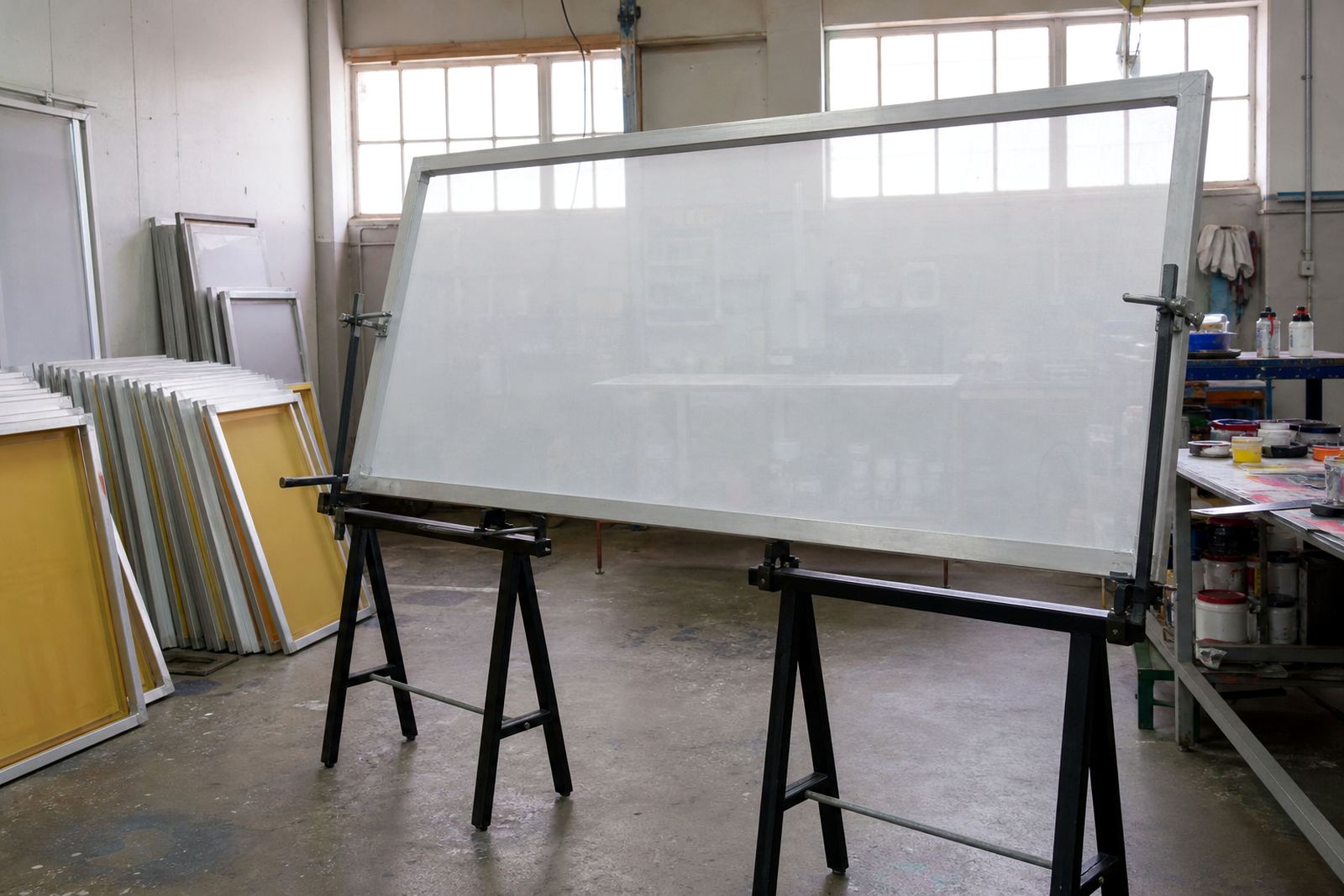
A wide screen frame gives you a larger printing area than a standard frame, which helps when the artwork stretches across more of the garment or substrate. It is commonly used for oversize graphics, wide text layouts, large panels, yardage work and jobs where the image must stay open and consistent across a broad stencil. If the design reaches near the edge of a normal frame, a wider format gives you better placement and more room for registration.
In screen printing, the frame is only part of the result. Mesh count, mesh tension and the way the mesh is stretched all affect ink deposit and detail. A wide screen must still hold tension evenly from corner to corner, otherwise the image can distort or the squeegee feel changes across the print. For shops running repeat jobs, this consistency matters as much as the frame size itself.
Wide screen sizes and mesh options we supply
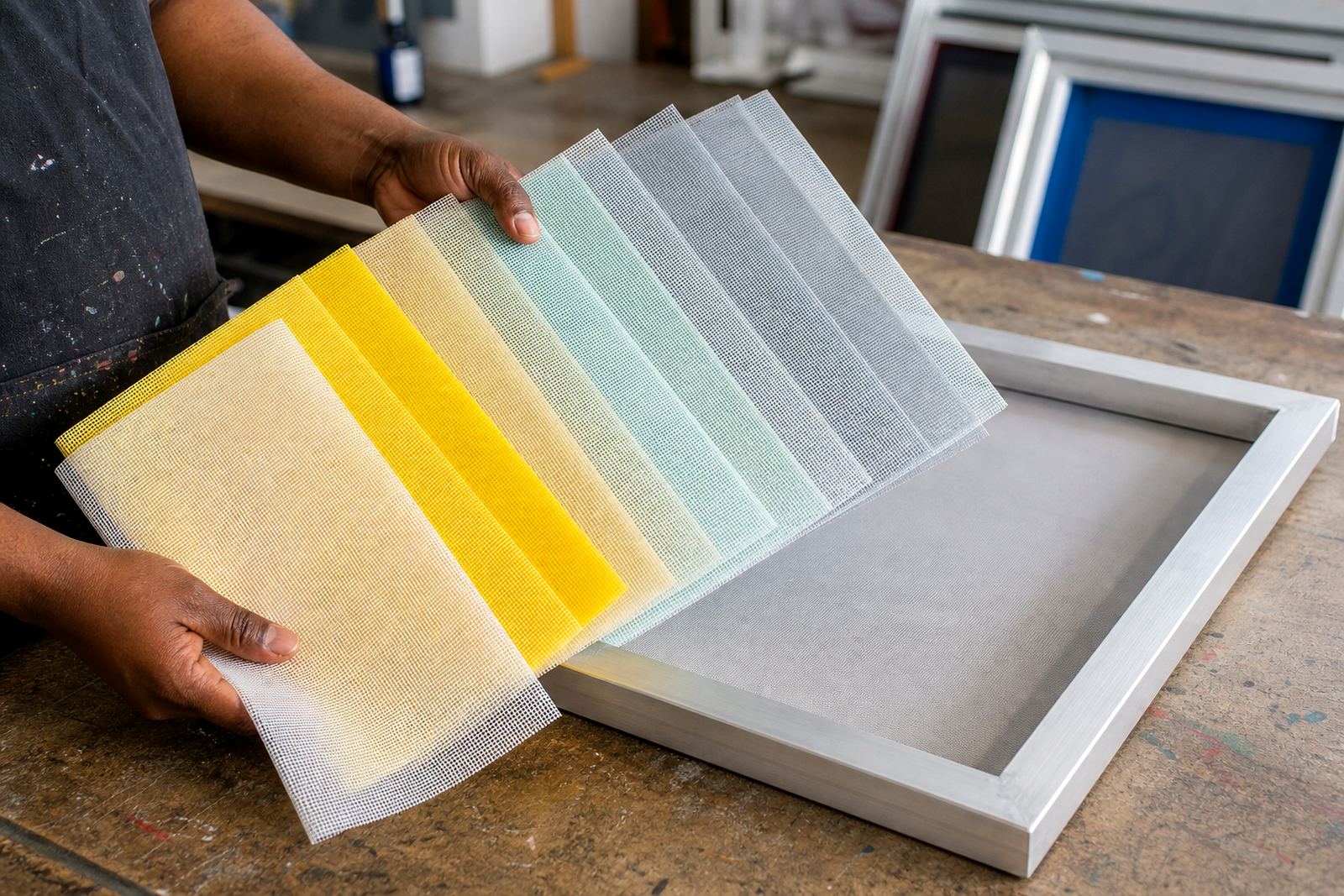
Wide screen work can be matched to several mesh counts depending on the artwork and ink type. Finer detail usually needs a higher mesh count, while heavier ink deposits and simpler graphics may call for a lower count. For water-based, solvent-based or plastisol style printing, the mesh choice must suit the ink body and the level of detail needed on the screen.
- Mesh counts for fine detail, halftones and cleaner ink release
- Mid-range mesh for general garment printing and spot colour work
- Lower mesh for heavy deposit jobs and bolder graphics
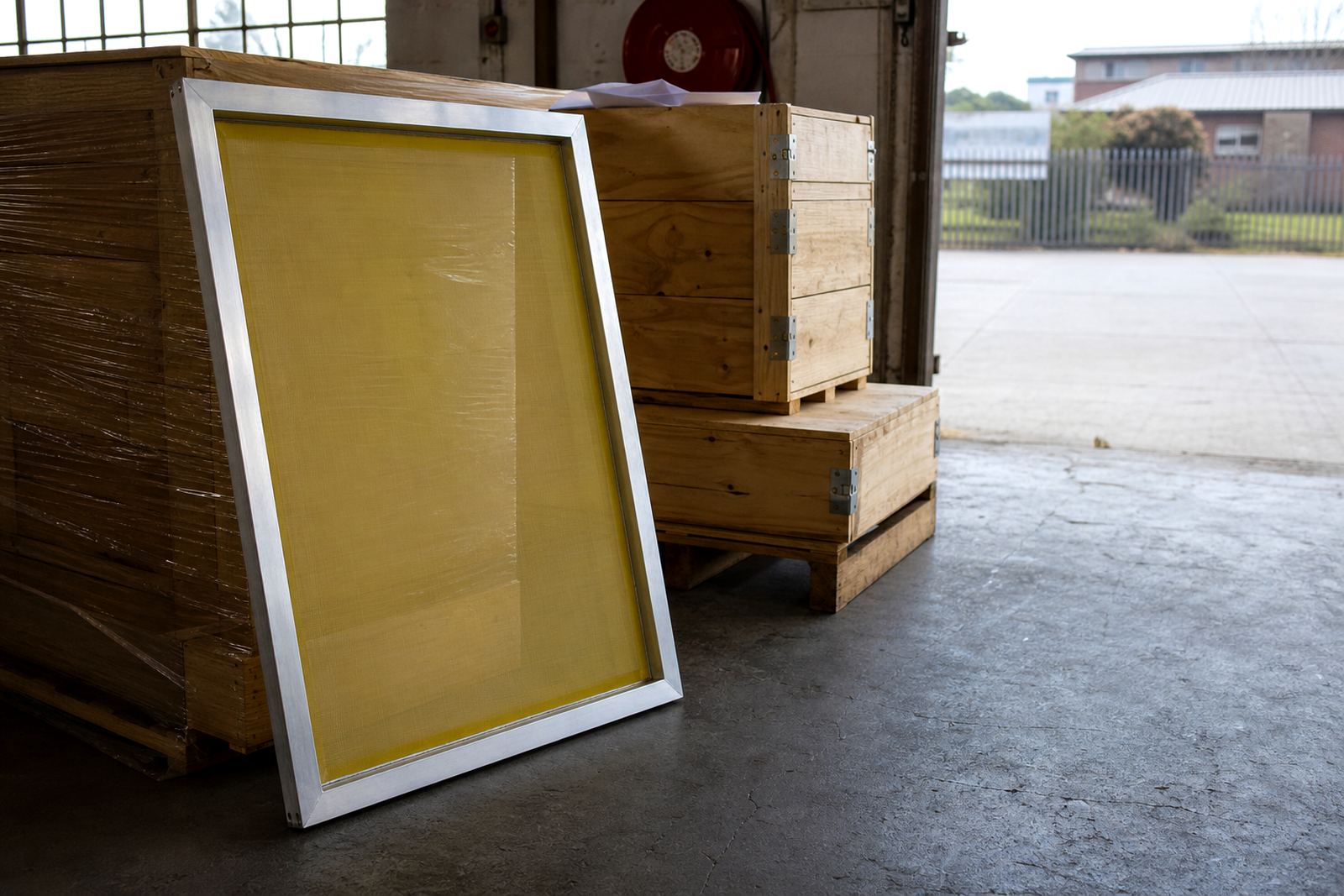
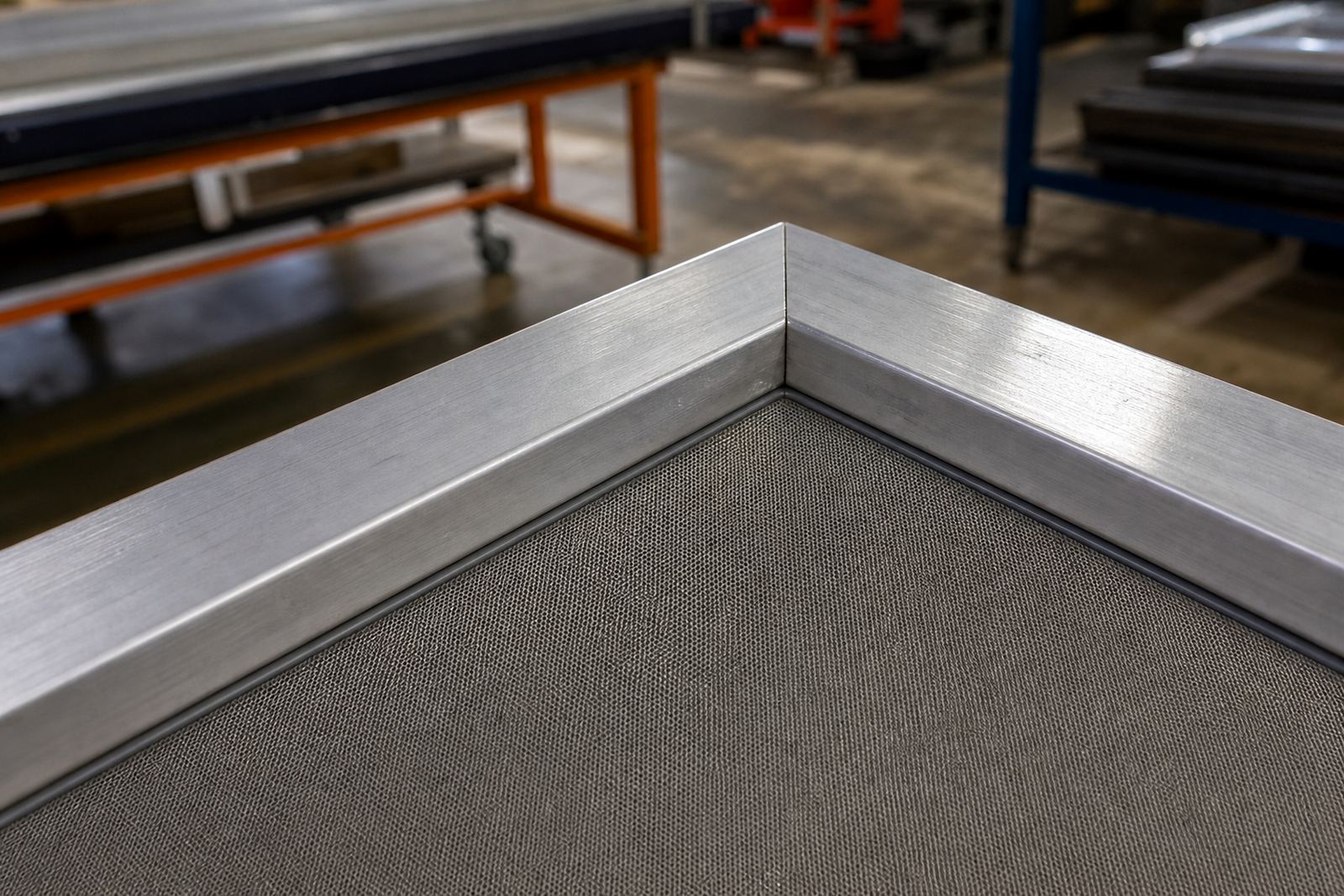
- Pre-stretched aluminium frames for repeat use and steady tension
- Custom frame sizing for larger print areas and non-standard layouts
We also help with mesh count matching so the screen is not overworked on the one hand or too open on the other. The right match keeps the stencil sharper and makes setup easier when you are running batches in Johannesburg, Pretoria or the coastal markets where humidity can affect how a screen behaves during the day.
Where wide screens suit the work best
Wide screen frames are a practical choice for print shops doing larger artwork on T-shirts, bags, panels, signage parts and flat promotional items. They also suit shops that need better coverage for long artwork, full front prints and jobs that must be registered neatly across a broad surface. When the image is too wide for a standard frame, the wider format saves time and reduces the risk of edge issues during production.
These screens are also useful for batch work. Once the stencil is set up, the wider frame helps keep the print stroke stable and gives the printer more room to work. That can matter on busy days when load-shedding has disrupted the schedule and a shop is trying to catch up before dispatch. A strong wide screen helps keep the production line moving with less fuss.
- Large garment graphics
- Panels and flat substrates
- Long wording or border work
- Repeat runs with fixed registration
- Workshop setups with limited prep time
Installation and power requirements
Wide screen frames themselves do not need power or gas. They arrive ready for screen prep, mesh tension and stencil application. If your shop uses drying units, exposure units or curing equipment alongside the screen, those items will have their own power requirements, but the frame itself is a manual item. That makes it useful for workshops that want a straightforward screen setup without extra equipment on the frame side.
For installation, the main checks are flat seating, proper frame support and even tension across the mesh. If the frame is fitted into your print table or used with a clamping setup, make sure the size allows enough clearance for the squeegee and for safe handling. Wide screens are easier to use when the print area is planned properly from the start instead of being forced into a small workstation.
Tension, stretching and what affects print quality
Good tension is the base of a usable wide screen. If the mesh is too loose, the stencil can drag, the print edge may blur and the ink deposit can vary across the screen. If the mesh is stretched too tight without the correct frame support, the mesh can lose balance over time. That is why frame strength, stretching method and bonding quality matter, especially on larger formats.
At MeshMaster we handle new frame stretching, re-stretching and frame clean prep for screens that need to go back into service. We also do tension checking and mesh bonding so the screen comes back ready for use. In practice, a wide screen should feel even across the full surface, with no soft corners or pulled areas near the centre. That even feel is what helps with clean results and repeatable printing.
Care, servicing and day to day handling
Wide screens last longer when they are cleaned properly after each run and stored away from damp or direct heat. In coastal areas such as Durban and Gqeberha, moisture can affect mesh condition and adhesive performance, so dry storage is important. In Gauteng, dust and workshop handling can be the bigger issue, so a clean prep area makes a difference. After reclaiming, inspect the frame for damage, uneven tension and glue line wear before the next job.
Routine servicing helps avoid costly rework. If the mesh has started to sag, if the stencil image no longer sits true, or if you notice uneven ink release, the screen may need re-stretching or inspection. We also support repeat orders and screen setup advice for shops that want consistent results across more than one frame.
- Wash out ink soon after printing
- Dry the screen fully before storage
- Keep frames off the floor and away from moisture
- Check corners and glue lines regularly
- Re-stretch before the mesh becomes unusable
What to check before you order
Before you place an order, check the artwork size, the substrate width and the detail level you need. A wide screen should allow enough room for the image, tape margins and safe handling at the press. You should also know whether you need a finer mesh for detail or a more open mesh for heavier ink deposit. If you are unsure, send through the job details and we can help match the screen to the work.
It also helps to confirm frame dimensions, mesh count, quantity and whether you need new stretching or a re-stretch. For shops in Germiston, Johannesburg, Pretoria, Durban, Cape Town and Gqeberha, we can arrange supply and dispatch packing through our normal order process. If the job is a repeat run, keep the same screen details on file so the next order is easier to match and the print result stays consistent.
- Artwork size and print area
- Mesh count needed for the ink and detail
- Frame size and orientation
- New stretch or re-stretch requirement
- Quantity and repeat order needs
Key facts
| Product | Wide screen format for screen printing |
|---|---|
| Frame material | Pre-stretched aluminium frame |
| Mesh options | Available in matched mesh counts for detail or ink deposit |
| Typical use | Large artwork, broad coverage and repeat production |
| Service options | New frame stretching, re-stretching, tension checking and mesh bonding |
| Supply area | Germiston, Johannesburg, Pretoria, Durban, Cape Town, Gqeberha and surrounding areas |