What the Starter Frame Kit includes for day one printing
This kit is put together for shops building an initial screen set and needing a reliable starting point without sorting every frame one by one. It is based on pre-stretched aluminium frames with mesh selected for common garment and general print work, so you can begin setting up for simple artwork, spot colours and basic process work straight away.
The kit is usually made up around the mesh counts that most small shops need first, rather than very specialised meshes that only suit one type of job. That means you can cover coarse ink deposits, medium detail work and finer artwork with fewer gaps in your setup. If you are printing from Germiston, Johannesburg, Pretoria or further afield, the aim is the same, to give you screens that arrive ready for use and easy to standardise across repeat jobs.
- Pre-stretched aluminium frames for stable screen handling
- Mixed mesh counts for common print applications
- Frames prepared for standard emulsion coating and exposure
- Suitable for manual print tables and simple production lines
Mesh counts and frame sizes that suit starter production
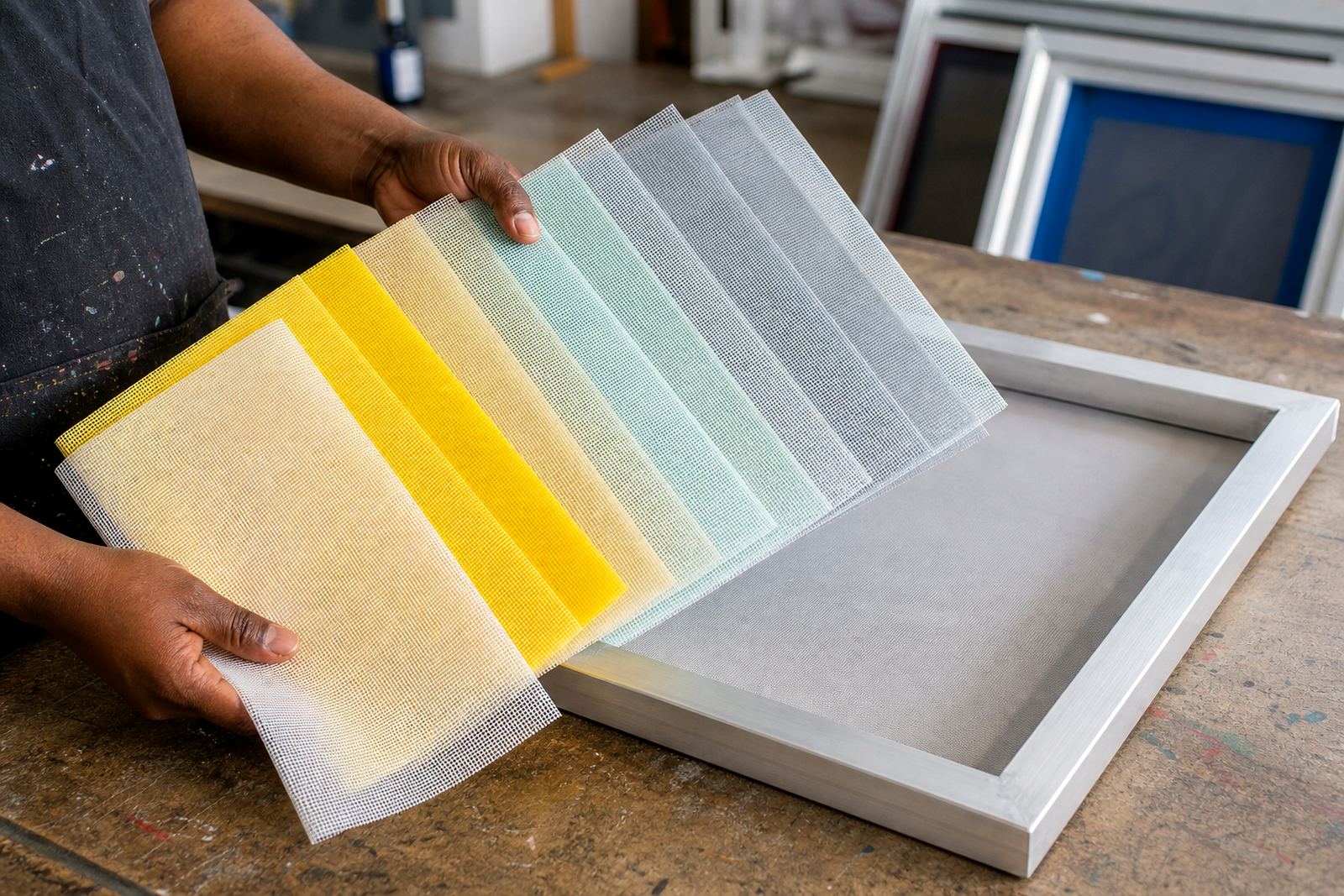
For a new print room, mesh count selection matters as much as frame size. Lower mesh counts are generally used where you need more ink deposit, such as bold spot colours, underbases and rougher substrates. Mid-range counts are a good all-round choice for most textile printing, while finer counts are better where detail, halftones or thinner ink deposits are needed.
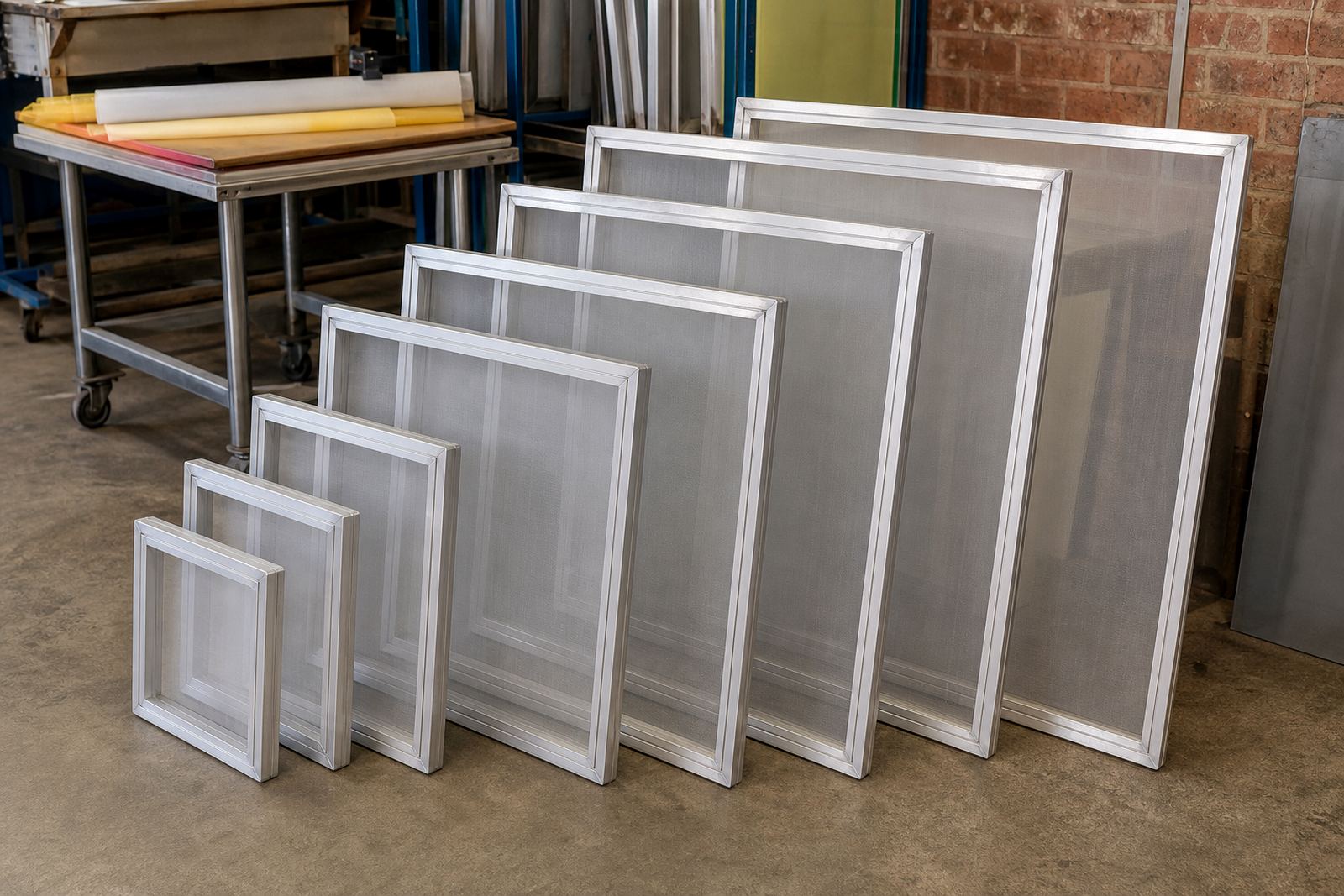
Starter kits are normally planned around practical frame sizes that are easy to handle, coat and store. Common sizes include smaller screens for compact artwork and larger formats for full-front or larger print areas. The right size depends on your press, pallet size and how much room you have for drying and racking. In smaller shops, too many oversized frames can slow things down, especially when space is tight or load-shedding interrupts the day.
- Coarse mesh for heavier ink laydown
- Medium mesh for everyday garment printing
- Fine mesh for smaller detail and smoother print edges
- Frame sizes chosen to suit practical shop handling
Where this kit fits best in South African print shops
This product suits start-up screen printers, home-based shops moving into trade work, and established printers adding a fresh set of screens for a second press or backup line. It is also useful for shops in coastal areas where humidity can affect drying times, or inland workshops where dust and heat can shorten the working window on a busy day.
For Durban and other humid locations, a well-stretched frame helps maintain consistency when the mesh is being coated, dried and reclaimed. In Gauteng, where temperature swings and dry air can change how emulsion behaves, a stable frame gives you better repeatability from one job to the next. The kit is useful where the team needs something ready, clean and easy to slot into regular production.
- New print shops setting up their first screen library
- Short-run and repeat-order garment printers
- Shops needing backup screens for busy periods
- Workshops printing across multiple substrates and artwork types
Installation, power and gas needs for the starter kit
The kit itself does not need gas and does not depend on specialised powered equipment to get started. The key needs are a clean coating area, a drying space, an exposure setup and enough room for washing out and storing screens. If you are working manually, the main requirement is good workflow rather than machinery. If your exposure unit is powered, you will need a stable electrical supply and a plan for load-shedding so screens are not left half processed mid batch.
For most small operations, installation means checking that your press, pallet spacing and frame sizes line up before the screens are put into production. Proper screen setup advice can help avoid awkward print areas, wasted ink and unnecessary rework. If you are using heat for drying, keep airflow controlled and avoid drying that is too aggressive, as that can affect coating quality and mesh stability.
- No gas connection required for the frames themselves
- Manual or powered setup can be used depending on your shop
- Allow space for coating, drying, exposure and washout
- Plan around power interruptions if your exposure process uses electricity
Care, cleaning and re-stretching to extend screen life
A starter set lasts longer when the screens are cleaned properly after each run and stored away from direct sun, sharp edges and excess moisture. In coastal towns, salt air can settle on aluminium and fittings so a regular wipe down helps keep the kit in good condition. In dusty inland areas, clean storage matters just as much, because fine dirt can mark the mesh and affect coating quality.
When screens begin to lose tension or show frame wear, re-stretching may be a better option than replacing everything. Tension checking helps identify screens that still have life left in them, while careful frame clean prep and mesh bonding support a longer service cycle. If you are doing repeat jobs, it also helps to keep the same mesh counts together so your ink and exposure settings remain consistent.
- Rinse ink off promptly after printing
- Dry screens flat or in a dust-free rack
- Check tension before long production runs
- Re-stretch frames when the mesh is still serviceable
What to confirm before placing your order
Before ordering a Starter Frame Kit, check the print sizes you need most often, the substrates you are printing on and the detail level expected in your artwork. If you mainly print bold logos on garments, your mesh mix will differ from a shop doing finer graphics or more detailed separations. It also helps to know whether your shop uses standard manual presses or larger frames for bigger garments and signage work.
Ask for the mesh counts that match your ink type and artwork requirements, and confirm whether you need matching frame sizes for your press. If you already have a production style in place, repeated screens can be prepared to keep your setup consistent across later orders. For shops in Johannesburg, Pretoria, Durban, Cape Town, Gqeberha and the East Rand, the enquiry form on our contact page is the best way to request the right kit and avoid guesswork.
- Artwork detail and ink type
- Usual garment or substrate size
- Preferred frame dimensions
- Whether you need standard or mixed mesh counts
Starter support for new shops and repeat production
A good starter kit is not just about getting screens on the floor, it is about making the first production weeks easier to manage. That is why matching mesh count, tension and frame size from the start can save time later when you need repeat orders or extra screens for busy periods. Our team handles new frame stretching, frame re-stretching, mesh count matching and dispatch packing from Germiston, with delivery support to Johannesburg, Pretoria, Durban, Cape Town and Gqeberha.
For new shops, practical advice on screen setup can be just as useful as the frames themselves. If you are unsure where to begin, it helps to start with the most common jobs first, then add specialised screens once your order pattern becomes clear. Mandla Ndlovu and the team work with shops that need straightforward supply and clear screen specifications, without overcomplicating the order.
Key facts
| Product type | Starter set of pre-stretched aluminium screens |
|---|---|
| Typical mesh options | Common print counts from coarse to fine, matched to job type |
| Frame material | Aluminium |
| Use case | New shops building an initial screen set |
| Setup needs | Coating, drying, exposure and washout space |
| Maintenance | Cleaning, tension checking and re-stretching as needed |