What a Large Square Screen Is Used For
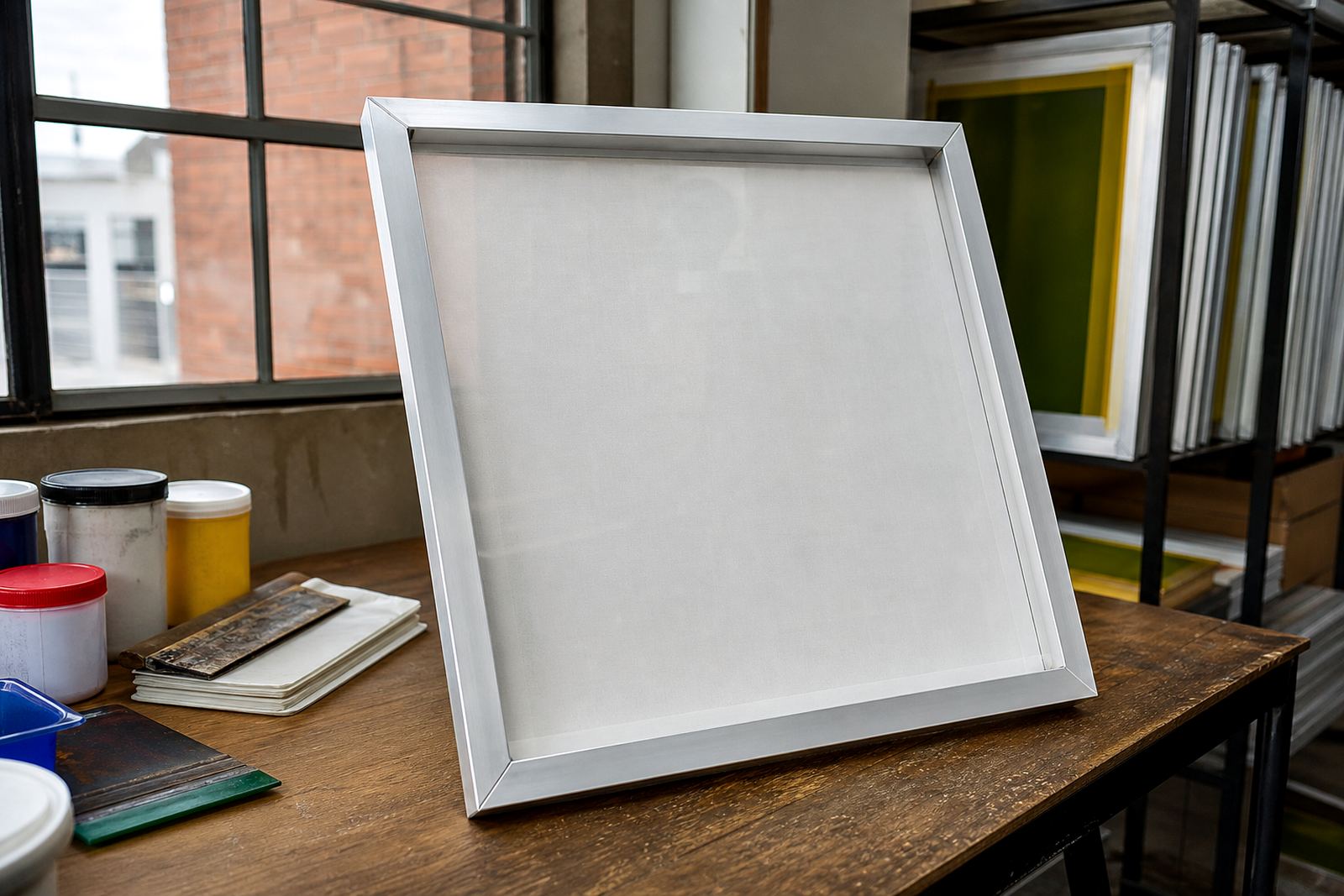
A large square screen is a screen-printing frame with a square format chosen for bigger graphics, wider layouts and jobs where you still want even pull and good control on the press. The square shape gives a practical balance between print area and handling, especially when you are running multi-colour work, oversized logos, garment panels or packaging that needs a broad stencil area.
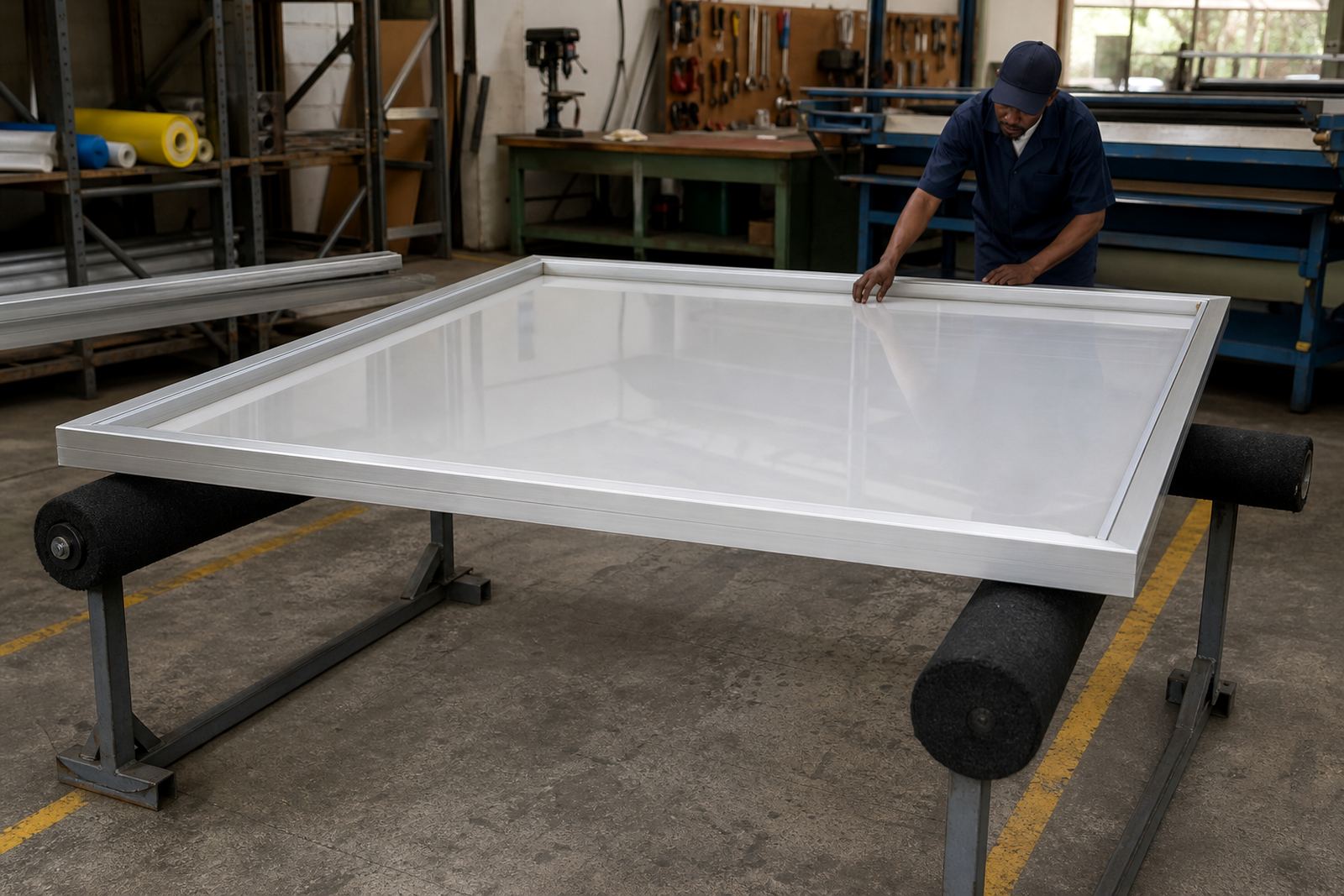
In normal screen-printing use, the frame holds the mesh at a set tension so the stencil sits flat and the print edge stays clean. For larger artwork, that flatness matters even more because any slack in the mesh can affect registration, ink deposit and sharp detail. A well-set large square screen helps reduce movement during print runs and makes repeated strokes more consistent.
These screens are a good fit for print shops working on textile printing, poster work, signage components, transfer production and general shop jobs that need more surface area without moving up to an awkward oversize frame. If your production space is limited in Germiston or anywhere else, the square format is often easier to stack, store and clean than long custom shapes.
Standard Sizes, Mesh Counts and Frame Options
Large square screens are usually specified by the outside frame size, the mesh count and the frame depth. Mesh count affects how much ink passes through and how much detail you can hold. Lower mesh counts are generally used for heavier ink deposit and textured work, while higher mesh counts suit finer detail and thinner inks. The right choice depends on the job, the substrate and how much coverage you want in a single print pass.
For this kind of screen, common options include coarse meshes for bold graphics, medium meshes for general garment work, and finer meshes for detail-heavy artwork. The frame itself can be supplied as a pre-stretched aluminium frame, which is lighter to handle and more stable over time than a basic timber build. Aluminium also stands up better to repeated washing and the damp conditions many shops deal with in coastal areas.
- Square frame format for balanced handling and broader print layouts
- Mesh counts selected to suit detail, ink deposit and substrate needs
- Pre-stretched aluminium construction for steady tension retention
- Custom sizing available for non-standard artwork or press tables
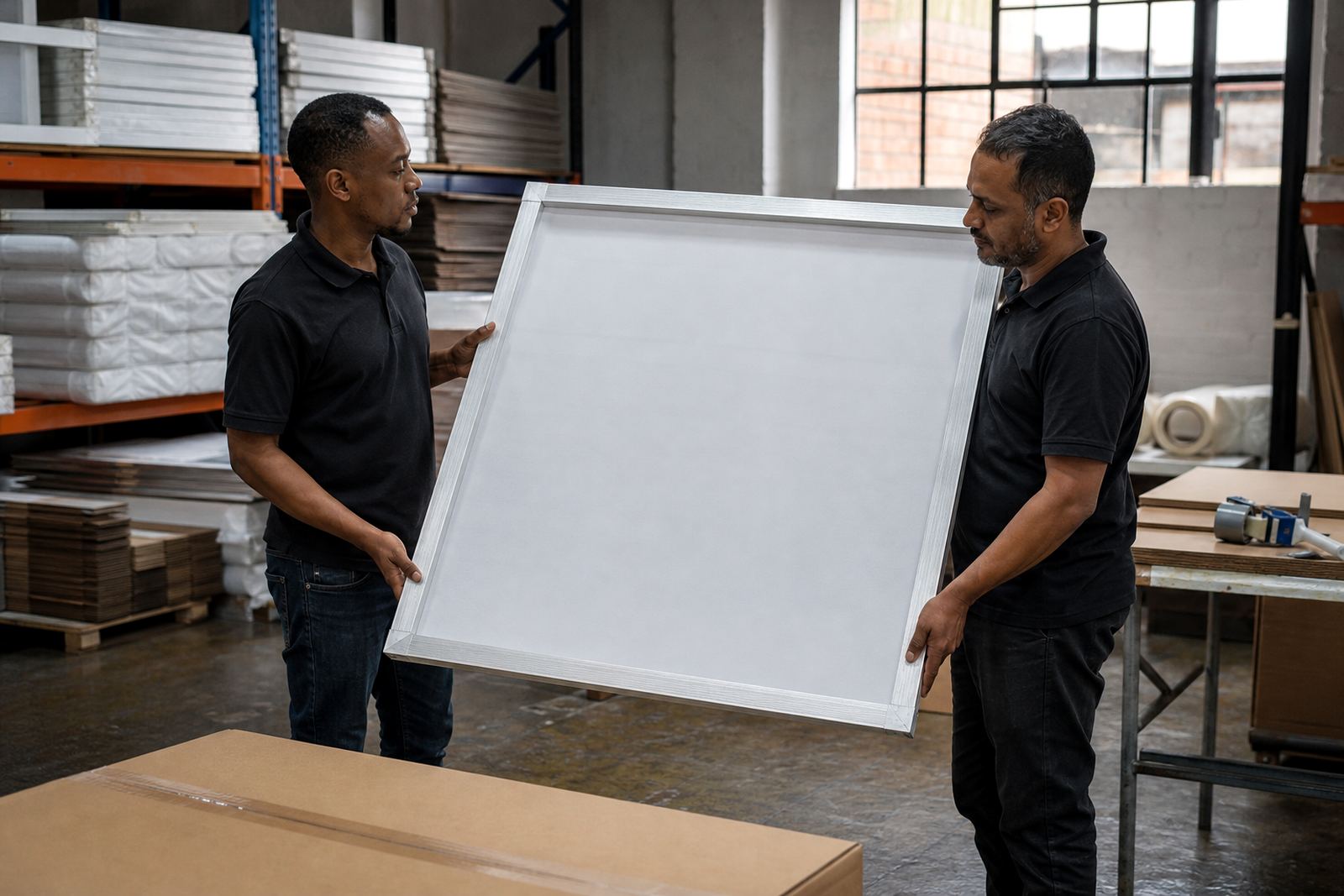
If you are matching a screen to an existing setup, it helps to check the inside opening, outside dimensions and the platen or table clearance. A screen that is too large can catch on clamps or make off-contact settings awkward, while one that is too small may waste artwork space.
Where the Large Square Screen Suits Best
This screen suits print shops that produce medium to large graphics and need the layout to stay square and controlled. It is commonly used for t-shirts, hoodies, tote bags, flat stock, display pieces and repeat production where the same image must register neatly across a run. In Johannesburg and Pretoria, it often works well for busy production floors with regular mixed orders. In Durban and Gqeberha, the same screen can be useful where humidity means your mesh and adhesives need proper prep and drying time.
Because the frame format is square, it can also help when you are setting up a design that sits centrally on the substrate. That is useful for front chest prints, back prints, logos with borders, and artwork that needs even margins all round. If your shop handles repeated jobs for schools, events, trade garments or local retail orders, a large square screen can simplify setup and reduce wasted time on re-alignment.
- Balanced for centralised artwork and square layouts
- Useful for repeat garment runs and mixed shop work
- Suitable for larger graphics that still need neat registration
- Practical for inland and coastal print rooms with different drying conditions
For shops in Germiston, Midrand and the East Rand, this format is often a reliable all-rounder. It gives you room for artwork without forcing your operators to wrestle with a frame that feels too long or too narrow. That matters on busy days when load-shedding, packing pressure and turnaround times are all in the mix.
Installation, Press Setup and Power Needs
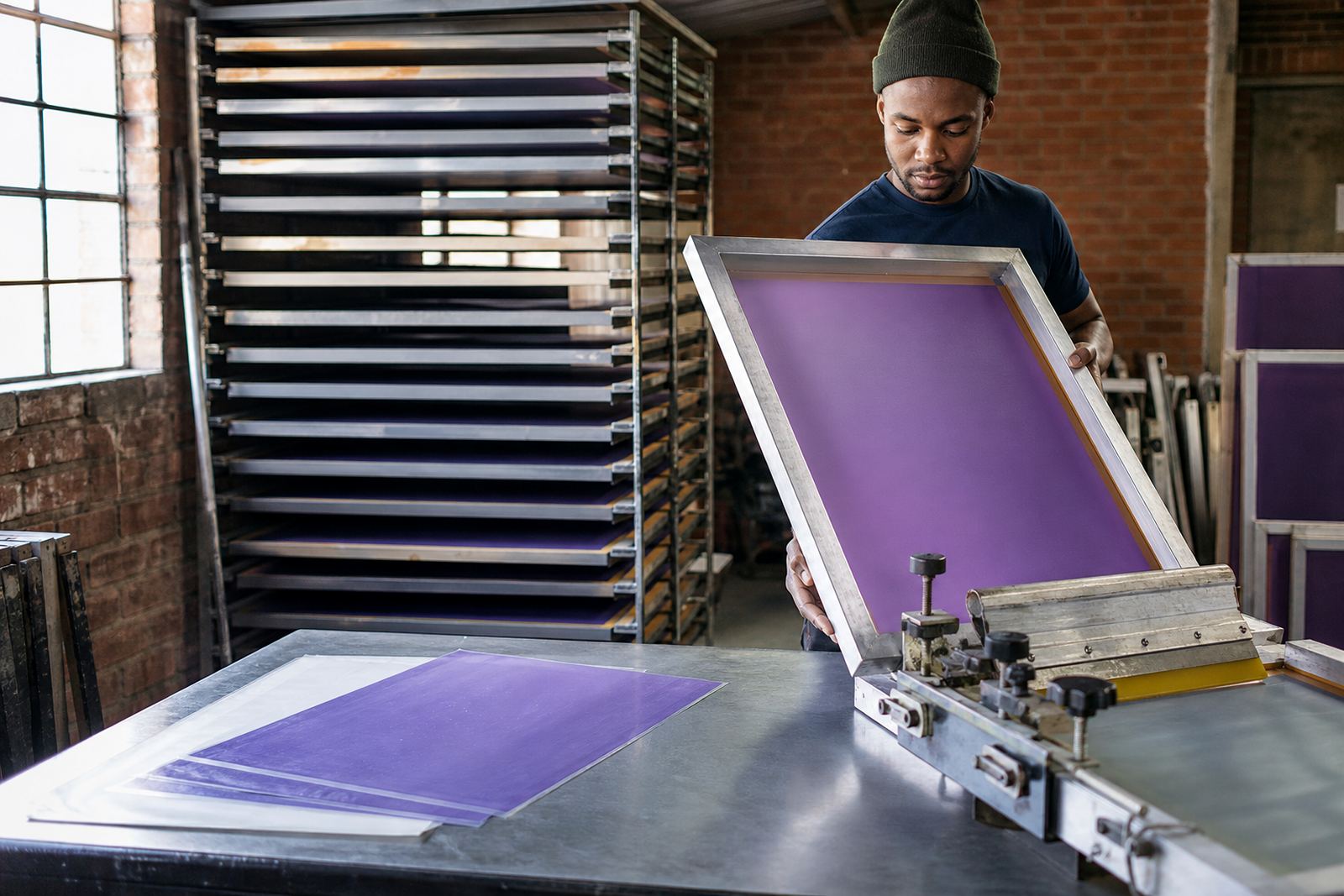
A large square screen does not need power or gas to install, but it does need correct fitting on the press or print table. The mesh should sit evenly, the frame should clamp securely and the off-contact should be set according to the substrate and ink system. If the frame is not seated properly, you can get bounce, blurred edges or uneven deposit across the print area.
For larger screens, good setup practice matters. Check that the frame clears the platen or table on all sides, that the squeegee stroke is comfortable and that the artwork sits where the operator can work without strain. On manual presses, a square screen can be easier to manage than a stretched long frame because the movement feels more even. On production lines, the main concern is clearance and repeatability.
There are no gas requirements for the screen itself. Your actual curing or drying setup depends on the inks and finishing method used in the shop, whether that is air drying, flash curing or another standard process. If power supply is an issue during load-shedding, many shops plan their screen prep and printing sequence so screens are ready when the press is active. That makes the frame format easier to use with less downtime.
Care, Cleaning and Re-Tensioning
A large square screen lasts longer when you keep the mesh clean, the frame free of old adhesive and the corners checked for wear. After printing, wash out the stencil properly so dried ink does not build up in the mesh. If residue stays in the screen too long, it can block open areas and change the way the next job prints. In humid coastal conditions, proper drying helps prevent staining and mesh damage.
For routine care, avoid harsh scraping on the mesh and store screens flat or in a rack where they will not twist. A twisted frame can affect tension and registration. If you use reclaim chemicals, make sure the mesh is rinsed well and allowed to dry fully before the next coat or exposure. That small step can save a lot of trouble later.
- Wash out ink and emulsion soon after the run
- Keep the frame square and store it where it will not warp
- Check tension if print sharpness starts to drop
- Inspect corners, mesh bonds and frame edges during routine service
If a screen starts to lose tension, re-stretching may bring it back into use, provided the frame is still sound. MeshMaster also supports frame re-stretching, tension checking and frame clean prep for shops that want to keep their working screens in order without replacing everything at once.
What to Check Before You Order
Before ordering a large square screen, check the job size, the artwork dimensions and the mesh count you need. It also helps to confirm whether the screen will be used for fine detail, solid fills or a mix of both. The wrong mesh count can make the job harder than it needs to be, especially if you are trying to balance ink deposit with clean edges.
You should also confirm the frame size, the opening needed for your artwork and whether you need a new frame, re-stretched frame or custom sizing. If you are changing from another screen format, measure your press space, clamp points and storage area. It is better to sort that out first than to discover the screen is not happy on your table after delivery.
- Artwork size and print area required
- Mesh count suited to the ink and level of detail
- Frame size, clamp clearance and storage space
- Whether you need new stretching, re-stretching or a custom build
If you are unsure, use the enquiry form on our contact page and give the team your artwork size, substrate and intended use. In many cases, a quick check on mesh count and frame sizing prevents waste and keeps the print run moving. MeshMaster supplies from Germiston, Gauteng to print shops in Johannesburg, Pretoria, Durban, Cape Town and Gqeberha, with support for repeat orders and practical setup advice.
Key facts
| Product type | Large square screen for screen printing |
|---|---|
| Frame material | Pre-stretched aluminium |
| Mesh options | Available in coarse, medium and fine mesh counts |
| Use case | Bigger graphics with balanced handling and stable registration |
| Power or gas needs | None for the screen itself |
| Service options | New frame stretching, re-stretching, tension checking and custom sizing |