What the Small Square Screen is made for
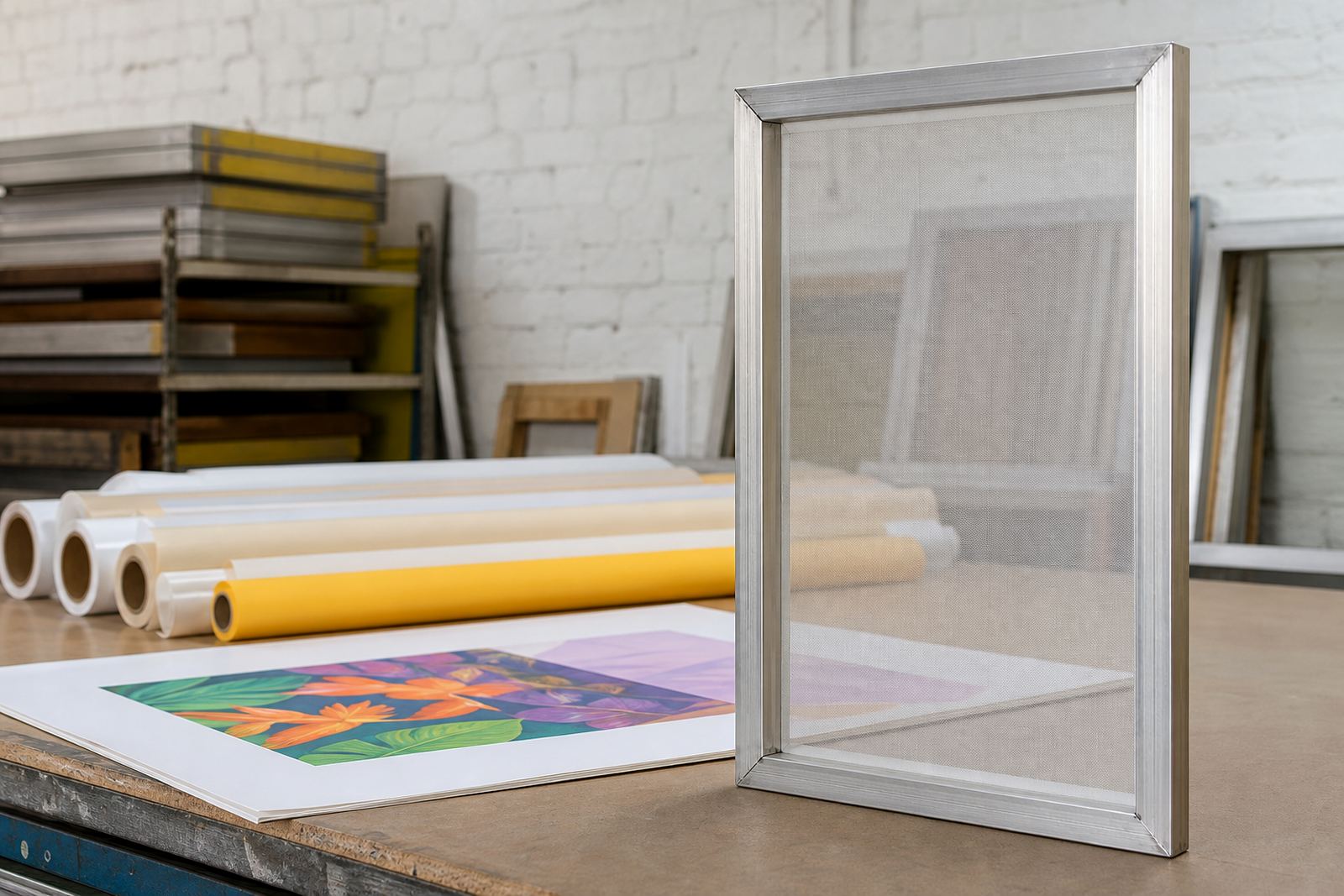
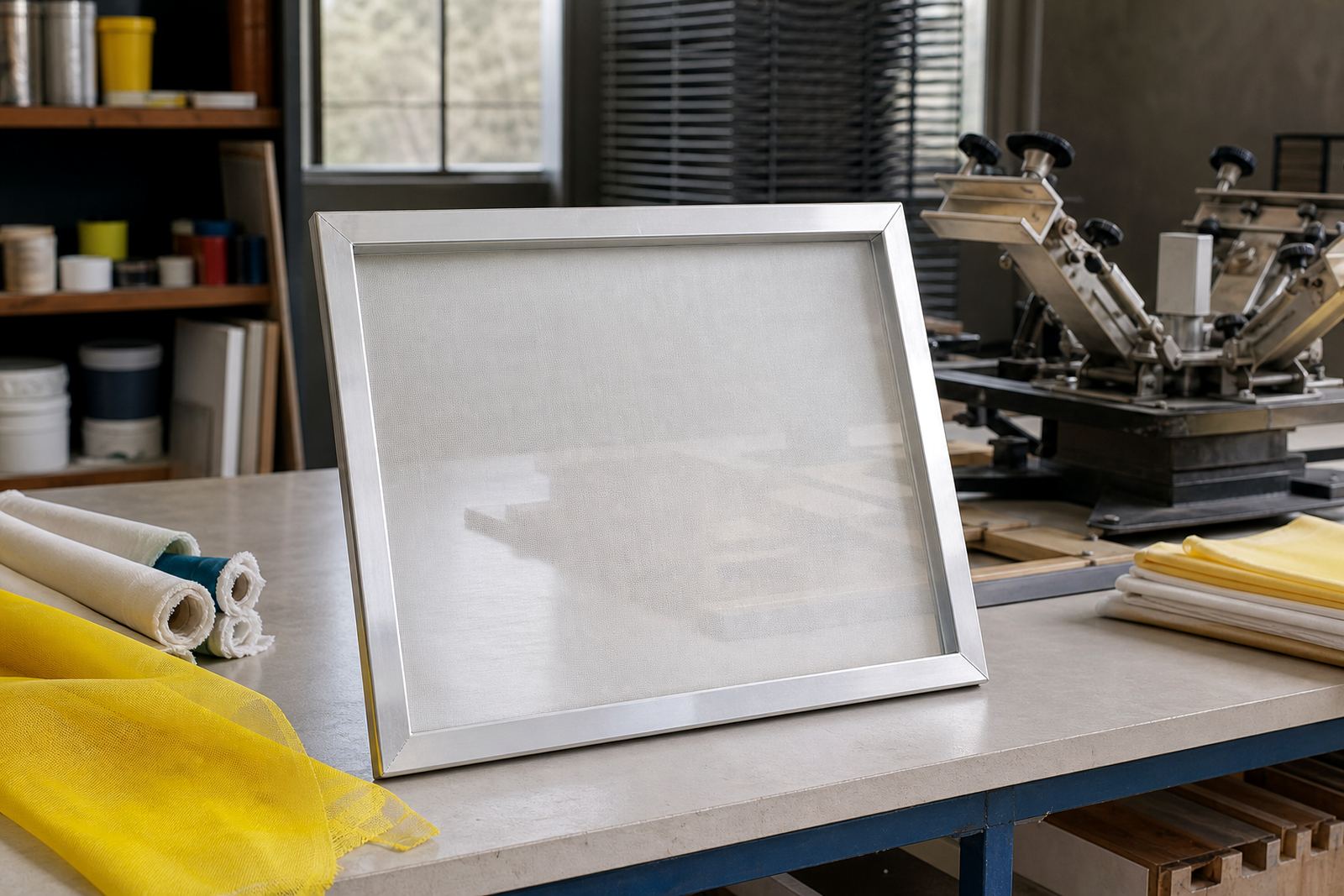
This format is a square screen frame set up for smaller images and controlled print runs. It suits print shops that need a neat, manageable frame for light production, sample approval work or repeat items with the same artwork. Because the frame area is smaller, it is easier to handle on manual tables and simple registration setups.
The square profile also helps when your artwork sits centrally on the screen and you want even pressure across the print area. For smaller garments, tag prints, packaging inserts and craft work, the smaller frame is often more practical than carrying a larger screen around the shop.
Mesh counts and frame options for different inks
Choosing the right mesh count matters more than the frame size alone. Lower mesh counts are usually used for heavier inks and stronger deposit, while finer counts suit detailed work and thinner ink systems. The correct choice depends on the artwork, the substrate and how much ink needs to pass through the open area.
- Lower mesh counts: useful for thicker inks, underbases and bolder prints
- Medium mesh counts: common for general textile and light graphic work
- Higher mesh counts: better for fine detail and smoother ink control
- Pre-stretched aluminium frames: preferred for stable tension and repeated use
For shops in humid coastal areas like Durban or Gqeberha, aluminium frames are a sensible choice because they handle moisture better than plain wood and stay more stable through changing weather.
Where this format fits best on the shop floor
The Small Square Screen suits compact production stations, small manual presses and side jobs that must move quickly through the print room. It is useful when you are running short batches, samples, repairs or artwork that needs a smaller screen opening for control.
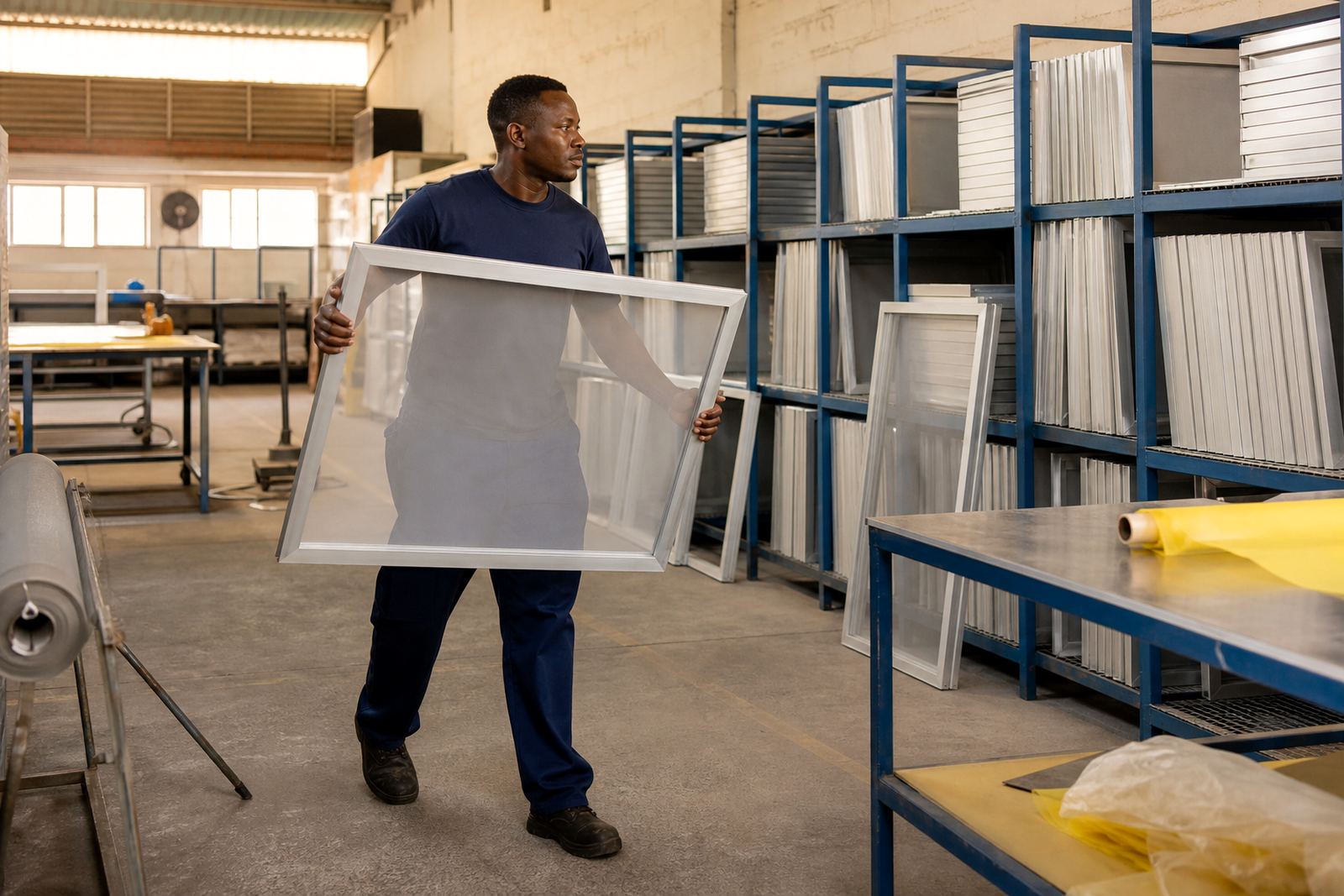
This format also works well where floor space is limited, or where screens need to be stacked, carried and cleaned by one person. In busy shops across Johannesburg, Pretoria and Germiston, smaller screens are often used for repeat jobs that must slot in between larger orders.
- Sample approval prints
- Small logo placements
- Labels and insert work
- Short production runs
- Compact artwork on fabric, boards or packaging
Installation, setup and power needs
This product does not need mains power or gas. It is a manual screen-printing item, so the main requirement is a clean print area, a stable frame support and the correct mesh tension for your workflow. If you are using it with a flash unit or curing equipment, those items may need separate power planning, especially where load-shedding affects production.
For best results, keep the frame aligned square to the print table and check that the print stroke clears the image area evenly. If the screen is being fitted into an existing system, measure the inner opening and clamp points carefully before placing the order.
Care, cleaning and tension checks
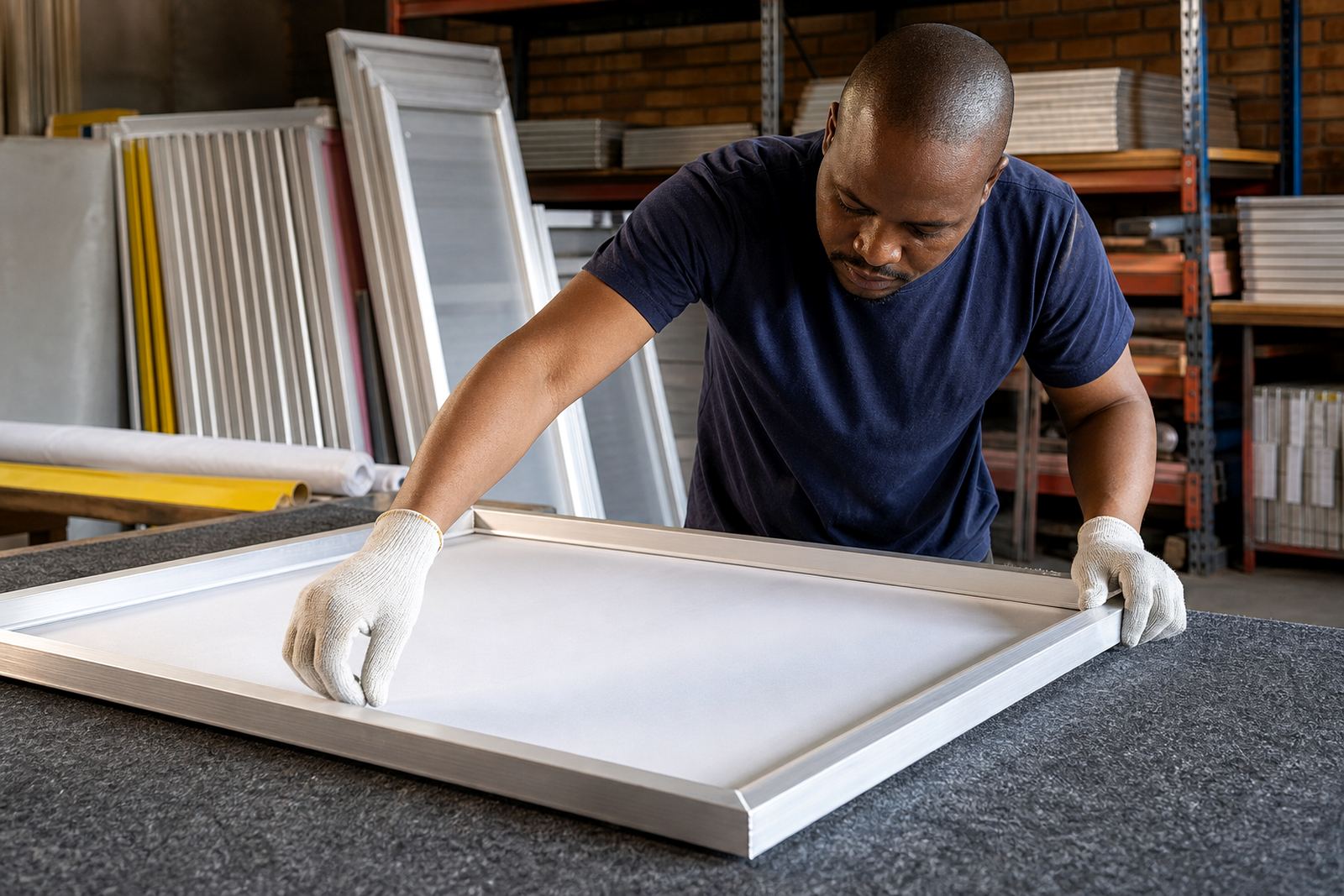
Good care starts with washing ink off soon after use and avoiding hard scrubbing on the mesh. Allow the screen to dry properly before storage, and keep it away from sharp edges that can damage the mesh surface. On aluminium frames, check the corners and bonding areas now and then, especially if the screen is used daily.
Tension should be checked when the screen is first fitted and again if prints start to lose detail or ink release becomes uneven. A screen that has dropped tension can cause blurred edges, poor registration or inconsistent deposit.
- Rinse ink off before it sets
- Dry screens flat or upright in a clean area
- Avoid stacking heavy items on the frame
- Inspect mesh for pinholes, tears and loose edges
- Re-stretch if the screen no longer holds even tension
What to check before placing an order
To match the right Small Square Screen to your job, check the artwork size, the type of ink, the substrate and the number of prints you expect to run. If the artwork is fine and detailed, a tighter mesh may be needed. If the ink is heavy or the print needs more deposit, a lower mesh count may suit better.
It also helps to confirm the frame opening, outer dimensions and whether you need a new screen or a re-stretched frame. If you are supplying repeat work to different branches or printers, keep the same mesh count and frame size for consistency across batches.
- Artwork dimensions
- Ink type and opacity needs
- Substrate surface and thickness
- Frame size and clamp fit
- Preferred mesh count
- Whether you need new stretching or re-stretching
Key facts
| Product type | Ready-to-use square screen frame |
|---|---|
| Frame material | Pre-stretched aluminium |
| Mesh options | Available in multiple screen-printing mesh counts |
| Use case | Compact artwork, samples and short production runs |
| Power or gas needs | None required for the screen itself |
| Service options | New frame stretching, re-stretching and tension checking |