What a signage screen is used for
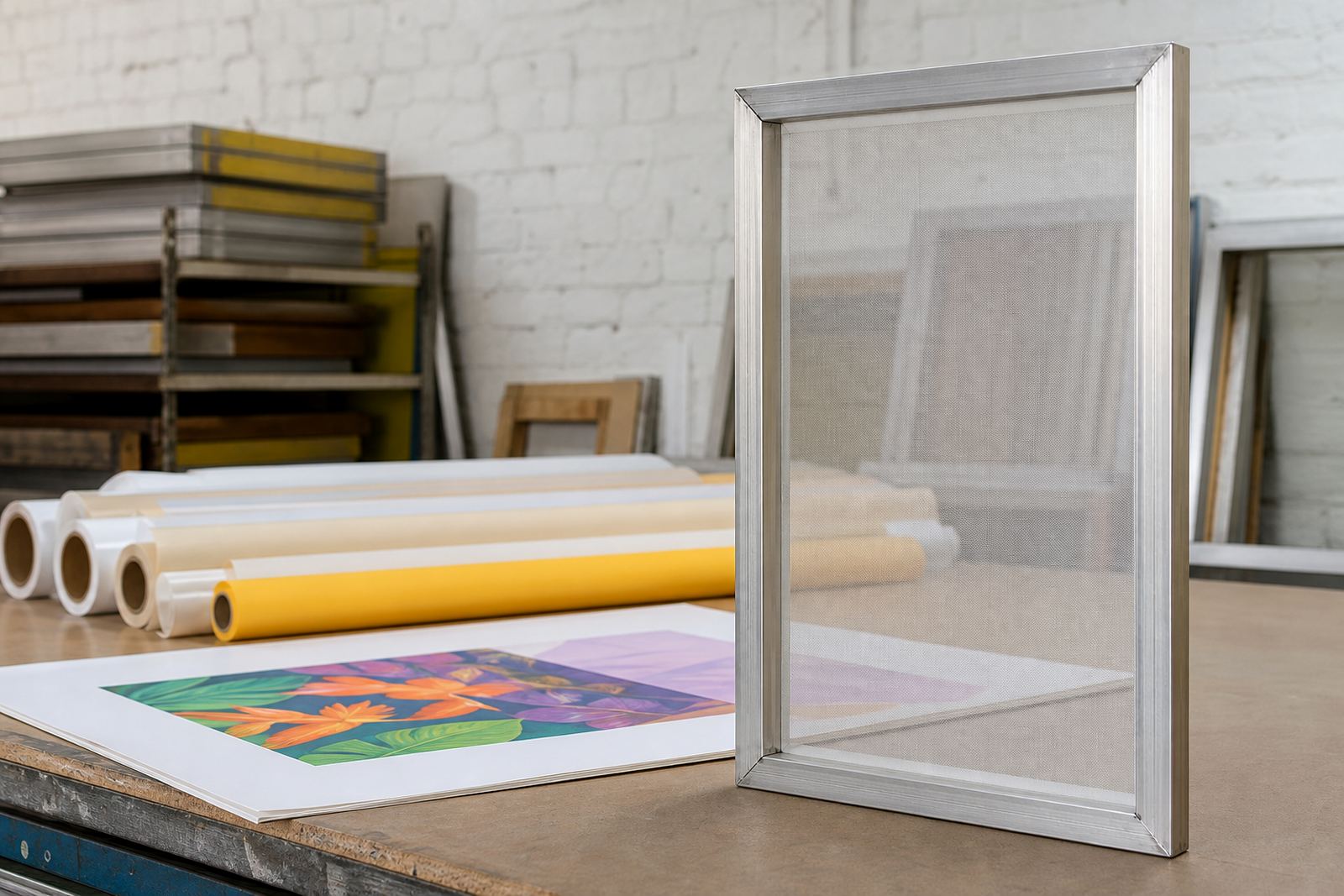
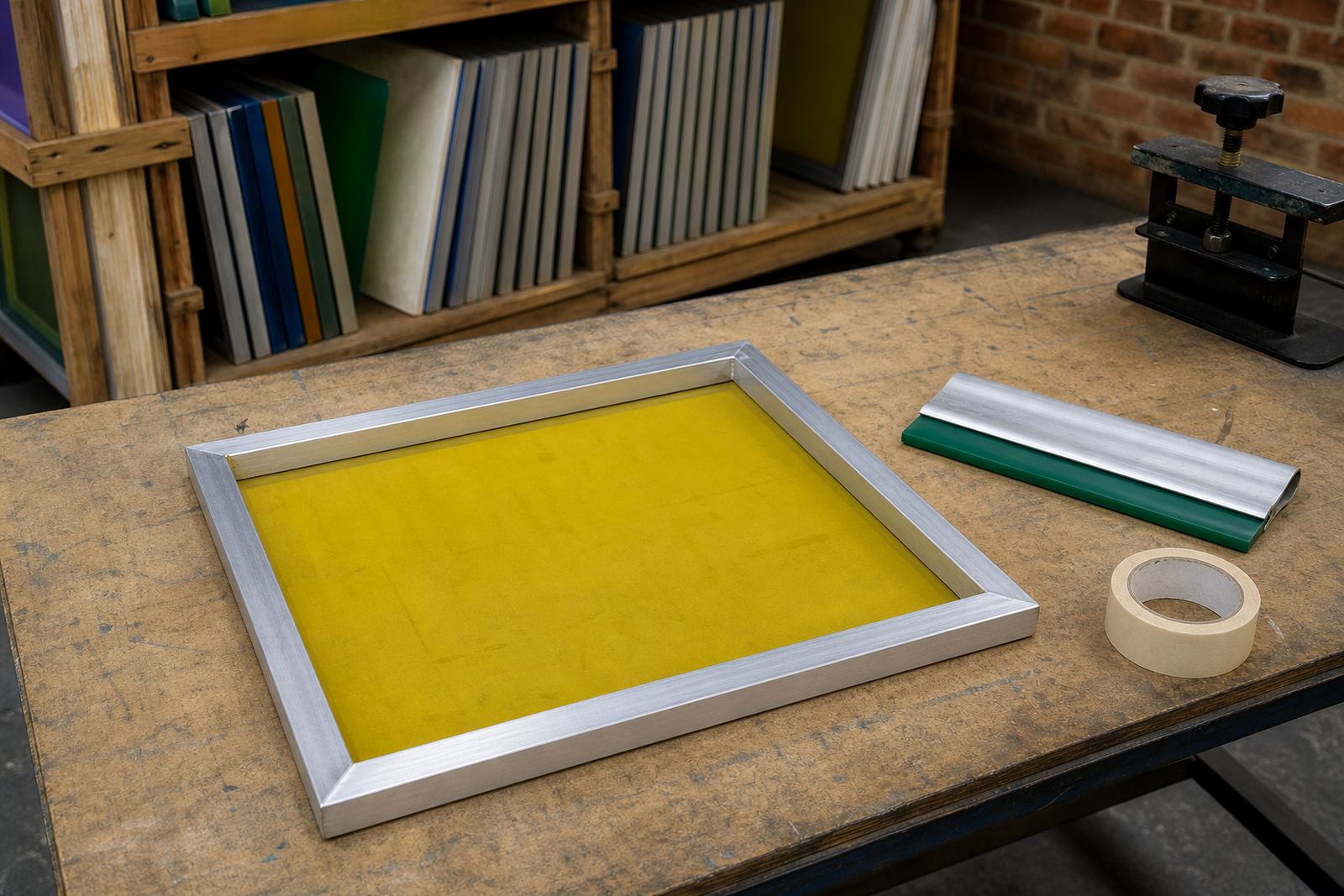
A signage screen is built for print jobs where lettering, blocks of colour and repeated artwork must stay sharp across every run. In practice, that means a screen that holds tension well, releases ink evenly and keeps the image stable on substrates such as boards, panels, PVC sheets and other signage stock.
For shops handling repeat orders, the value is in consistency. When the mesh count, frame size and tension match the artwork, setup takes less time and registration is easier to hold. That matters on production days when the same design has to move through drying, curing and finishing without rework.
- Suitable for single colour signage runs and layered artwork
- Useful where clean text, fine lines and solid fills are needed
- Helps maintain even print pressure across repeated jobs
Mesh counts and frame options for signage work
Signage work usually calls for mesh counts that suit the detail level and ink deposit of the job. Lower mesh counts allow more ink through and are often chosen for bold graphics, spot colours and heavier deposit work. Higher mesh counts give finer control for text, line work and detail where a cleaner edge is needed. The right choice depends on the artwork, ink type and the look required on the final sign.
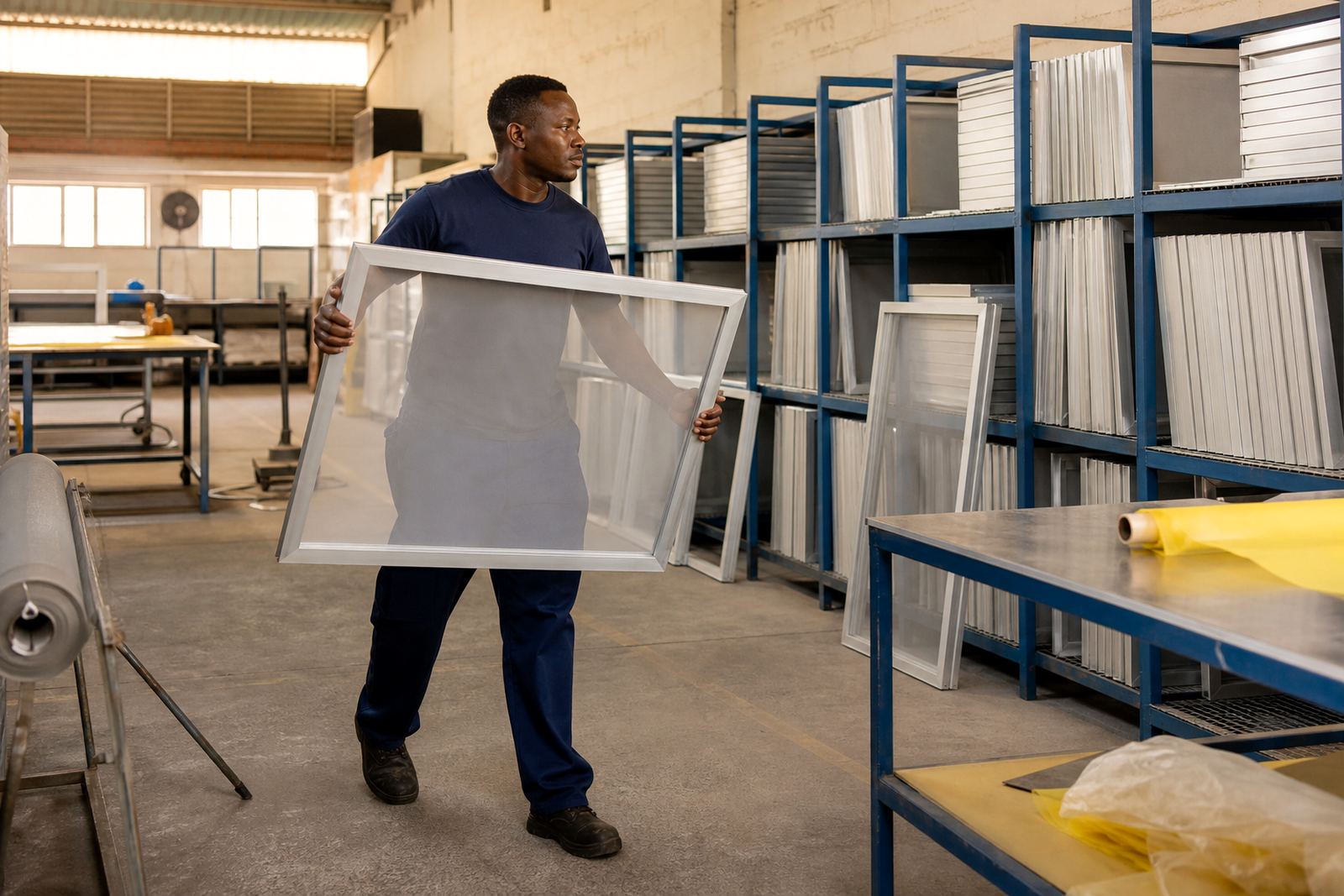
MeshMaster supplies pre-stretched aluminium frames in practical sizes for everyday print shop use. Frames can be supplied for new builds, replacement screens or re-stretching jobs when an existing frame is still sound. Aluminium is a good fit for South African conditions because it stays light to handle and does not react the same way as timber in coastal humidity or warm storage areas.
- Common mesh choices include medium to high mesh counts for signage detail
- Frames can be sized to suit recurring job formats and workshop layouts
- Custom frame sizing helps when artwork or press setup needs a specific footprint
Where this screen suits best
This screen is suited to print shops doing signage for retail, industrial, events and short-run display work. It is also useful for businesses that need a dependable screen for repeat production, whether the job is small format or built around larger panels. A screen that holds tension properly supports better alignment and fewer surprises on press.
In busy centres such as Johannesburg, Pretoria, Durban, Cape Town and Gqeberha, signage work often moves quickly from approval to print. That places pressure on the screen itself. A well-matched frame and mesh combination helps keep the job moving, especially when a shop is balancing repeat orders with urgent one-off requests.
- Shopfront boards and display signage
- Indoor and outdoor promotional panels
- Short-run production where repeatability matters
- Artwork with solid fills, text and clean outlines
Installation, setup and what the screen needs
A signage screen does not need power or gas. It is a manual production item that relies on correct stretching, clean degreasing and proper setup before the print run starts. The main requirement is a stable frame, a suitable mesh count and enough working space to align the screen on the press or table. If the shop is using batch prep, the screen should be checked before it goes into the queue.
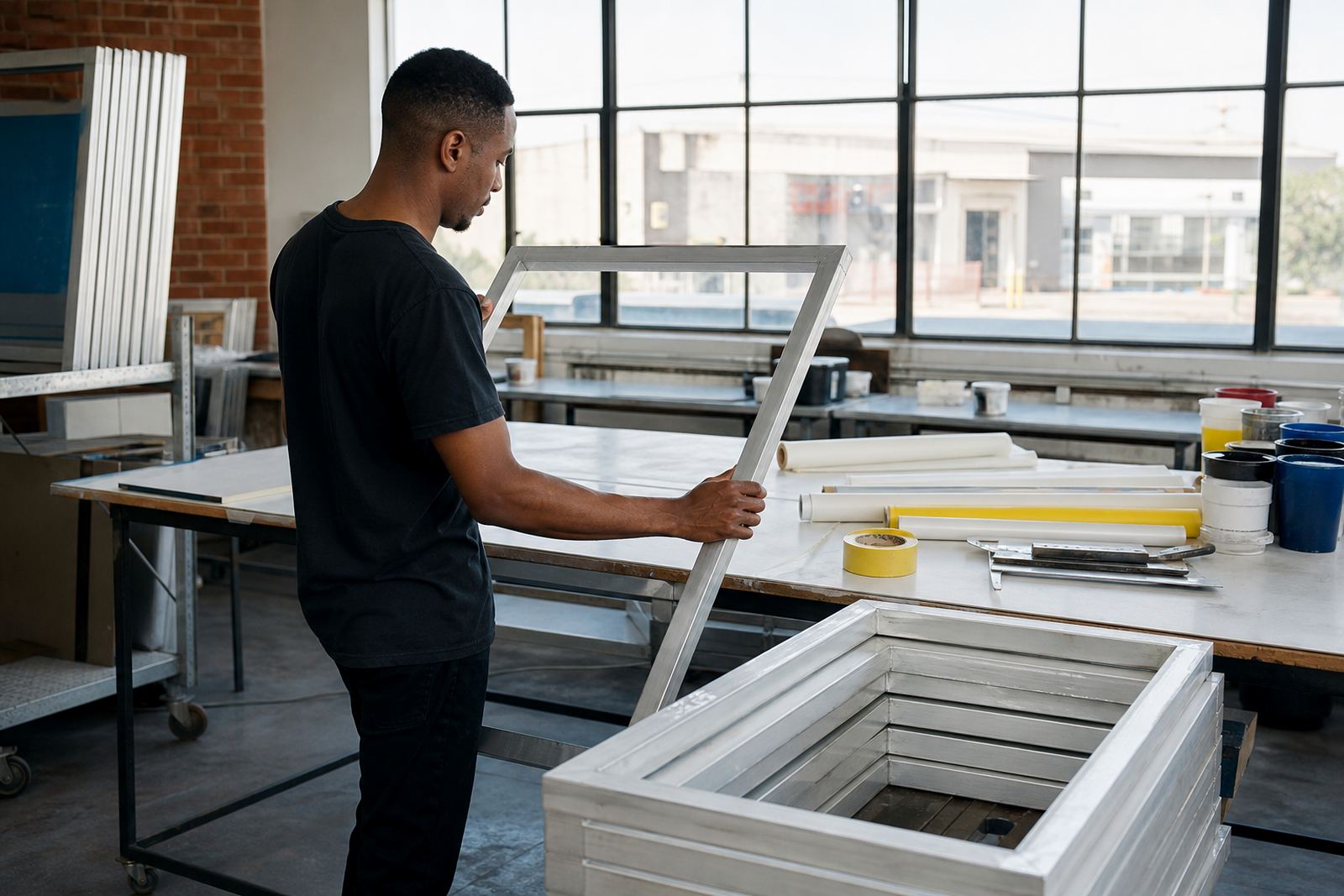
For new installations, the important steps are simple: confirm the mesh count, check the frame size against the artwork and ensure the screen sits square. If the frame is being re-stretched, the old mesh should be removed cleanly and the frame inspected for twist, damage or loose joints before stretching begins.
- No electrical, gas or utility connection is required
- Needs clean handling space and a level setup area
- Works best when the artwork size and frame size are confirmed first
Care, cleaning and re-use
Screen life depends on how the mesh is handled after each job. Ink should be washed out fully, emulsion removed properly and the frame dried before storage. If the screen is left wet or stored under strain, tension can drift and print quality starts to fall away. In coastal areas, it is worth keeping screens off damp floors and away from salty air where possible.
For repeat use, check the mesh for pinholes, scarring and loss of tension. A frame that still has good structure can often be re-stretched instead of replaced. That is especially practical for shops that run the same signage sizes often and want to keep a consistent screen set without unnecessary replacement.
- Rinse ink out soon after use
- Dry screens fully before stacking or storage
- Inspect for mesh wear, frame twist and loose corners
- Re-stretch when the frame is still serviceable
What to check when ordering a signage screen
Before placing an order, confirm the artwork size, the press size and the level of detail in the design. If the job uses fine type or small line work, the mesh count should support that detail. If it is a bold signage job with heavier coverage, a different mesh choice may be better. The frame should also suit the screen area and your handling method, especially if the workshop runs multiple jobs at once.
It helps to note whether you need new frame stretching, re-stretching or just a batch of matching screens. For shops with regular production, mesh count matching and tension checking can save time later on the press. If you are unsure, send through the job details via the enquiry form and our team can help match the screen to the work.
- Artwork size and final print area
- Level of detail, line thickness and ink deposit needed
- Whether you need a new screen or re-stretching
- Frame size, batch quantity and repeat order needs
Supplying signage screens from Germiston
MeshMaster is based in Germiston, Gauteng and supplies screen-printing mesh and pre-stretched aluminium frames to print shops across South Africa. Our team handles new frame stretching, frame re-stretching, mesh count matching, tension checking and screen setup advice for signage work that needs steady output and practical handling.
Whether you are running jobs in Johannesburg, Pretoria, Durban, Cape Town, Gqeberha or the East Rand, the aim is the same: a screen that fits the work and stays dependable through regular use. For repeat signage production, that kind of consistency matters more than anything else.
Key facts
| Product type | Signage screen for screen-printing work |
|---|---|
| Frame material | Pre-stretched aluminium frame |
| Mesh options | Medium to high mesh counts for signage detail and coverage |
| Common use | Text, solid colour areas, line work and repeat signage runs |
| Power or gas | Not required |
| Service options | New frame stretching, re-stretching, tension checking and mesh count matching |