What the Shop Essentials Set includes
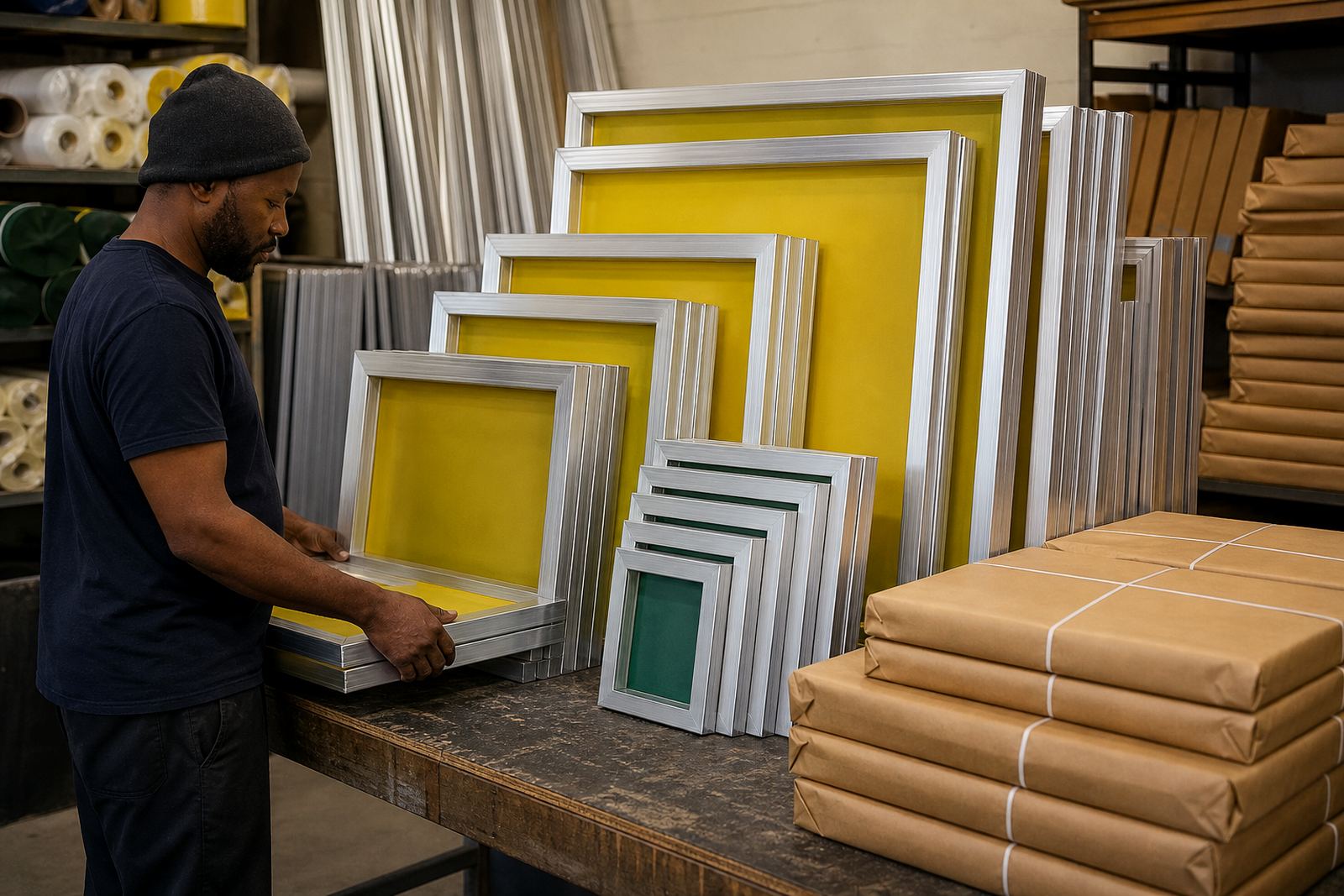
This set brings together the screen items most print shops reach for during a normal week of production. The bundle is built around pre-stretched aluminium frames with mesh selected for common garment, poster and general purpose printing jobs. It is useful when you want matched screen formats on hand, rather than building every screen from scratch for each order.
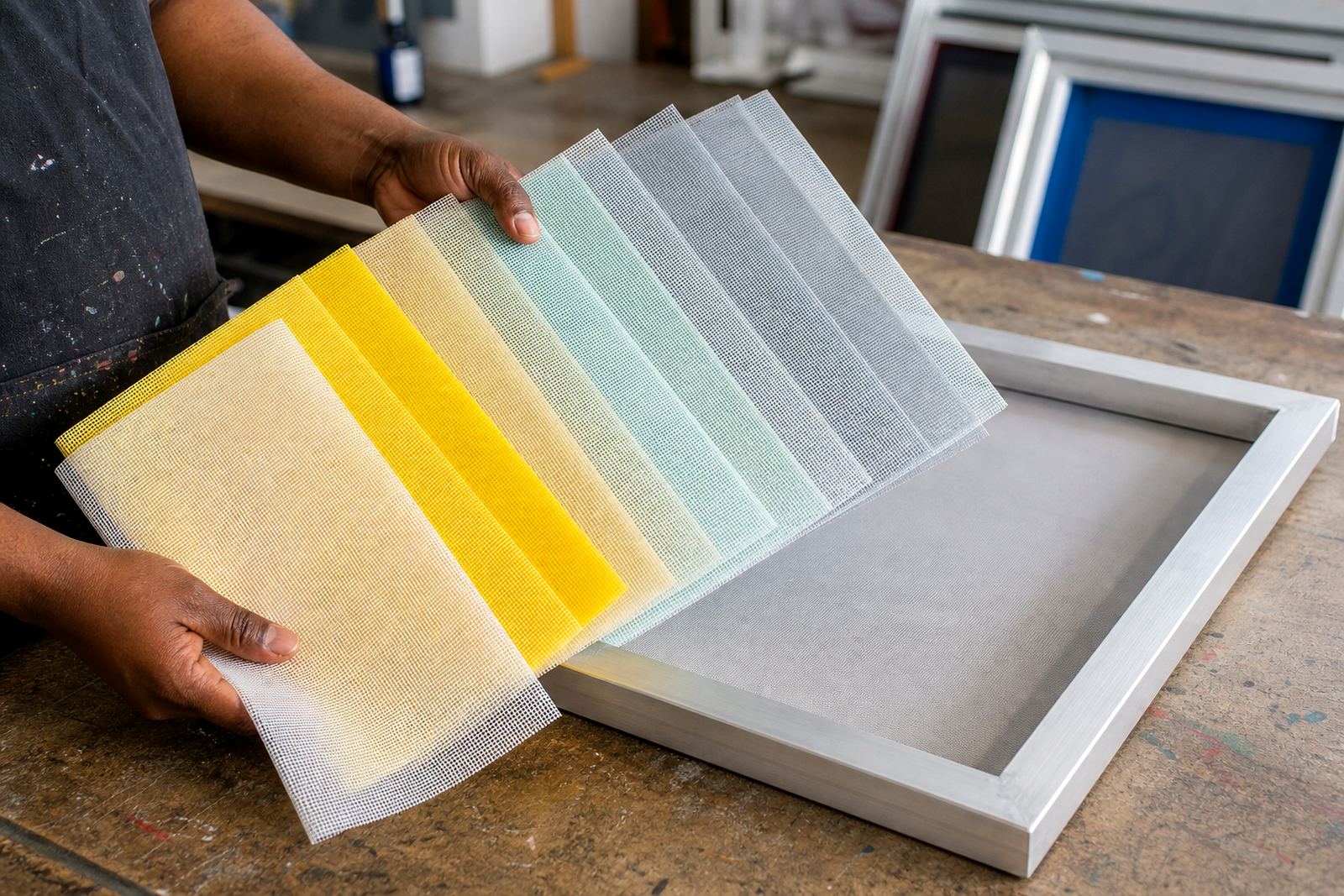
Depending on the job, the set can be supplied with finer mesh for detail work, mid-range mesh for general textile printing, and coarser mesh for heavier ink deposit. That makes it easier to keep a small stock of screens ready for repeat work, sample jobs and fast turnaround printing.
- Pre-stretched aluminium screen frames
- Screen-printing mesh in common counts
- Options for fine detail, general print and heavier deposit work
- Suitable for repeat jobs and daily production
Mesh counts and where each one suits
Screen mesh count affects how much ink passes through the screen and how much detail the stencil will hold. Lower mesh counts allow more ink through and are often chosen for bold graphics, white inks and prints that need a heavier deposit. Higher mesh counts hold finer detail and are often used where clean lines, halftones or thinner ink layers are needed.
For many South African print shops, the practical approach is to keep a mix of counts ready for the type of work that comes in most often. On cotton garments, a mid-range mesh is usually a sensible everyday choice. For finer artwork, labels or lighter ink deposits, a tighter mesh is better. The right choice also depends on ink body, artwork detail and the finish your customer expects.
- Lower counts for heavier ink deposit and bold artwork
- Mid-range counts for daily garment printing
- Higher counts for fine detail and cleaner edges
- Mesh choice should match ink type and artwork detail
Frame sizes, tension and stretching quality
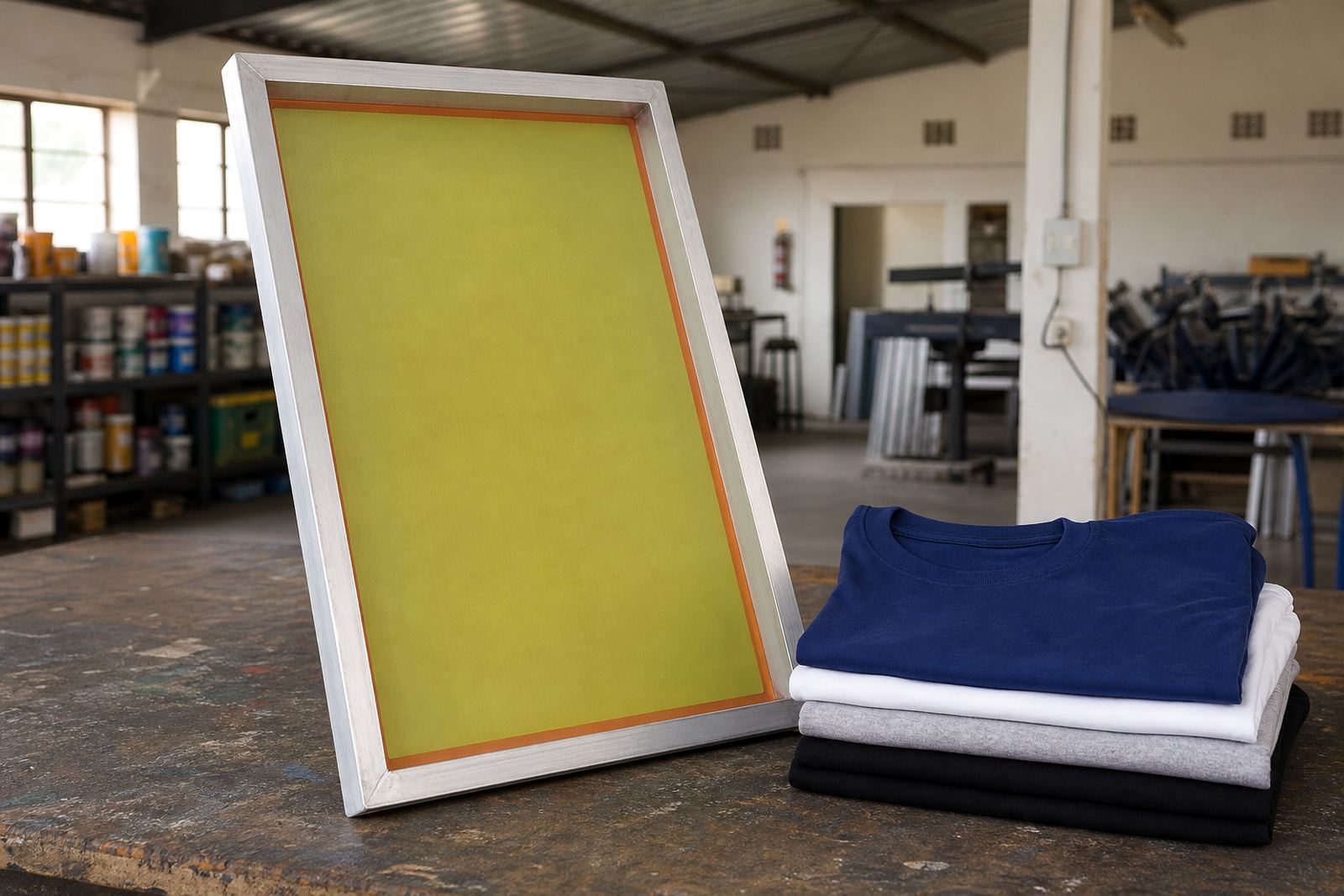
The Shop Essentials Set is centred on pre-stretched aluminium frames so the screen is ready for coating, exposing and printing with less prep time. Aluminium frames are widely used because they stay lighter than many alternatives and hold their shape well when properly handled. Frame size can be matched to the artwork, the press area and the pallet size you use in your workshop.
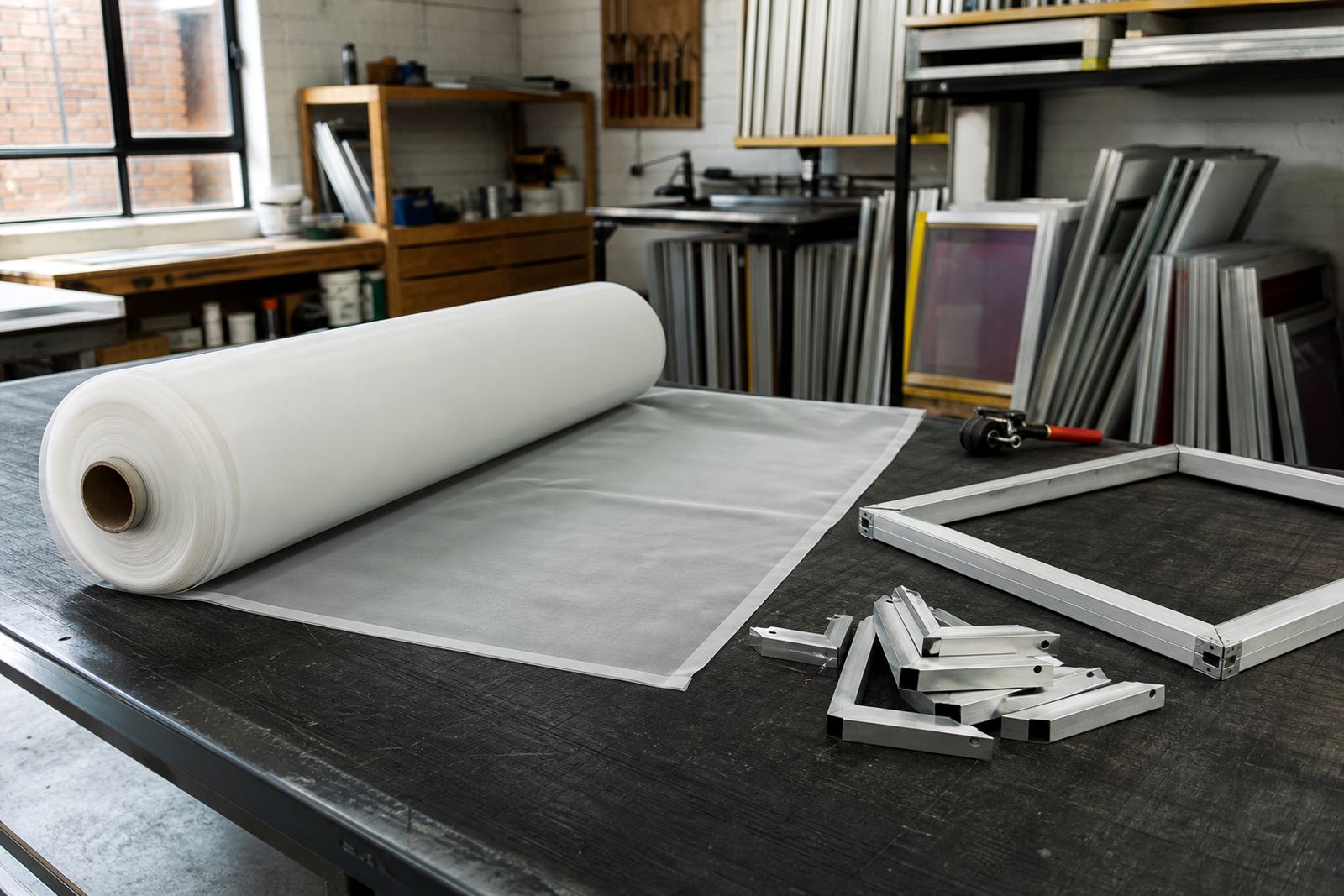
Good tension is important. A properly stretched screen gives cleaner detail, more even ink release and better repeatability from one print to the next. If the tension is uneven the screen may sag or print inconsistently, especially on longer runs. That is why frame stretching, re-stretching and tension checking are part of the service work that supports this set.
- Aluminium frames for lighter handling and stable use
- Custom frame sizing available for specific artwork or press needs
- Pre-stretched screens reduce setup time
- Tension consistency matters for clean repeat prints
Where this set works best in South Africa
This bundle suits print shops in Germiston, Johannesburg, Pretoria, Durban, Cape Town and Gqeberha that need practical screens for everyday production. It is useful for garment printers, small batch businesses, promotional work and shops that run repeat orders across the month. In coastal areas like Durban and Gqeberha, correct storage and drying matter because humidity can affect screen handling and coating times.
The set is also handy for shops working around load-shedding schedules. Having screens prepared in advance means less lost time when power is off and the press still needs to keep moving once electricity returns. For municipal or shared workshop spaces, ready frames also help keep workflow cleaner and more organised when space is tight.
- Daily production in busy print shops
- Repeat orders and short turnaround work
- Coastal workshops where humidity needs managing
- Operations affected by load-shedding or limited prep time
Installation, setup and power needs
The Shop Essentials Set does not need special power or gas requirements for normal use. Once the frame is stretched and the mesh is prepared, the screen can be coated, dried and exposed using the equipment already common in most screen-printing workshops. The main requirement is proper handling during setup so the frame stays square and the mesh remains evenly tensioned.
If you are fitting the screen into an existing workflow, check that the frame size suits your print table, exposure area and squeegee stroke. For new set-ups, it helps to confirm whether your shop uses manual printing, a semi-automatic press or a manual bench arrangement. A good fit from the start reduces waste and saves time during production.
- No gas connection required
- No special power draw for the screen itself
- Check frame fit against your press and exposure area
- Allow for normal coating, drying and exposure steps
Care, cleaning and re-use
With proper care, these screens can be reused many times. After printing, remove ink promptly and wash the mesh thoroughly so residue does not harden in the weave. Keep frames dry and stored flat or in a safe rack to avoid knocks, twisting or mesh damage. In humid conditions, make sure screens are fully dry before they are stacked or packed away.
If a screen begins to lose tension or shows signs of stretching, it can often be recovered through re-stretching rather than replaced. Regular inspection helps spot weak corners, frame movement or mesh damage early. Shops that use the same artwork often benefit from a repeat order service because it keeps screen sizes and mesh counts consistent from one run to the next.
- Clean ink off soon after printing
- Dry screens fully before storage
- Keep frames protected from knocks and bending
- Use tension checks to decide when re-stretching is needed
What to confirm before you order
Before ordering the Shop Essentials Set, check the artwork size, the ink type, the substrate and the number of screens you need in rotation. It also helps to confirm whether you want finer mesh for detail work or a more open mesh for stronger ink deposit. If you are matching existing screens, bring the old mesh count or sample details so the new set can be aligned properly.
You should also confirm frame dimensions, whether the screens are for garments or other items, and if any batch screen prep is needed before dispatch. For shops handling mixed work, ask for mesh count matching and screen setup advice so the set suits the actual jobs you run in Germiston, Midrand and across the larger Gauteng area. It is better to get the screen spec right now than to lose production time later.
- Artwork size and print area
- Ink type and desired ink deposit
- Frame size and quantity needed
- Existing mesh count if you are matching older screens
Key facts
| Product type | Bundle of pre-stretched aluminium frames with selected screen-printing mesh |
|---|---|
| Mesh range | Common fine, mid-range and open mesh counts for general screen-printing work |
| Frame options | Custom frame sizing available for different press and artwork needs |
| Use cases | Garments, promotional work, sample runs and repeat production |
| Setup needs | No gas required; standard coating, drying and exposure workflow |
| Service support | New frame stretching, re-stretching, tension checking and screen setup advice |