
What 54T Mesh Means On Press
54T mesh refers to a mesh count that sits in the middle of the screen-printing range, giving a stronger ink deposit than finer meshes while still holding enough detail for everyday production work. In plain terms, it is often chosen when the print needs good coverage on darker garments, signage or substrates where a heavier laydown is useful.
This count is commonly used with plastisol, water-based and discharge-type workflows, depending on the artwork and the ink system. It is a sensible option for printers who need one mesh that can handle general production without being too open or too restrictive. For many shops in Germiston, Johannesburg and Pretoria, it is a dependable all-round choice for repeat work and standard run sizes.
- Mesh count: 54T
- Typical use: stronger ink laydown with controlled detail
- Best for: general apparel, bold graphics, posters and signage
- Common frame fitment: aluminium frames for manual or automatic setups
Sizes And Frame Options Available
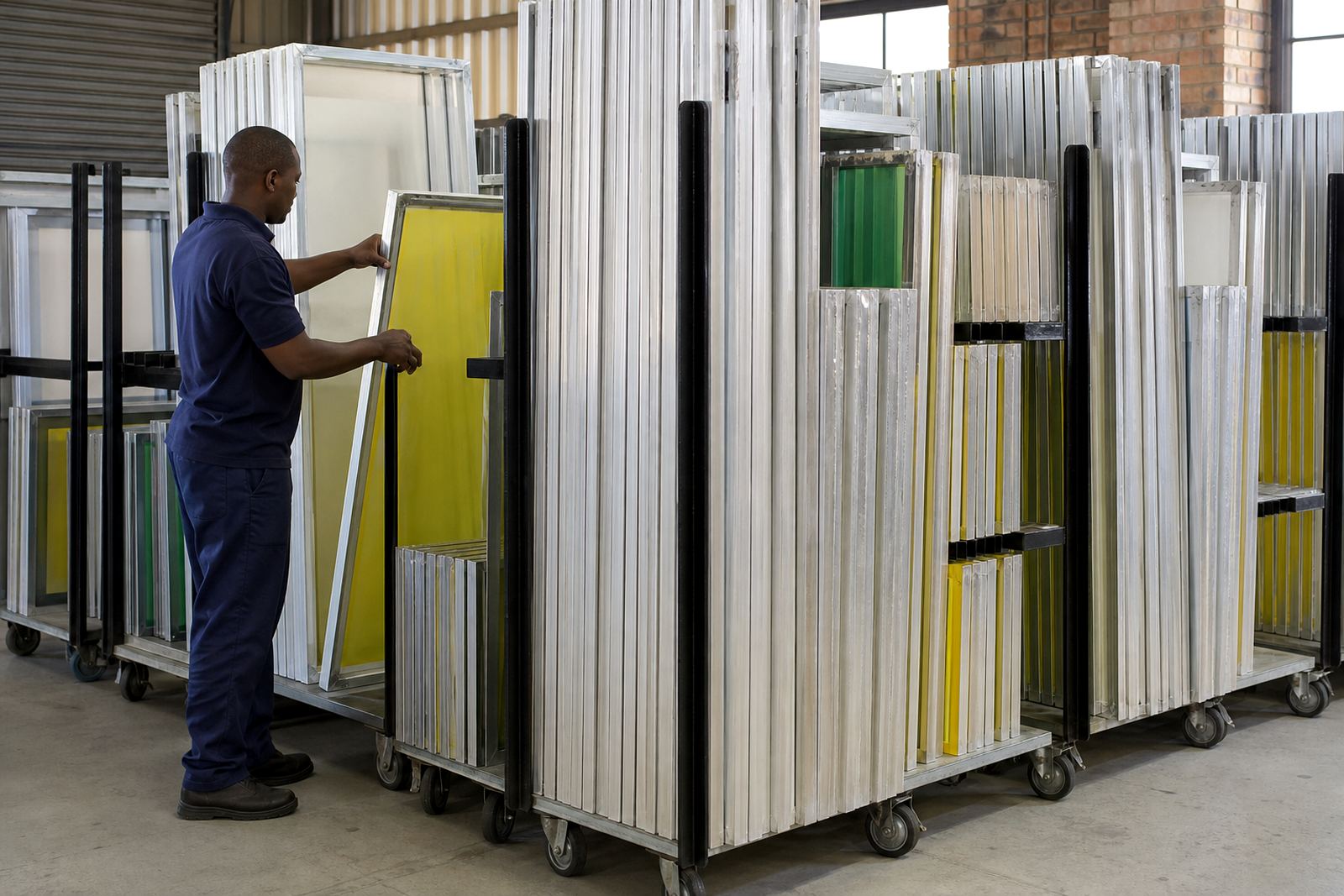
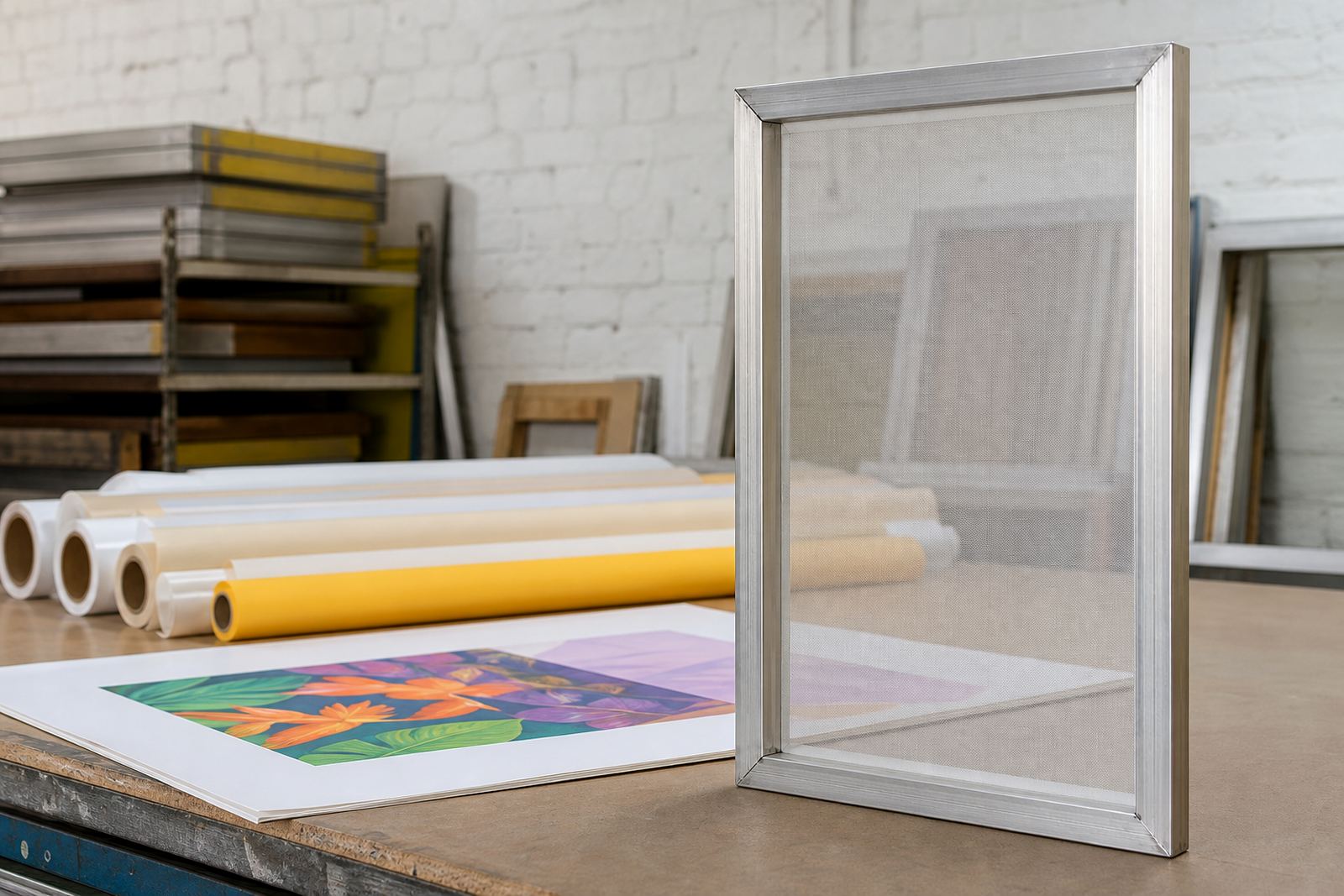
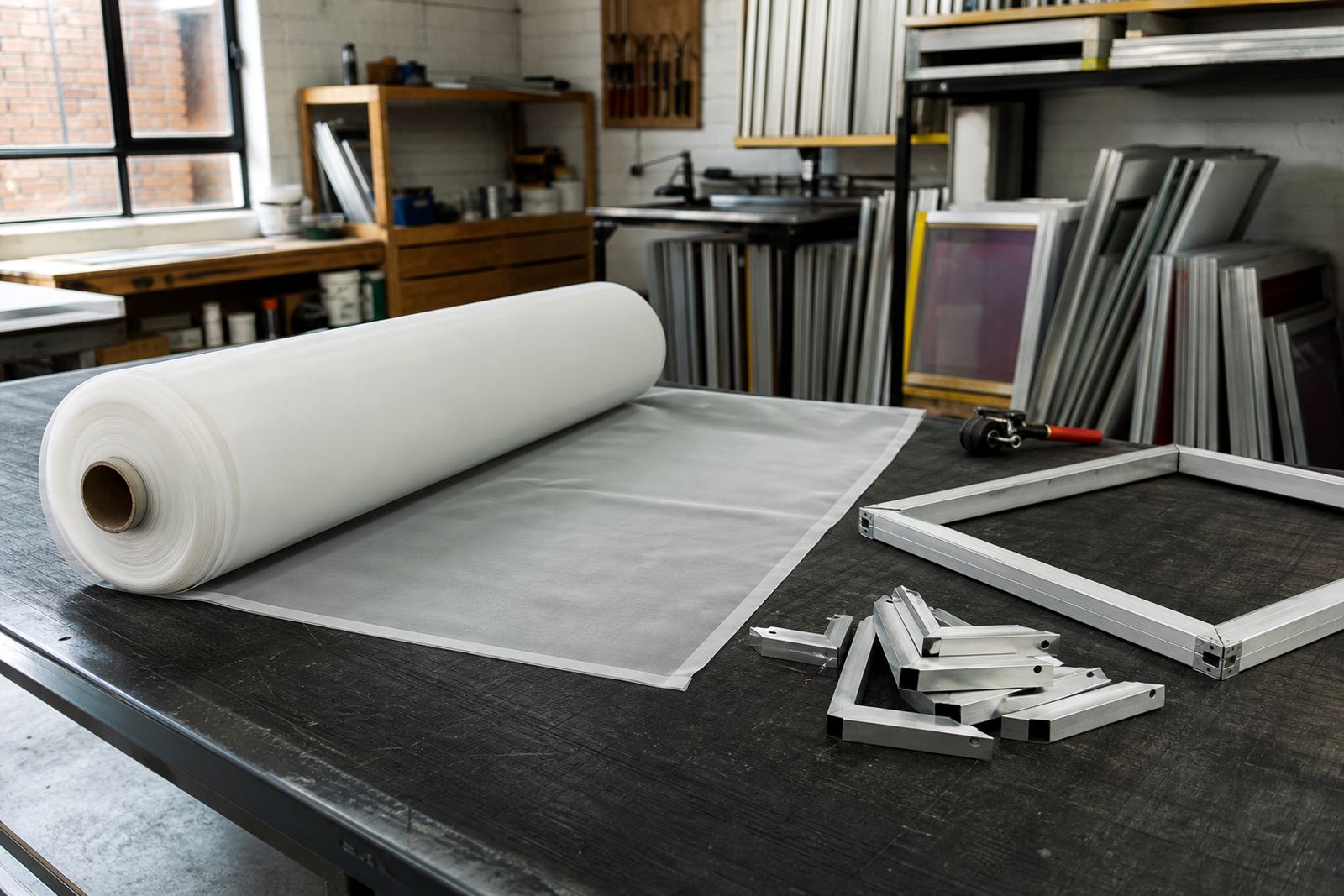
54T mesh is supplied on pre-stretched aluminium frames or as mesh for new stretching, depending on how your shop prefers to work. We also support custom frame sizing, which helps when you need a specific outer size, print area or clamp fit for your equipment. If you are replacing worn screens, frame re-stretching can be the more practical route when the frame is still sound.
For larger production rooms and smaller workshop benches alike, the main thing is to match the frame size to the print job and the press setup. A good fit reduces awkward make-ready time and helps keep the screen square during exposure and printing. If you are running batch screen prep, it is worth keeping a few matched screens on hand for the same artwork and colour sequence.
- New stretched screens for fresh production work
- Frame re-stretching for reusable aluminium frames
- Custom sizing for special presses and unusual artwork sizes
- Batch matching for repeat jobs and multi-screen runs
Where 54T Mesh Performs Well
This mesh count suits work where you need a solid deposit without moving into very open mesh territory. It is often used for bold logos, block lettering and general garments where the image must read clearly and hold its body after washing and handling. It can also work well for certain promotional items and flat substrates, provided the ink and stencil setup are matched properly.
For coastal customers in Durban or Gqeberha, and for inland shops in Gauteng, the practical difference is in control. 54T gives you room to move with the ink, but not so much that fine detail becomes messy. It is not the finest option for tiny halftones, yet for everyday production it is a strong middle ground. When the design has both open areas and medium detail, this count often keeps the job manageable.
- Good for bold artwork and solid fills
- Useful where print opacity matters
- Suitable for general commercial screen printing
- Not the first choice for very fine detail or high line-count halftones
Installation, Stretching And Press Setup
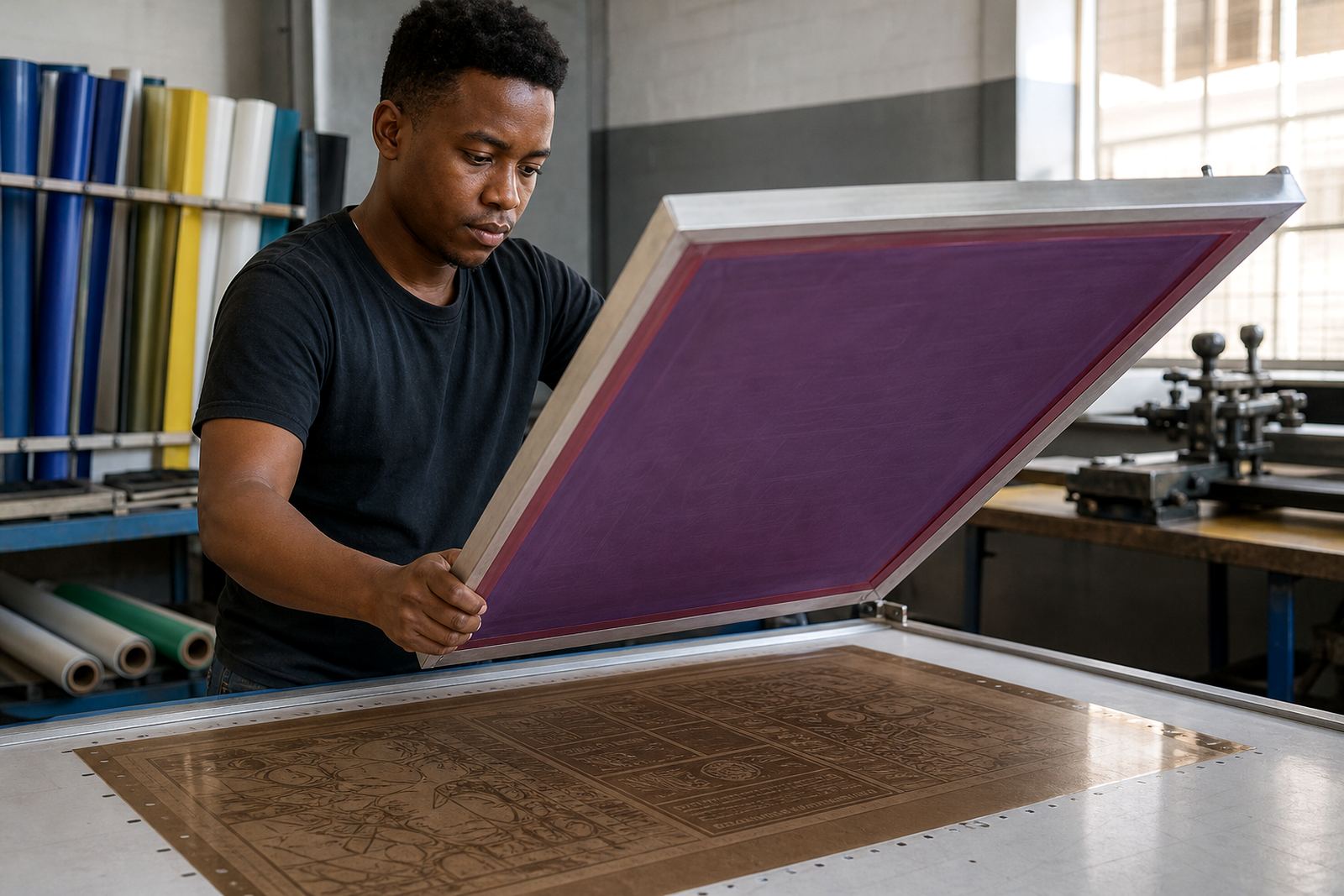
When fitting 54T mesh, correct tension is important. A screen that is stretched evenly across the frame gives better registration, cleaner edges and more repeatable results from one print to the next. Uneven tension can lead to image distortion, poor ink release and unnecessary wear on the stencil. That is why frame stretching and tension checking are part of our normal support work.
Screen setup does not need gas or special power requirements from the mesh itself. What matters is the condition of the frame, the adhesive bond, the tensioning method and whether the screen is prepared for the job size. In most shops, a sound aluminium frame, proper mesh bonding and a clean prep area are enough to get started. If your operation is affected by load-shedding, it helps to keep pre-stretched screens ready so the press can keep moving when power is available.
- Even tension helps with registration and print consistency
- Clean frame prep improves bonding and screen life
- No gas requirement for the mesh itself
- No direct power requirement for the mesh, though your exposure and print room may need normal shop power
Care, Re-Use And Servicing
54T mesh will last longer when it is cleaned properly after each run and stored without pressure points on the print area. Ink residue, blocked openings and rough reclaiming can shorten screen life, so a careful wash-down routine is worth the time. In humid conditions, especially near the coast, screens should be dried fully before storage to reduce corrosion risk on fittings and to keep the mesh in good condition.
If a screen is still structurally sound but the tension has dropped, re-stretching can often bring it back into service. That is useful for shops trying to manage costs while keeping production steady. If the mesh is damaged, bonded badly or no longer holds tension, replacement is usually the safer route. Regular inspection also helps catch pinholes, frame warp and edge wear before they affect a job.
- Rinse ink out soon after printing
- Dry screens properly before stacking or storage
- Check tension after repeated use and reclaiming
- Re-stretch if the frame is good but the mesh has relaxed
What To Check Before Ordering 54T Mesh
Before placing an order, confirm the mesh count, the frame size, the job type and whether you need a new stretch or a re-stretch on existing frames. It also helps to know the inks you use most often, because that affects the level of detail and ink deposit you will want from the screen. If you are running a mixed shop, make sure the order matches the way your press room is actually set up.
Our Germiston base supplies shops across Johannesburg, Pretoria, Durban, Cape Town, Gqeberha and the East Rand, so the more accurate your enquiry, the easier it is to match the right screen. When you send an enquiry through the contact page, include the artwork size, frame preference and whether you need screen setup advice, dispatch packing or repeat order service. That gives us enough detail to prepare the right mesh count and frame format for your work, and avoid unnecessary back and forth.
- Confirm the required mesh count is 54T
- Give the exact frame size or print area
- Say whether you need new stretching or re-stretching
- Share the ink type and the kind of substrate you print on
- Note if you need batch prep or repeat ordering for the same job
Key facts
| Mesh count | 54T |
|---|---|
| Typical use | General screen printing with stronger ink laydown |
| Frame type | Pre-stretched aluminium frames or new stretch on existing frames |
| Suitable inks | Plastisol, water-based and other common screen-printing inks |
| Service options | New Frame Stretching, Frame Re-Stretching, Mesh Count Matching, Tension Checking |
| Supply areas | Germiston, Johannesburg, Pretoria, Durban, Cape Town, Gqeberha, East Rand, Midrand |