What the Mesh Sample Pack gives you
The Mesh Sample Pack is a practical starter set for printers who want to choose the right mesh count with less guesswork. It is suited to shops that print textiles, posters, decals, labels or other flat stock and need to compare how different meshes behave with their inks and artwork.
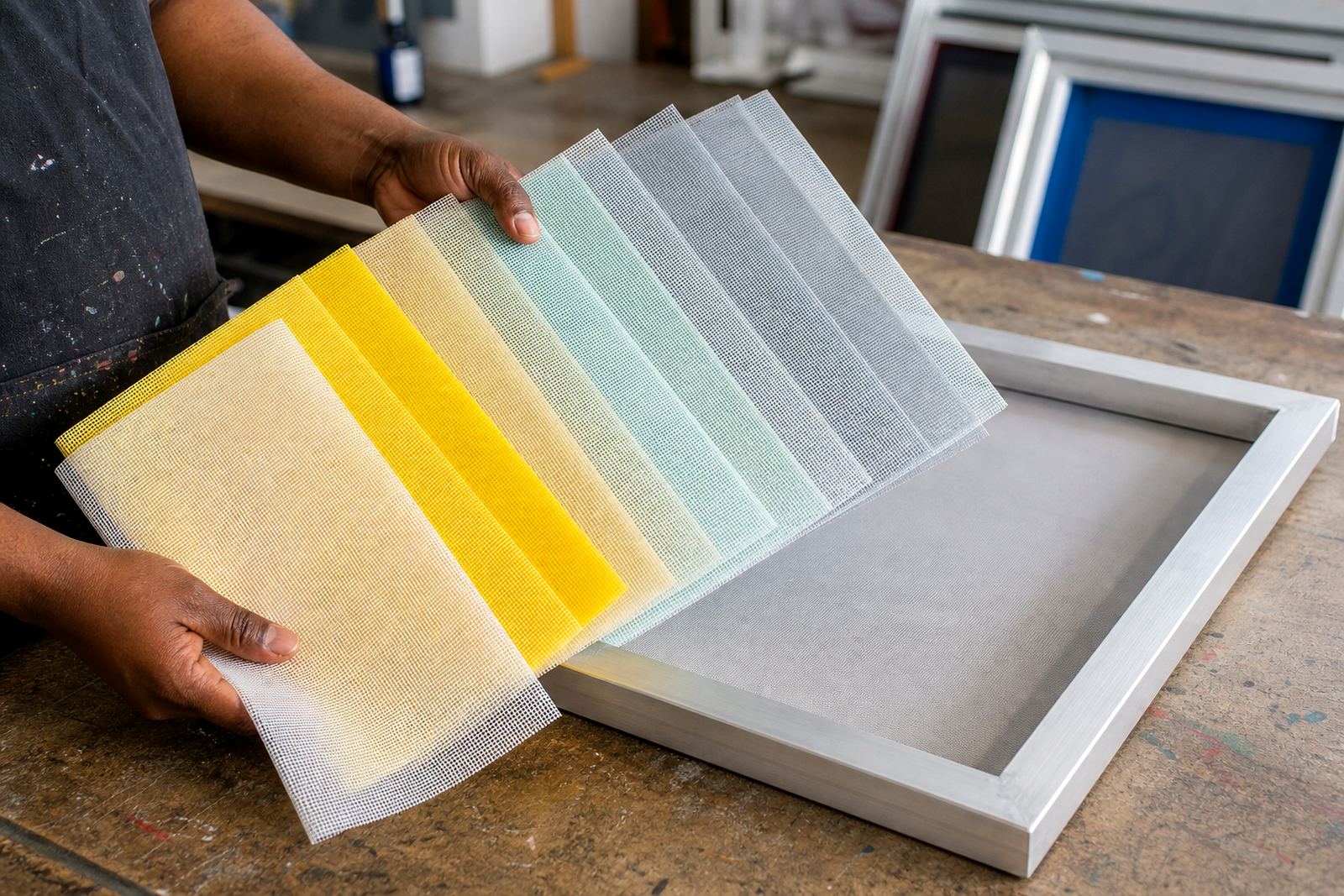
Each pack is put together to help you see the difference between lower mesh counts for heavier ink deposits and higher mesh counts for finer detail. In real use, that means you can check how much ink passes through, how clean small text holds, and how well halftones and fine lines sit on the substrate.
- Useful for setting up new production jobs
- Helps match mesh to ink thickness and artwork detail
- Good for shop trials, training and repeat order planning
Common mesh counts included and how they behave
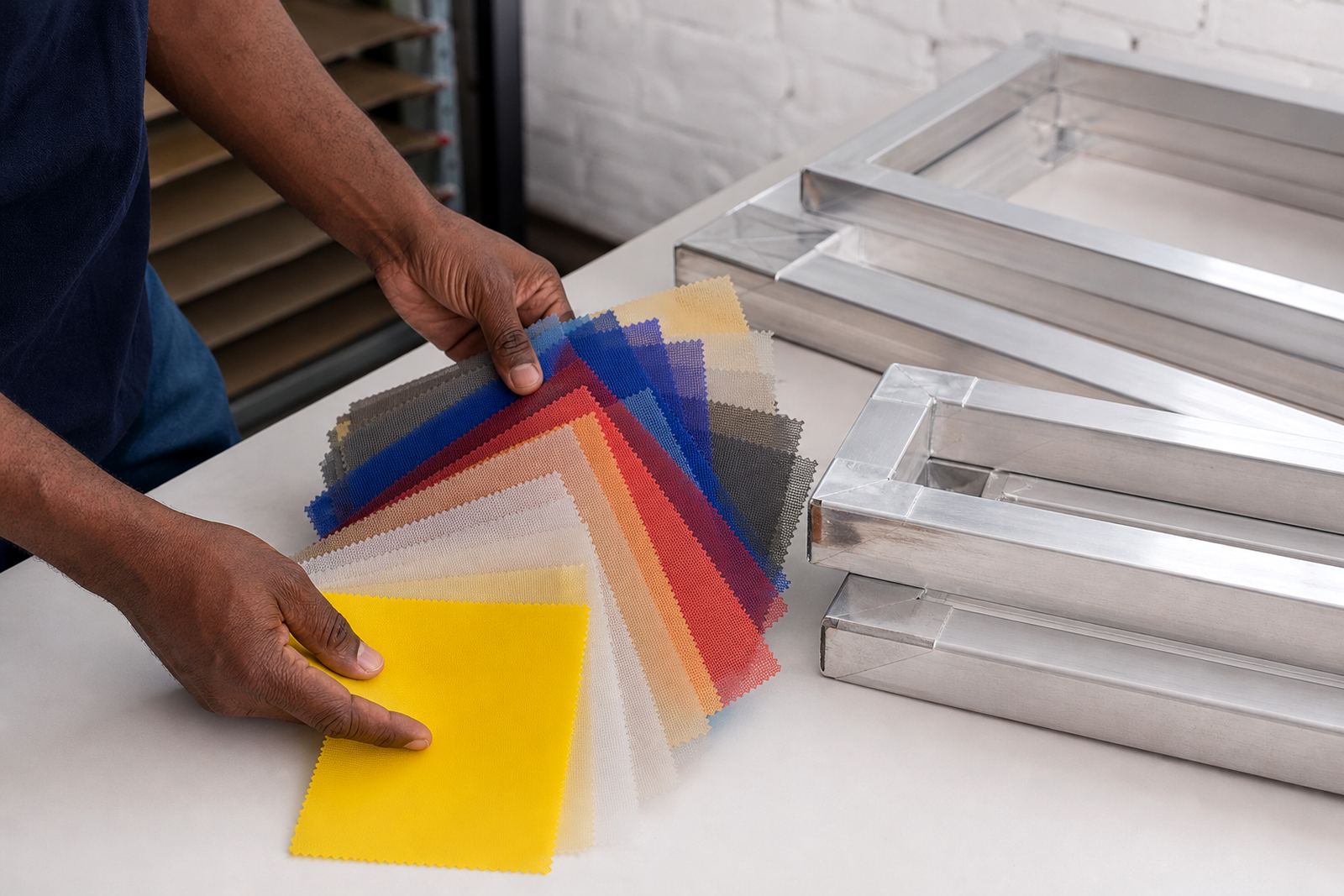
Screen mesh is normally chosen by the number of threads per centimetre or inch equivalent, and by how open or tight the weave is. Lower counts allow more ink through and are often used for bold graphics, underbases and thicker ink systems. Higher counts give better control on detail and are often selected for finer text, halftones and cleaner edges.
A sample pack usually makes sense when you need to compare several common working ranges side by side. For most South African production shops, that can mean looking at a coarse mesh for heavy coverage, a mid-range mesh for general work and a finer mesh for detailed printing. The right choice depends on the ink, mesh tension, artwork and the substrate surface.
- Lower mesh counts for stronger ink deposit
- Mid-range counts for everyday general printing
- Higher counts for small type and fine detail
Where this pack suits production work
This pack suits print shops in Johannesburg, Pretoria, Durban, Cape Town and Gqeberha that need a reliable way to standardise screens across different jobs. It is also useful for smaller shops in Germiston and the East Rand that want to keep a sensible stock holding and avoid ordering the wrong mesh for a job that is already booked.
If you print in humid coastal conditions, fine mesh can behave differently from inland conditions. High humidity can affect drying times, coating behaviour and how a screen releases ink on press. For that reason it helps to test the mesh on your actual shop floor, with your own exposure method, reclaim process and inks.
- Textile shops handling garment prints and spot colour work
- Label and decal printers needing clean edge control
- Training rooms and setup benches where teams compare options
Frame fit, stretch quality and handling
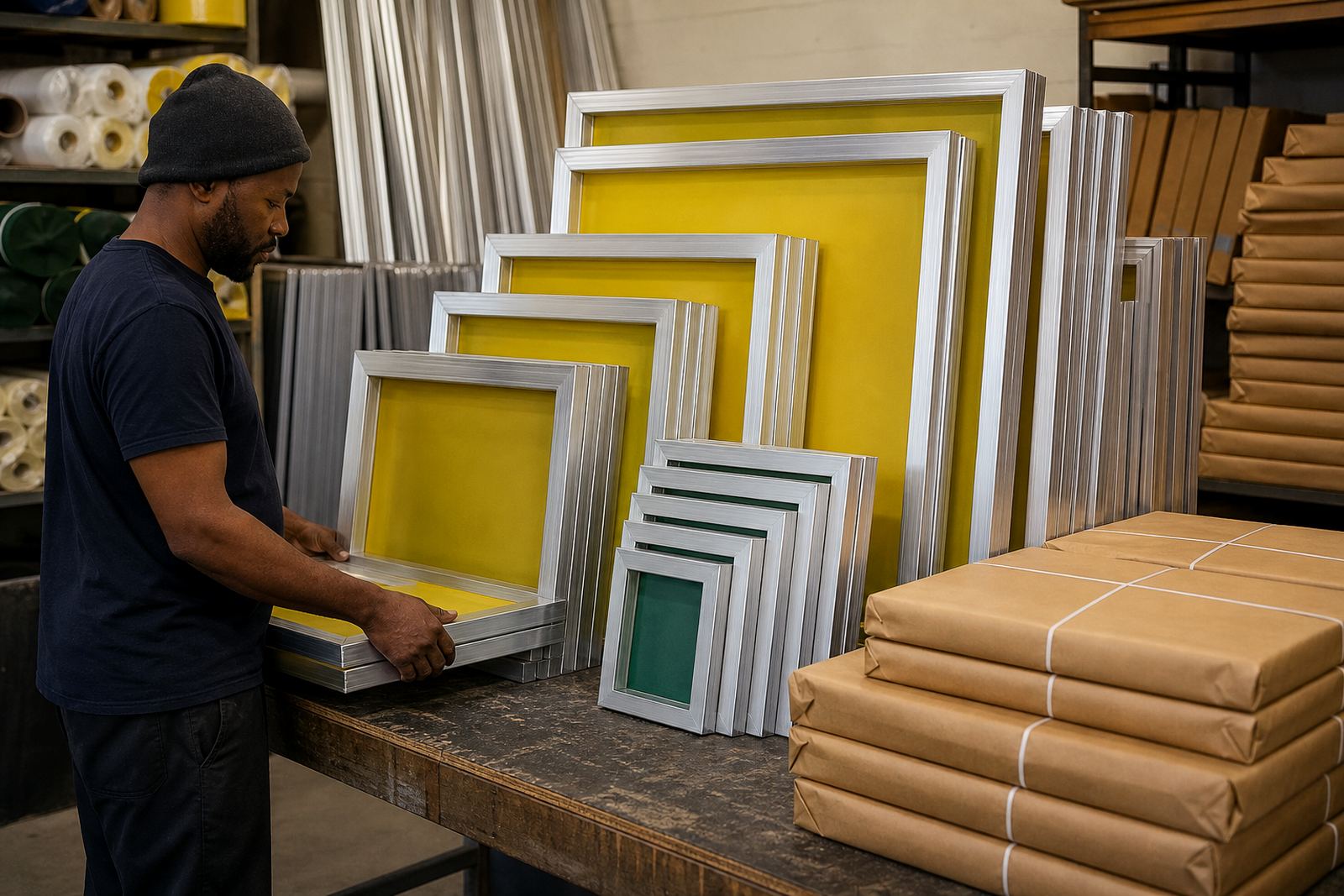
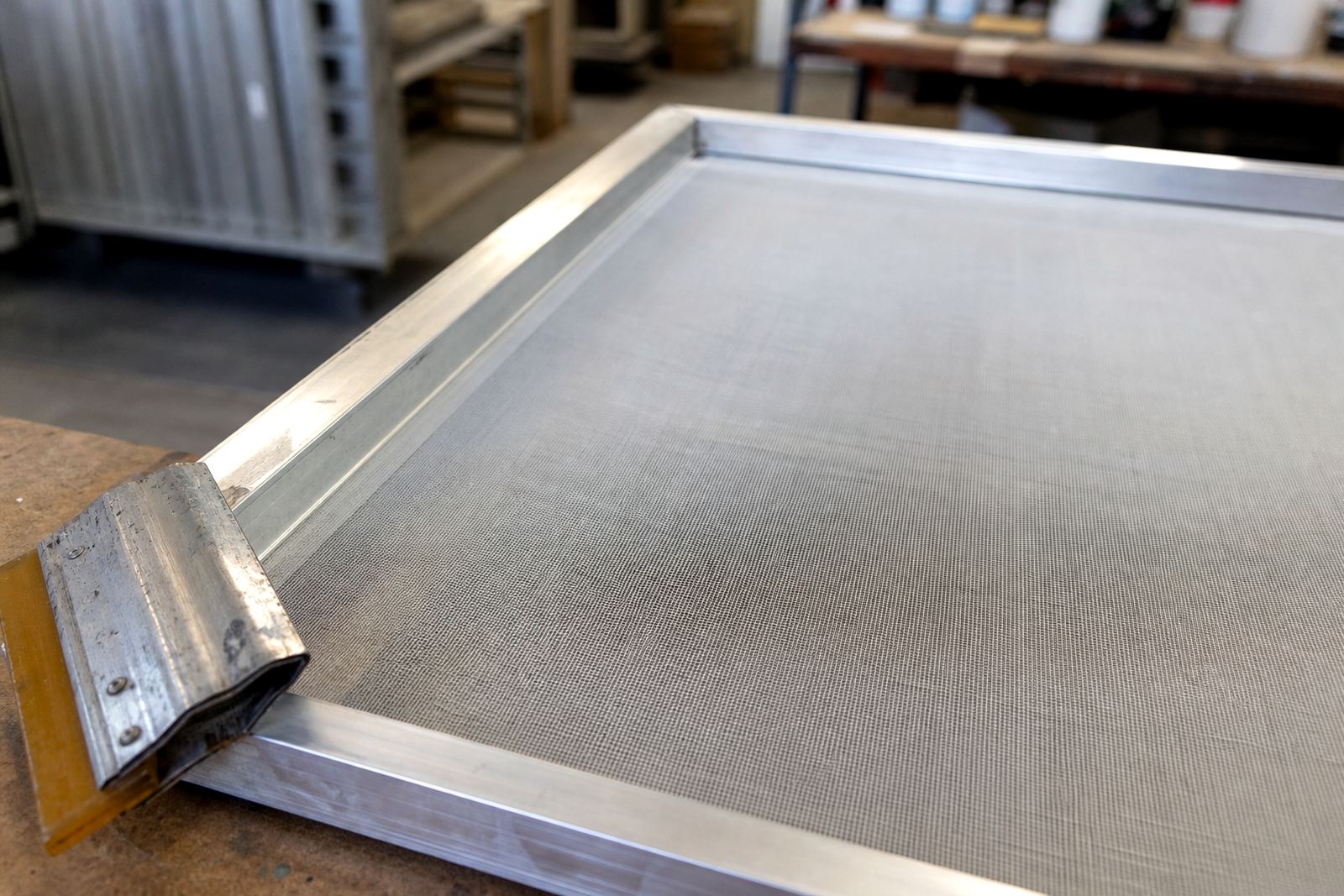
The sample pack is only part of the picture. Mesh performance also depends on the frame, the stretch quality and how well the mesh is bonded. A well-stretched screen should feel even across the full area, with no soft corners or obvious variations in tension. If the tension is uneven, the same mesh count can behave very differently from one screen to the next.
When you compare samples, check how each one feels when flooded, how it snaps back after the squeegee pass and whether the detail stays sharp after several prints. That gives you a much better guide than looking at the mesh on its own. For production work, the goal is repeatable tension and a clean, stable print stroke.
- Check for even tension across the full frame
- Confirm the mesh is bonded cleanly at the edges
- Match the frame size to your press and artwork area
Installation, power and shop set-up needs
This product needs no power or gas. It is a manual screening consumable for your print room, so there is no electrical connection, burner, compressor or fuel requirement tied to the sample pack itself. You can use it in a small setup, a busy production shop or a training area without changing your services or utilities.
For best results, fit the sample screens into your normal workflow and test them with the same squeegee pressure, flood speed and exposure settings you use on production jobs. If you are working through load-shedding, it still helps because the sample pack can be checked offline while your press or drying process is being scheduled around power availability.
- No power or gas needed for the sample pack itself
- Works with standard screen-printing benches and presses
- Easy to trial during normal shop hours or during shutdown planning
Care, storage and ordering the right pack
Store sample screens flat, clean and dry. Keep them away from direct sunlight, heavy dust and solvent mist, and do not leave reclaim chemicals sitting on the mesh longer than needed. If a sample is used for testing, rinse and dry it properly so you can compare it again later or use it for repeat set-up work. Good handling extends the useful life of the mesh and keeps your comparisons honest.
When ordering, check the mesh count range you need, the frame size, whether you want one-offs or a repeat order service, and if you need help matching the pack to a specific ink type or artwork style. It also helps to note whether you print on textiles, rigid sheets or coated stock, since that affects the way mesh opens up on press. If you are unsure, send your enquiry through the contact page and we will help you work through the options.
- Confirm your preferred mesh counts before ordering
- Check frame size and whether it suits your press
- Tell us the inks and substrates you use most often
Key facts
| Product type | Mesh sample pack for screen-printing comparison and setup |
|---|---|
| Typical use | Comparing common mesh counts before production standardisation |
| Mesh range | Mixed sample counts from coarse to fine working ranges |
| Frame option | Sample screens supplied on pre-stretched aluminium frames |
| Power or gas | Not required |
| Care | Keep clean, dry and tension-stable between tests |