What the 120cm Frame Is Used For
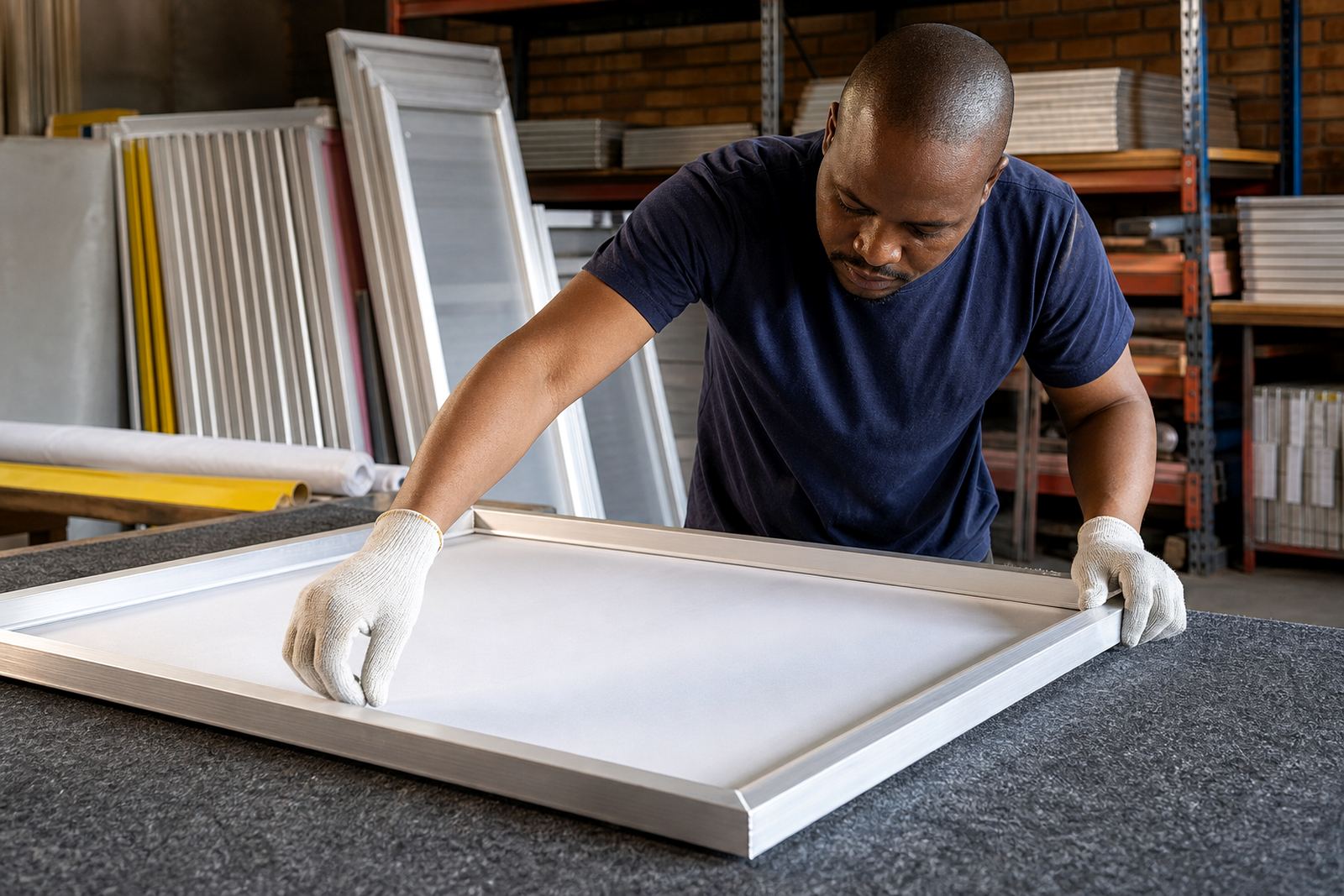
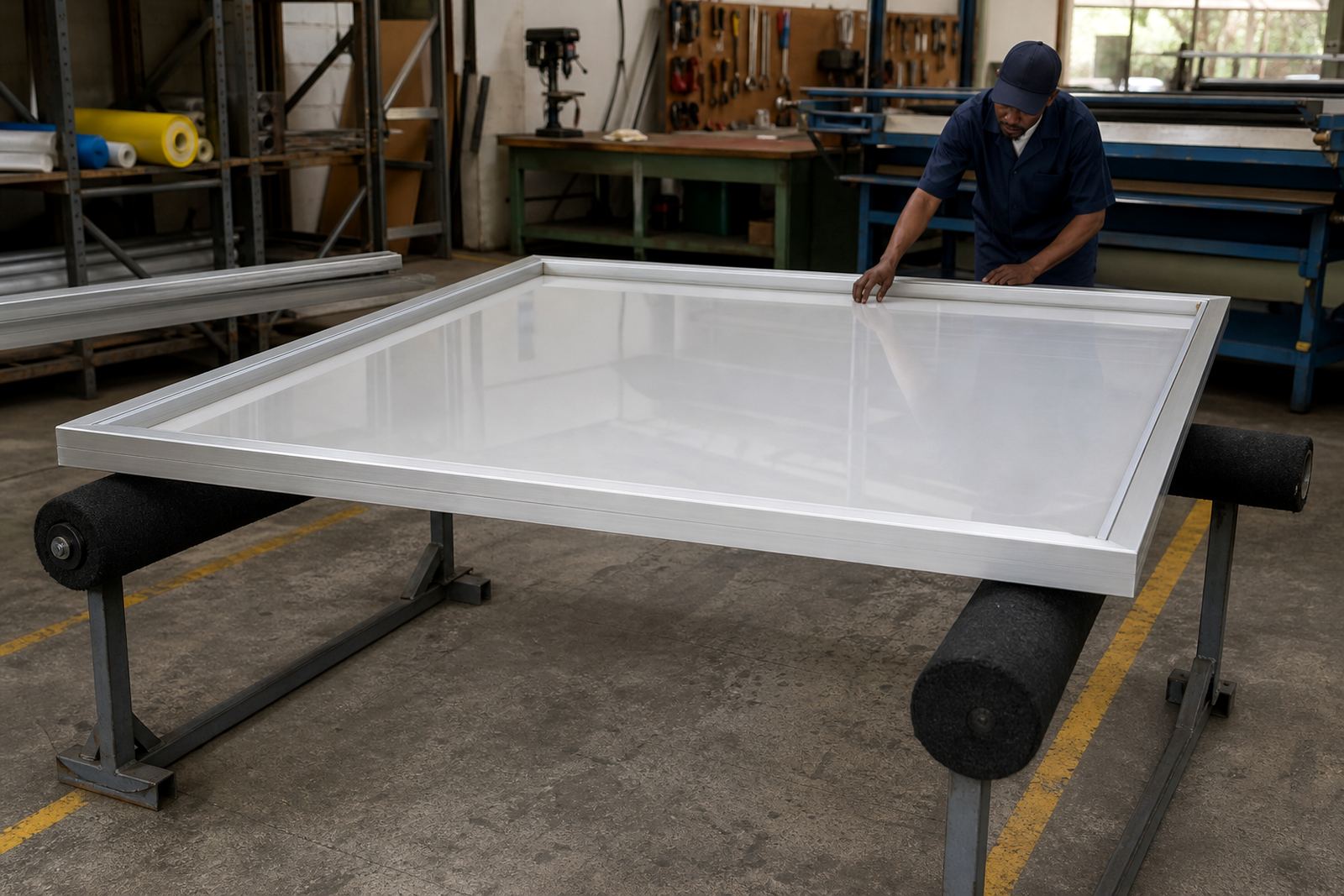
The 120cm frame is a large-format screen-printing frame designed for jobs that need wider image coverage without losing control of the mesh. It is commonly used for oversized artwork, longer runs, broad spot colour work and layouts where a standard frame is simply too small for the image size. In busy print rooms around Germiston, Johannesburg and Pretoria, this size helps shops set up work more efficiently when the artwork spans a larger print area.
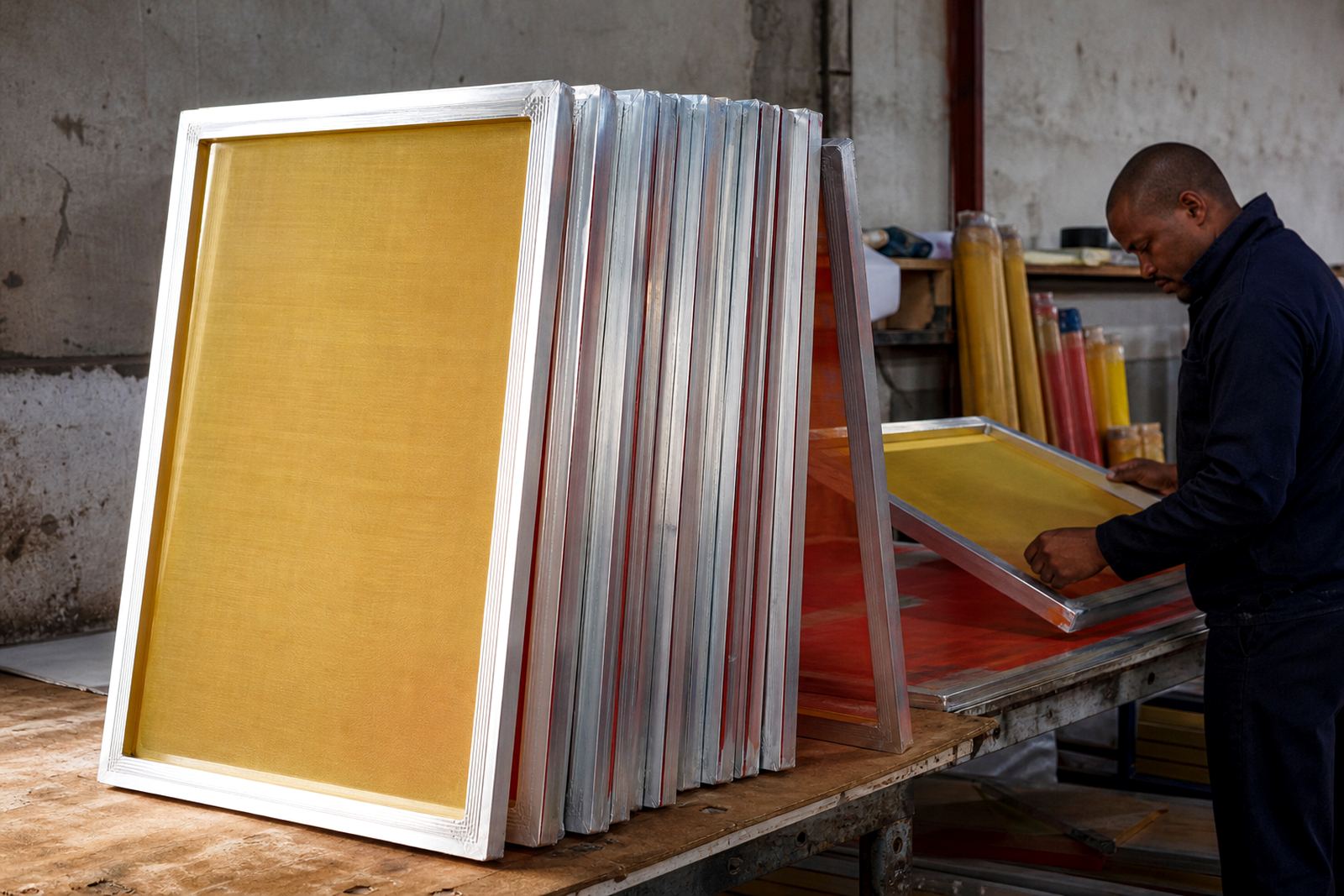
Because the frame is pre-stretched and ready for mesh bonding, it saves time during setup and helps keep tension more even from one side to the other. That matters when printing finer detail, halftones or heavier ink deposits where any slack can affect registration. The frame is also a good fit for printers who need repeatable results on contract work and want a dependable option for daily use.
For coastal work in Durban, Cape Town or Gqeberha, aluminium frame construction is a practical choice because it handles humidity better than untreated timber and is easier to keep clean between jobs. If your shop handles mixed work, this size gives you enough room to stretch a range of mesh counts for different ink types and artwork needs.
Frame Size, Mesh Options and Build Details
The 120cm measurement refers to the frame width used for large-format screening. Depending on the job, the actual print area available will be slightly less than the outside frame size, so artwork placement still needs proper allowance for margins, tape-up and registration. The frame is supplied in a large, rigid format suitable for pre-stretched mesh and repeated use in production.
- Large frame format for oversized screens
- Pre-stretched aluminium construction for stability
- Suitable for multiple mesh counts depending on artwork and ink type
- Works well for fine detail, bold solids and mixed production requirements
- Can be specified for custom frame sizing where needed
Mesh count choice should always match the print purpose. Lower counts are usually used for heavier ink laydown, textile whites and specialty work, while higher counts suit finer detail and thinner ink deposits. If the wrong mesh count is fitted, the screen may print too much ink or not enough, and the image can lose sharpness. Mesh count matching is especially important on larger frames because tension consistency has a bigger impact across the full surface.
Where This Frame Suits Best
This frame suits print shops that regularly work on larger garments, multi-panel jobs, oversized graphics and batch production. It is a sensible option for shops doing contract printing across Gauteng and further afield, especially where screens need to be prepared in advance and held ready for repeat orders. The bigger print area is also useful for artwork that needs extra space around the image for alignment or multiple placements on one substrate.
Shops in industrial areas like East Rand and Midrand often need screens that can move through prep, exposure, washout and dispatch without unnecessary handling. A properly stretched 120cm frame helps with that because the screen remains predictable in use and can be checked, cleaned and stored more easily between runs. It also gives extra room for custom work where the brief changes from one job to the next.
- Oversized garment prints
- Large branding panels and wide artwork layouts
- Repeat production where consistency matters
- Custom screen setups for mixed print runs
- Workshops needing stronger frame rigidity for frequent handling
Installation, Power and Workshop Setup
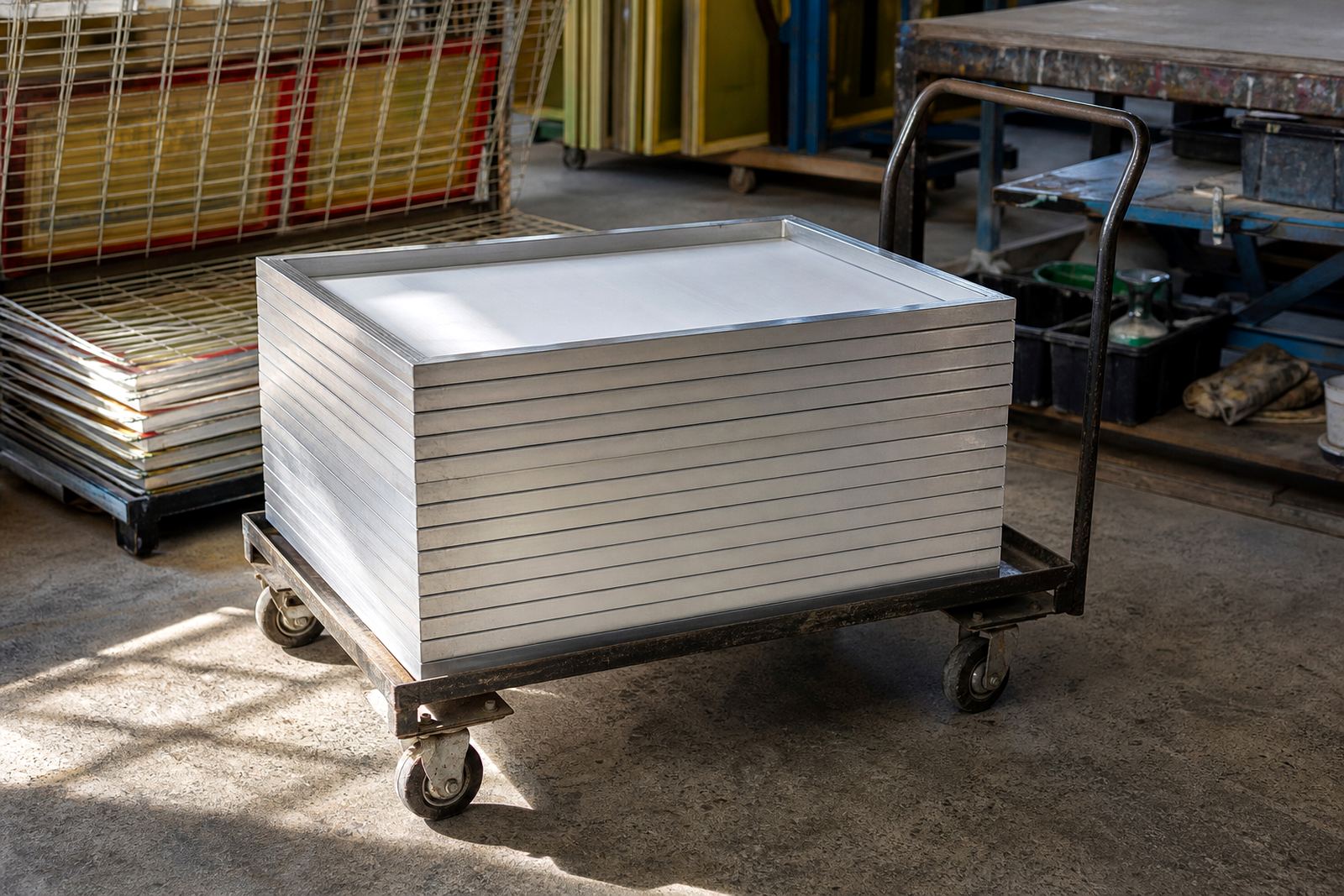
There are no power or gas needs for the frame itself. It is a manual screen-printing item, so your main setup requirement is enough bench space, a flat prep area and safe handling during transport and storage. Because the frame is large, it should be carried and stored carefully to avoid twist or edge knocks, especially in shops where screens are moved between prep and print areas multiple times a day.
When setting up, check that your exposure area, washout space and drying racks can handle the full frame size. On smaller sites, especially where floor space is tight, the frame should be planned around your existing racks and tables so there is no unnecessary crowding. If your shop is affected by load-shedding, the frame itself is still ready to use, but your exposure, curing and drying workflow may need backup planning around your normal print schedule.
For customer sites with high humidity or dust, a clean prep zone is important. A screen that picks up dust or residue before bonding can create pinholes or weak spots in the stencil area. Keep the frame stored off the floor and away from direct sunlight where possible, and avoid stacking heavy items on top of it.
Tension, Re-Stretching and Care Between Jobs
Good tension is what makes a large frame worthwhile. If the mesh is too loose, the print can blur or flood too much ink into the image. If it is overstretched, the screen may lose life too quickly or become harder to use consistently. That is why tension checking is part of proper frame care, particularly for larger screens where even small changes can affect the print result.
For routine care, wash the frame after use, remove ink residue promptly and let it dry fully before storage. Avoid harsh scraping at the mesh edge and do not leave screens sitting in solvent or water for long periods. In busy production, a simple check before each run can save time later. Look for slack mesh, damaged corners, adhesive failure and areas where the stencil film is beginning to lift. A small issue caught early is easier to fix than a frame that has gone out of shape.
If a screen starts to lose tension, frame re-stretching may be the better option instead of replacing the whole unit. This is often useful for shops that want to keep a set of large screens in circulation and keep costs sensible. A clean frame with fresh mesh and proper bonding will always print better than one that has been pushed beyond its useful life.
What to Check Before You Order
Before ordering a 120cm frame, check the exact print size you need, the mesh count required and whether the job calls for fine detail or heavier ink laydown. If you already have artwork, confirm the image area and whether the screen needs extra margin for registration marks, tape-up or repeated placement. A larger frame should match your press setup, drying space and handling routine.
- Required image area and artwork dimensions
- Mesh count needed for the ink and substrate
- Whether the job needs new stretching or re-stretching
- How the screen will be handled in storage and transit
- Any need for custom sizing or batch screen prep
- Whether repeat orders should match an existing screen spec
If you work across Johannesburg, Pretoria, Durban, Cape Town or Gqeberha, it helps to order screens that can be kept consistent from one branch or production run to the next. That makes repeat work easier and helps avoid setup delays. If you are unsure about the best mesh count or frame arrangement, screen setup advice can help you match the screen to the print job before production starts. A quick check at the ordering stage is usually enough to avoid wasted time later on, and it keeps the whole process straighter.
Key facts
| Product | 120cm pre-stretched screen-printing frame |
|---|---|
| Frame material | Aluminium |
| Use case | Oversized screen-printing jobs and wide image coverage |
| Mesh options | Available in mesh counts suited to fine detail or heavier ink laydown |
| Service options | New frame stretching, re-stretching, tension checking and custom sizing |
| Main supply areas | Germiston, Johannesburg, Pretoria, Durban, Cape Town, Gqeberha, East Rand, Midrand |