Made for the print area you actually need
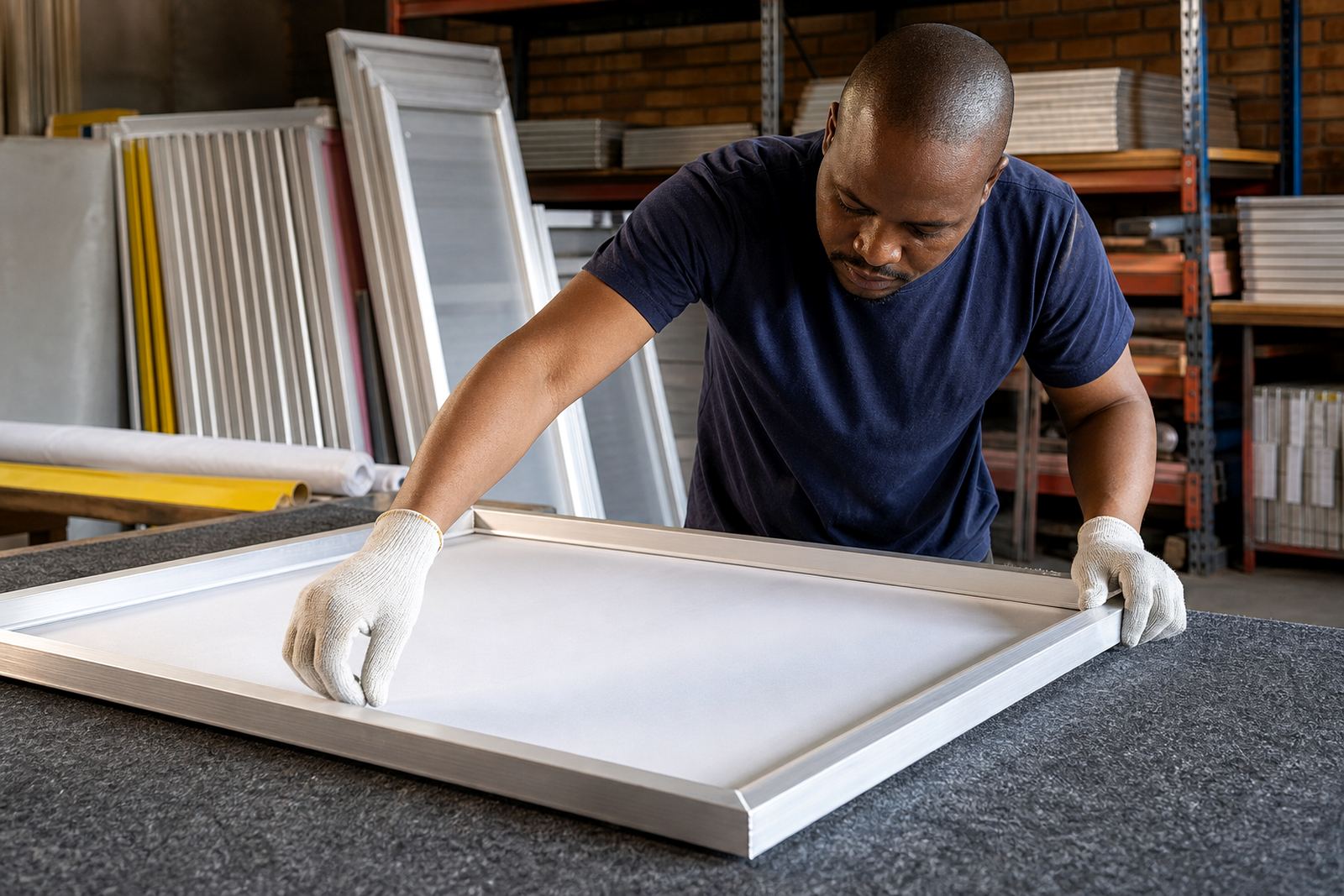
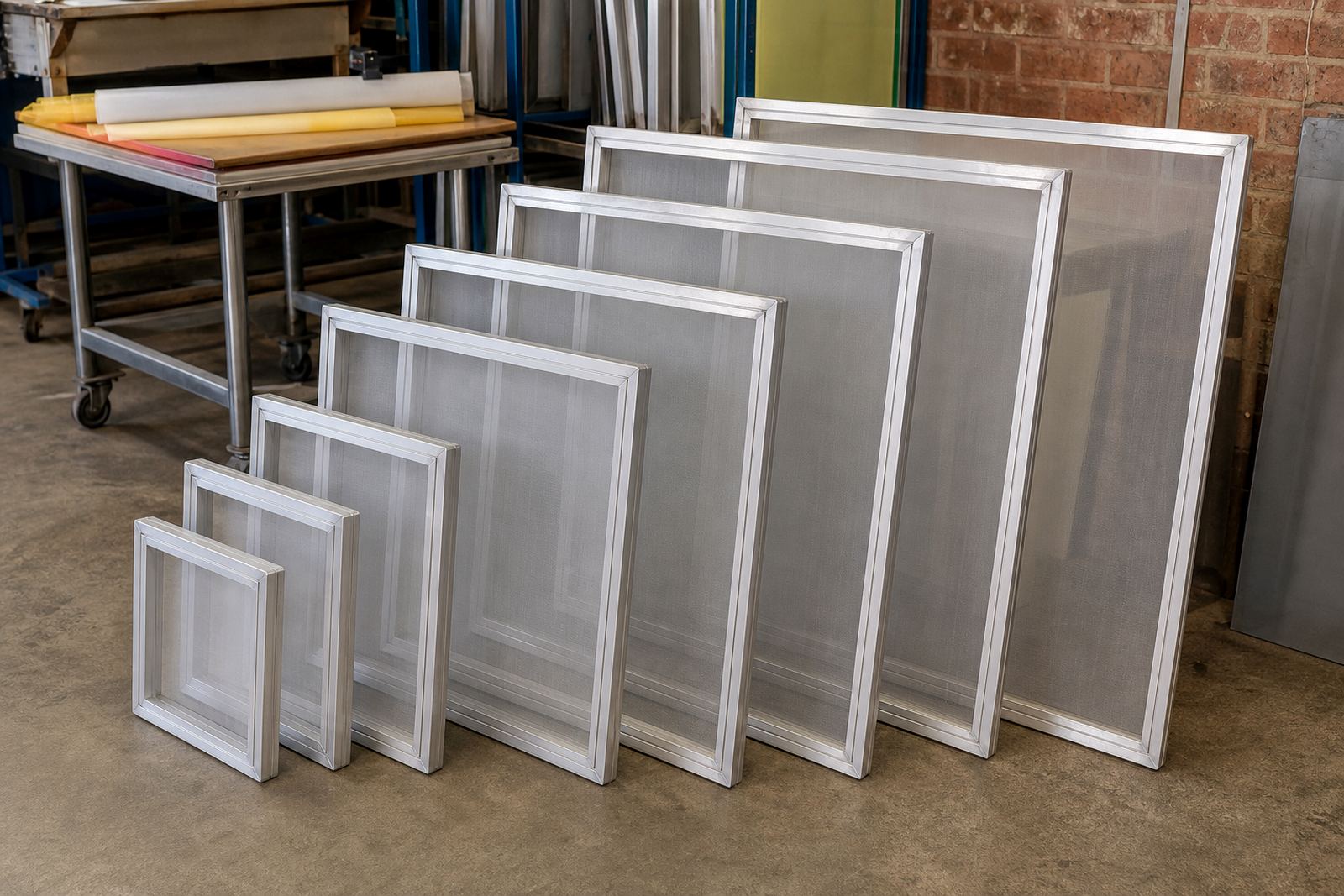
Custom size frames are built from aluminium to match a specific printing area, not a stock size that comes close enough. That matters when your artwork has unusual dimensions, a long repeat, or a print layout that needs extra margin for registration marks and flood strokes. A well sized frame gives you better mesh support, steadier tension and more control when pulling ink across the screen.
These frames are suited to manual screen printing and small to medium production setups where repeatability matters. They are especially useful for print shops working with mixed jobs, from garment printing and signage panels to packaging inserts and sample work. In South Africa, where many workshops deal with mixed climate conditions and load-shedding interruptions, an aluminium frame is a practical choice because it keeps its shape better than timber and is easier to clean after use.
Sizes, mesh counts and frame options
Custom sizing starts with the outside frame dimensions, the inside print area and the mesh count required for the job. Mesh count affects how much ink passes through the screen and how fine the detail can be. Lower counts suit heavier ink deposits and blocky artwork. Higher counts are used for finer detail, halftones and thinner ink laydown. Choosing the wrong count can affect opacity, edge sharpness and drying time.
- Low mesh counts for bold spot colour work, underbases and thicker ink systems
- Medium mesh counts for general textile printing and most everyday artwork
- Higher mesh counts for fine detail, smaller type and tighter image edges
- Custom frame depths for better rigidity on larger screens
- Optional re-stretching for frames that still have good structure
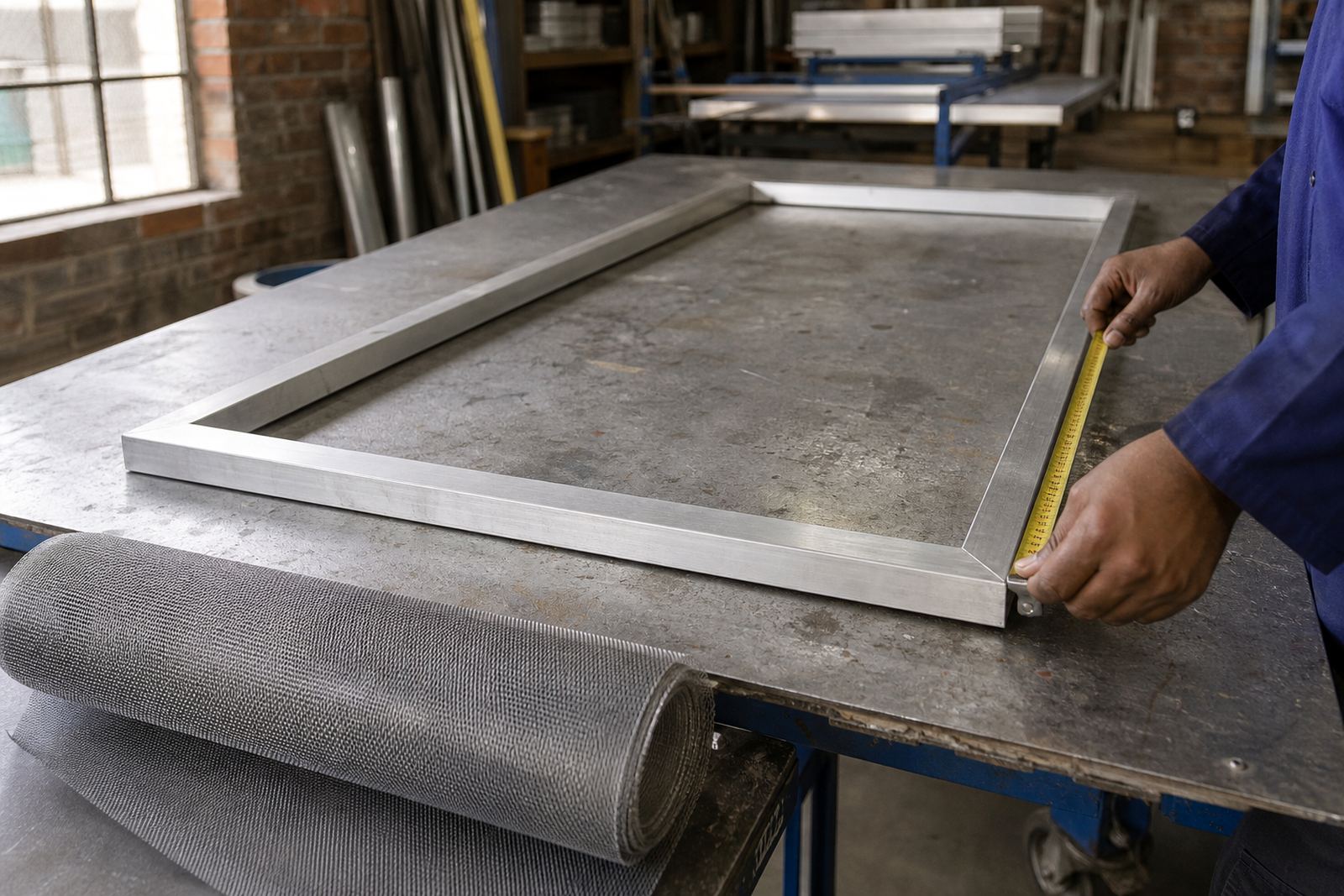
When ordering, check the finished print area, not just the paper artwork size. Allow space for clamps, tape, registration and handling. If your shop prints a range of jobs, it often helps to keep one or two standardised custom sizes that fit your common press set-up and screen exposure routine.
Where custom frame sizing works best
Custom frames suit shops that cannot afford to keep cutting around standard screen sizes. They are useful for wide prints, long repeat artwork, odd-sized packaging, and screens that need more border space for registration. They also help when a job needs a very specific mesh tension across a set of screens, since the frame can be sized to support that tension more evenly.
For print rooms in Johannesburg, Pretoria, Durban, Cape Town, Gqeberha and across the East Rand, custom sizing is often about keeping production moving with less waste. A frame that is too small can restrict the image area, while one that is too large can make storage, cleaning and drying more awkward. If you are dealing with coastal humidity in Durban or Gqeberha, a correctly made aluminium frame is also easier to keep clean and dry between runs.
- Wide format artwork and non-standard layouts
- Short run jobs with special registration needs
- Training rooms and starter print setups
- Repeat jobs that need the same screen size each time
- Workshops upgrading from mixed old frames to a consistent set
Installation, stretching and power needs
Custom size frames are supplied for screen stretching and final setup in the print shop or by a frame stretching service. The frame itself does not need power or gas. What matters is the stretching method, adhesive bond and final mesh tension. On larger frames, even tension across the whole mesh field is important because weak corners or uneven pull can cause print variation and image distortion.
If you are preparing screens in a workshop with regular load-shedding, plan your setup around the fact that stretching and curing can be affected by interruptions. Keep the area clean, level and free of dust. For best results, the frame should be fitted, bonded and checked before exposure. Once the mesh is on, the screen should sit square and allow for proper ink contact without sagging in the middle.
There are no gas fittings or utility connections required for the frame itself. You only need normal workshop space for handling, drying and storage. If the frame is going into a press system, confirm clamp positions and screen clearance before ordering so the finished size matches your equipment.
Care, re-stretching and day to day servicing
Aluminium frames are straightforward to care for, but they still need proper handling. After printing, remove ink fully, wash the mesh with suitable cleaning fluids and keep the frame dry before storage. Do not leave screens standing in standing water or harsh chemical residue, especially if the shop works near the coast. That helps protect the adhesive bond and keeps the frame edges in good condition.
If mesh tension drops over time, a screen can sometimes be re-stretched rather than replaced. That depends on the condition of the frame and whether the corners remain true. Re-stretching is useful when the frame is still square and sound but the mesh has relaxed from repeated use. It is also worth checking for frame nicks, glue build-up and tape residue before every new run.
- Wipe down after each print session
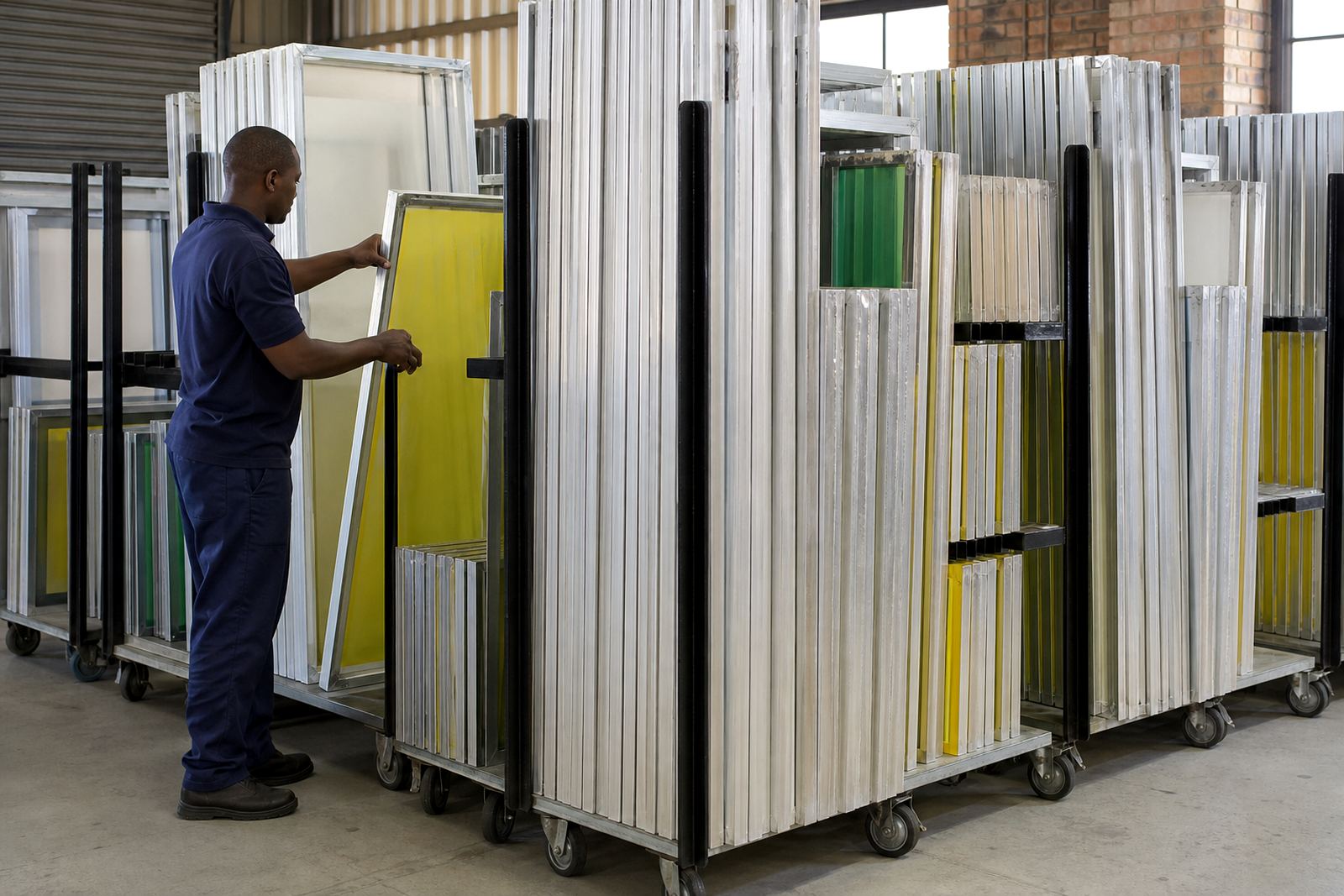
- Store flat or on clean rack supports
- Keep away from heat, moisture and direct floor contact
- Inspect corners and mesh before exposure
- Re-check tension if the screen has been stored for long periods
What to check before you order
Before placing an order, measure the finished print area and confirm the artwork size, not only the substrate size. You should also know whether the job needs coarse, medium or fine mesh. If you are unsure, match the mesh count to the ink type, detail level and desired deposit. A thicker ink usually needs a lower mesh count, while finer work usually needs a tighter mesh count and careful tension checking.
It also helps to confirm the type of press or frame clamps being used, the desired outside dimensions, and whether you need new stretching or re-stretching on an existing frame. If you are printing batches, ask for consistent sizing across the full set so each screen behaves the same during setup and print. That saves time during screen inspection and batch prep. One small detail missed at ordering stage can slow the whole job down, so it is worth checking the measurements twice.
- Finished print area and artwork size
- Required mesh count for the ink and detail level
- Outside frame dimensions and clamp clearance
- Need for new stretching or re-stretching
- Quantity of screens needed for the job
Key facts
| Product type | Made-to-order aluminium screen frame |
|---|---|
| Use | Screen-printing jobs that do not suit standard frame sizes |
| Mesh options | Low, medium and high mesh counts matched to the print requirement |
| Frame material | Aluminium |
| Setup requirement | Screen stretching and tension checking before use |
| Maintenance | Clean after use, dry properly, inspect corners and bond lines |