What Bold Coverage Screen Means In Practice
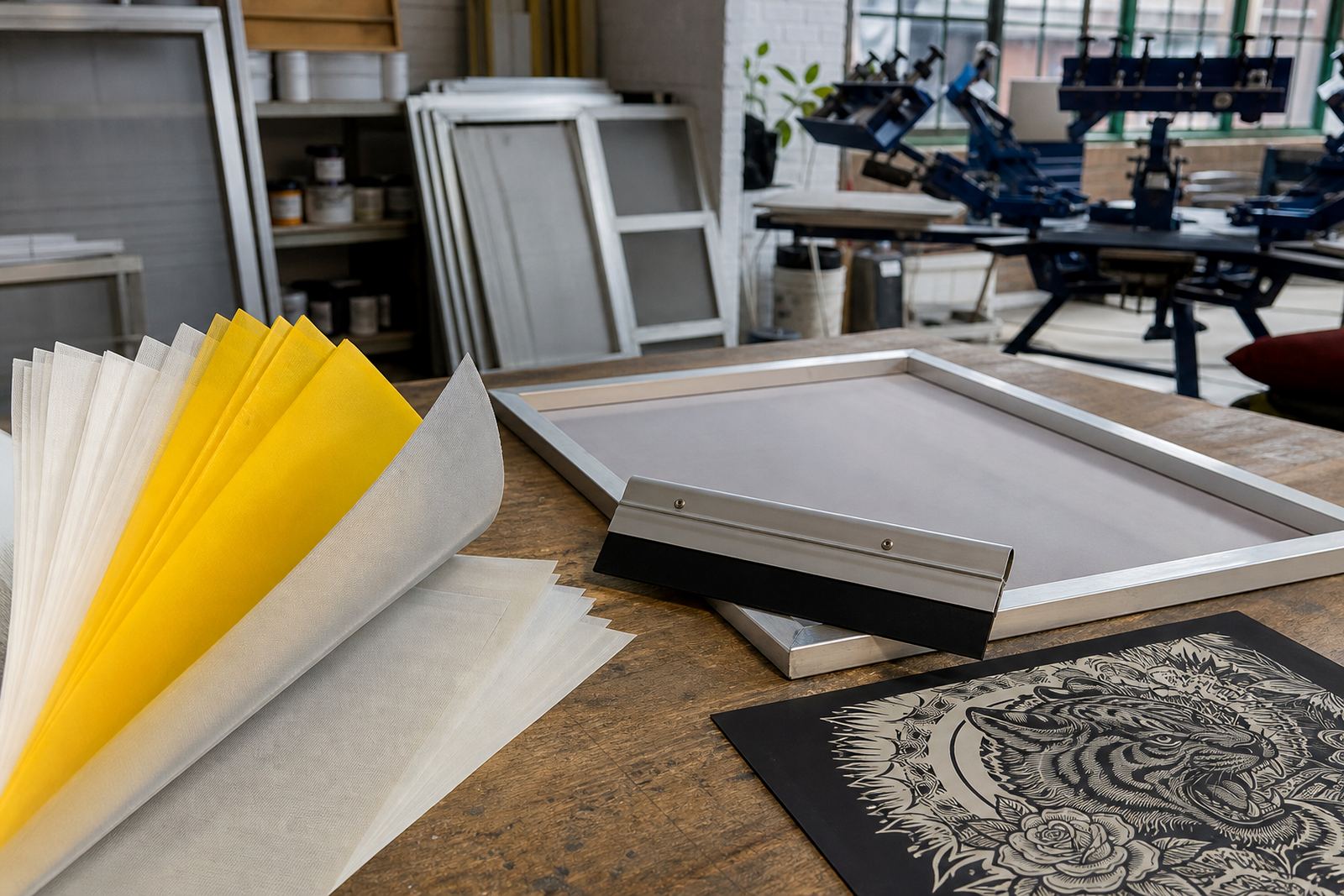
In screen printing, bold coverage comes from the right match between mesh count, thread diameter and frame tension. A lower to mid mesh count allows more ink through the screen, which helps when you need a solid block of colour, better opacity on dark garments, or a heavier deposit on signage inks and industrial markings.
This option is not about flooding the garment. It is about controlled ink flow with enough open area for the ink to pass cleanly. When the mesh is stretched properly and the frame is true, you get a steadier print, less smearing and better repeatability across short or long runs.
Mesh Counts And Frame Sizes We Commonly Supply
For bold coverage work, print shops usually look at mesh counts in the lower and middle range, then choose the frame size to match the press and artwork. The final choice depends on ink type, detail level and the amount of coverage needed.
- Lower mesh counts for heavier ink deposit on solids, underbase work and coarse substrates.
- Mid-range mesh counts where you still want coverage but need a bit more detail control.
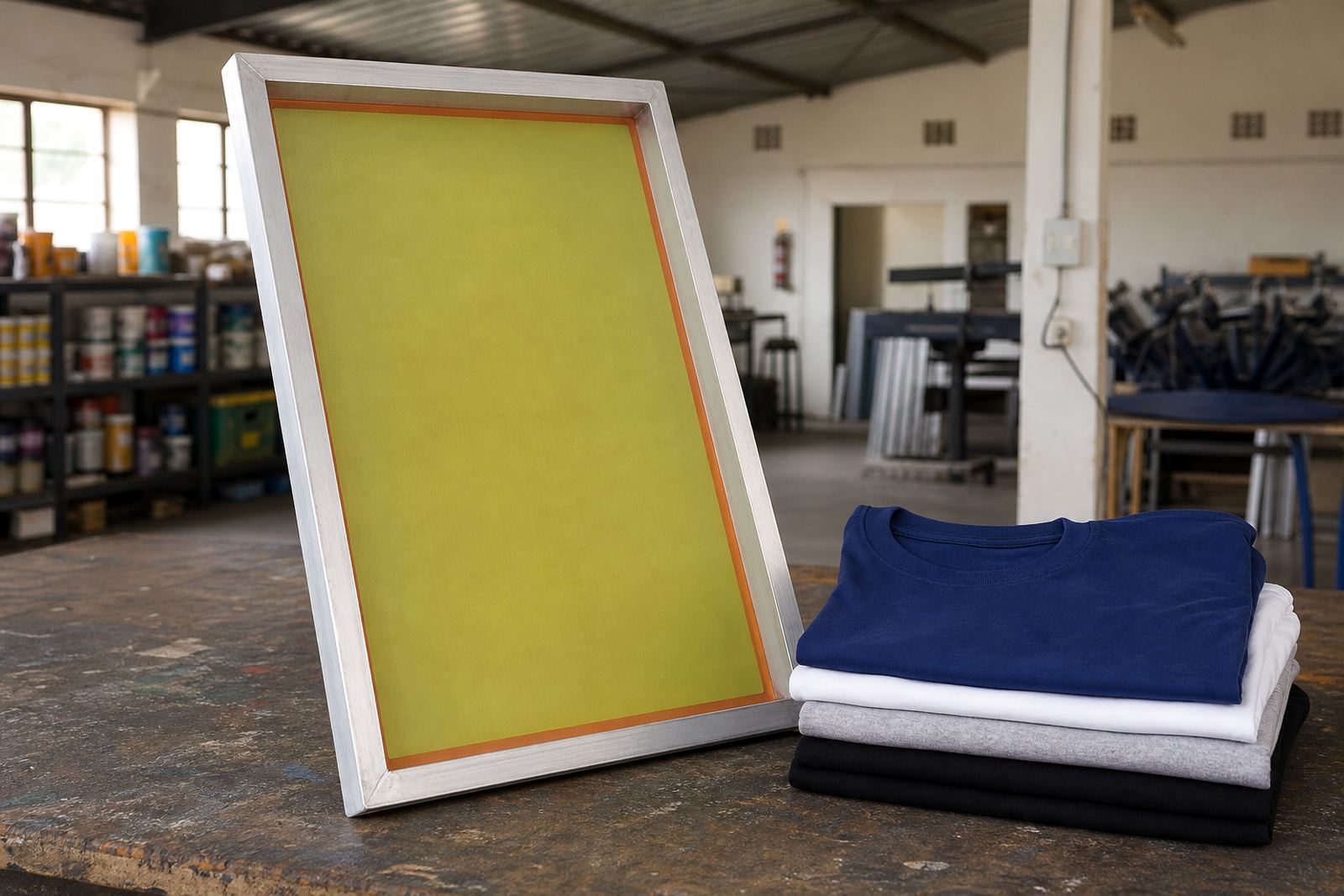
- Pre-stretched aluminium frames for flat, stable printing and easier repeat set-up.
- Custom frame sizing for manual tables, carousel presses and larger format screens.
- Re-stretching when an existing frame is sound but the mesh has relaxed or been damaged.
In Germiston and across Gauteng, many shops keep a mix of screens ready for different jobs rather than forcing one mesh count to do everything. That approach saves time and gives cleaner results when orders change quickly.
Where Bold Coverage Performs Best
This screen style suits jobs where ink needs to sit on the surface with confidence. It is commonly used for textile printing on cotton, blends and some heavy fabrics, as well as for general shop work where a stronger print is more important than fine halftone detail.
It also suits pieces that need to stay readable in harsh light or on darker backgrounds. If you print for Johannesburg, Pretoria, Durban, Cape Town or Gqeberha, it helps to choose the mesh with your substrate and local conditions in mind. Coastal humidity in Durban and Gqeberha can affect drying behaviour, while summer heat in Gauteng can change working speed and screen open time.
- Dark garments that need a clean underbase or fuller top colour.
- Workwear, school items and general textile runs.
- Posters, signs and bold graphics where strong fill matters.
- Short repeat jobs where screen consistency saves time.
Installation, Stretching And Press Setup
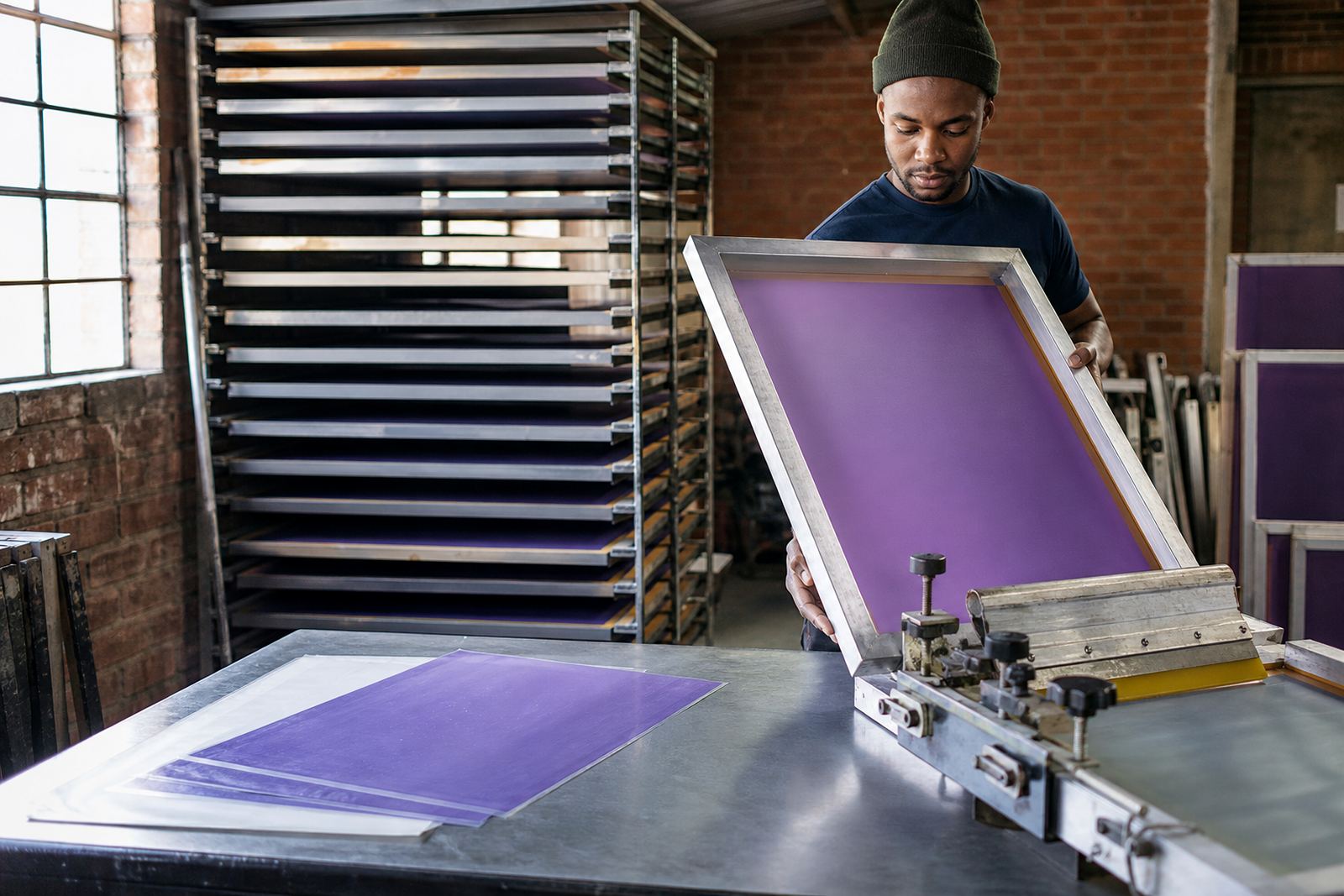
A good result starts with correct stretching. The mesh must be pulled evenly so the screen holds tension across the full area, not just in the centre. Uneven tension causes image distortion, blurry edges and poor registration from colour to colour.
For aluminium frames, the frame should be clean, square and ready for bonding. Mesh bonding must be even and secure so the screen can handle repeated squeegee pressure without loosening early. If you are setting up a new screen, check that the stencil area, off-contact and press clearance suit the ink and garment thickness.
Power and gas requirements are usually not needed for the screen itself. In a busy print room, though, stable workspace conditions matter. Load-shedding can interrupt drying, exposure and production timing, so many shops plan screen prep and print runs around backup power or shifted schedules. Good ventilation is also important when using cleaning agents and reclaiming screens.
Care, Cleaning And Re-Use
Bold coverage screens last longer when they are treated carefully after each run. Fresh ink should be cleared before it dries in the mesh, and the screen should be washed in a way that suits the ink system being used. Water-based inks, plastisol and special-effect inks all need slightly different cleaning habits.
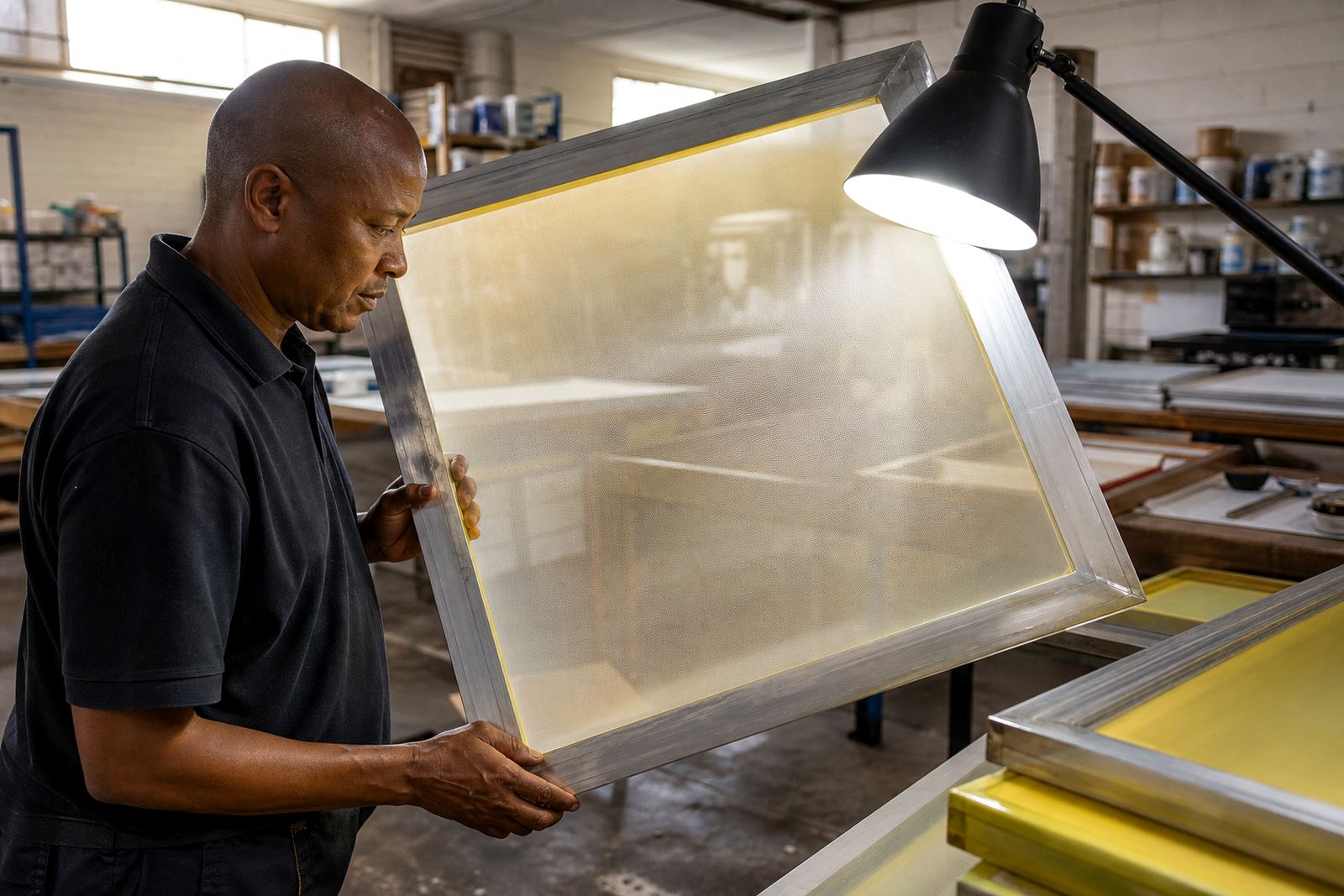
For regular care, keep an eye on the frame corners, adhesive edges and tension across the mesh. If a screen starts to lose snap, it will show up in the print before it shows up on the frame. Re-stretching can often bring a good frame back into service, provided the aluminium is still straight and the bond area is sound.
- Store screens upright and out of direct sun.
- Avoid hard knocks on the frame edges during dispatch and handling.
- Keep reclaimed screens fully dry before re-use.
- Check for pinholes, mesh damage and weak corners before the next job.
What To Check Before You Order
Before placing an order, think through the print job from start to finish. The right mesh count is only one part of the setup. Artwork detail, ink type, garment colour and press size all affect the final choice.
It helps to confirm whether you need new frame stretching, re-stretching, mesh count matching or batch screen prep. If you are ordering for a recurring contract, repeat order service can help keep the screens consistent from one run to the next. Our team in Germiston supports shops across South Africa with practical screen setup advice, dispatch packing and screen inspection before the screens leave the premises.
- Artwork type: solids, text, halftones or mixed detail.
- Ink system: water-based, plastisol or speciality inks.
- Substrate: garment type, board, film or other print surface.
- Frame size: standard or custom dimensions for your press.
- Need for tension checking, frame clean prep or mesh bonding.
If you are unsure, send through the job details on the enquiry form and we can help narrow it down. That way the screen arrives ready for the work you actually need, not a generic setup that wastes ink and time.
Key facts
| Mesh count range | Lower to mid counts commonly used for stronger coverage and fuller ink flow |
|---|---|
| Frame material | Pre-stretched aluminium frames |
| Frame options | Standard sizes and custom frame sizing available |
| Tension | Checked for even stretch across the full image area |
| Suitability | Textile printing, bold graphics, underbase work and heavier ink deposit jobs |
| Services | New Frame Stretching, Frame Re-Stretching, Mesh Count Matching, Tension Checking |