What 165T Mesh Means in Screen Printing
165T mesh is a fine mesh count used where image clarity matters more than heavy ink deposit. In practical terms, the tighter weave gives better control over detail and helps support thinner stencil areas without letting ink flood through too freely. For printers handling artwork with small type, sharp edges or fine line drawings, 165T is a common choice.
The right mesh count depends on the ink, the substrate and the look you want on the final print. A finer mesh like 165T is often used when you need cleaner definition on smoother surfaces and when the stencil has to hold small open areas without breaking down. If the artwork needs a softer, heavier deposit then a lower mesh count may be better, but for detailed work 165T sits in a useful middle ground.
Sizes, Frame Options and Stretching Choices
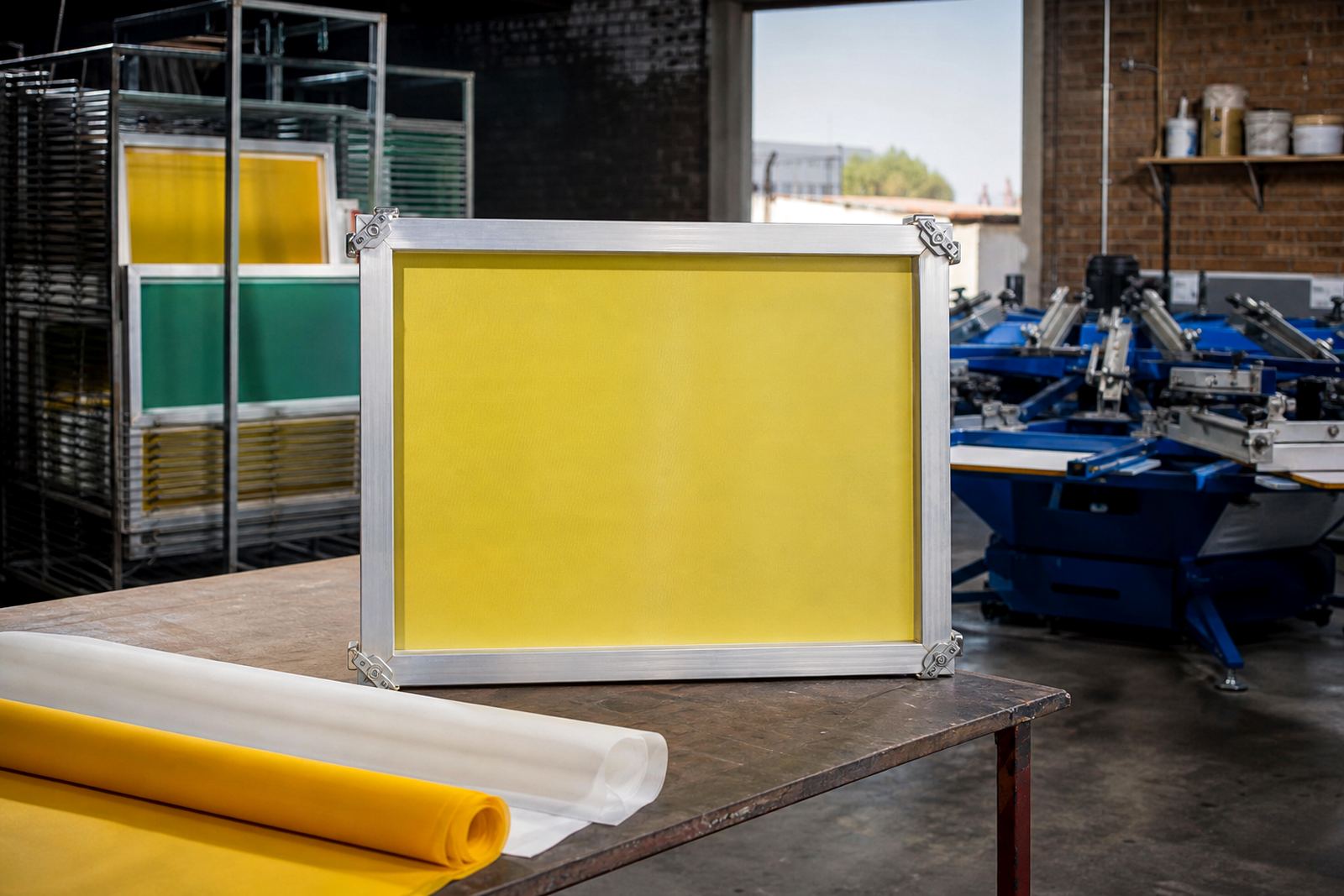
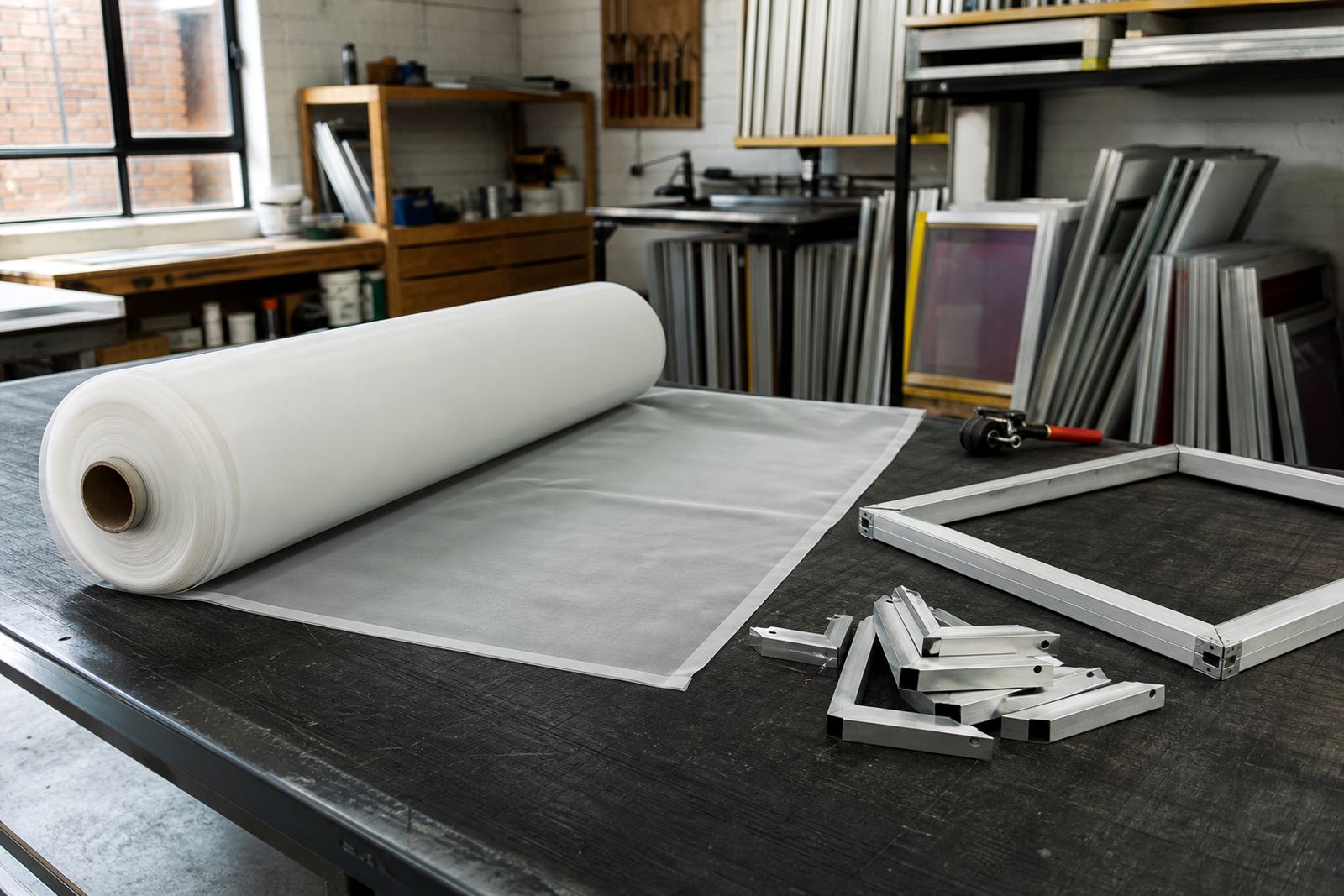
MeshMaster supplies 165T mesh for new frame stretching and re-stretching work across South Africa. You can order it as cut mesh for your own frame prep or as part of a pre-stretched aluminium frame, depending on how your shop works. Frame size is normally matched to the screen you need for the job, with custom sizing available for both small-format and larger production screens.
- New frame stretching for fresh screens
- Frame re-stretching for worn or slack screens
- Custom frame sizing for specific press set-up
- Batch screen prep for repeat jobs
- Mesh count matching for artwork and ink choice
For shops in Johannesburg, Pretoria, Durban, Cape Town and Gqeberha, we can prepare screens for regular dispatch and repeat orders. Aluminium frames are a practical option for long-term use because they handle repeated tensioning better than many timber alternatives and are easier to keep square.
Where 165T Mesh Works Best
This mesh count suits print work where the details need to stay sharp. It is commonly used for designs with thin text, fine outlines, halftones and logos that need cleaner edges. On smoother garments and selected promotional items, the finer mesh helps maintain image definition and can reduce excess ink buildup around small features.
165T is also useful when you want better stencil support during long runs. If the screen is properly tensioned, the mesh can give a stable printing surface that helps keep registration consistent from the first print to the last. It may not be the first choice for very heavy underbases or thick ink deposits, but for detail-led work it is a practical option.
- Fine text and small lettering
- Detailed logos and line art
- Halftone work with controlled ink flow
- Cleaner edges on graphics that need precision
Installation, Tension and Power Requirements
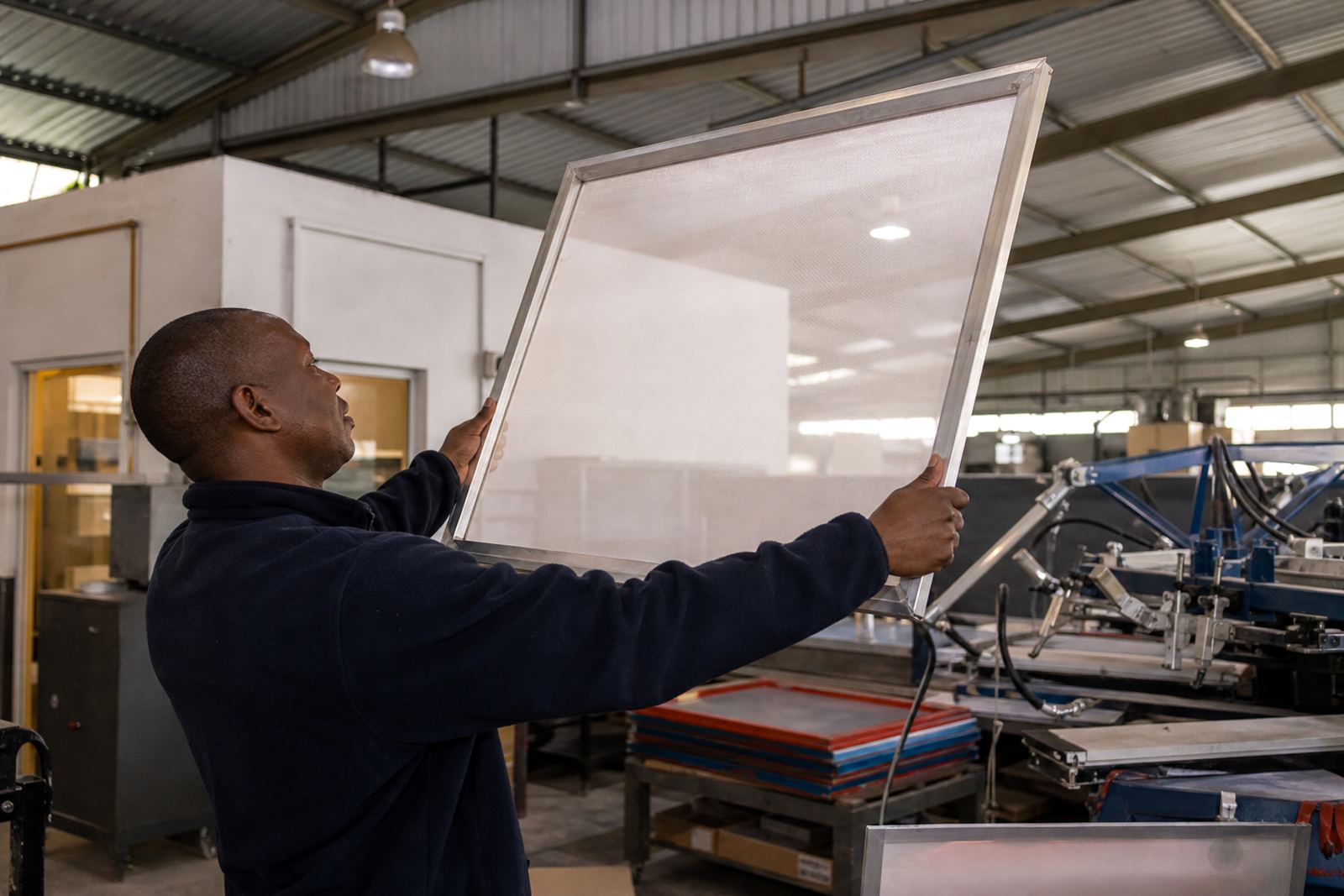
165T mesh does not need power, gas or special utilities for fitting. What matters is proper stretching, clean frame prep and even tension across the screen. When the mesh is stretched correctly, the screen sits stable on press and helps maintain repeatable print results. Uneven tension can cause print variation, so it is worth checking the whole frame before use.
For best results, the frame should be clean, dry and free of old adhesive or ink residue before bonding. If you are stretching in a humid area such as Durban or a coastal part of Cape Town, allow for moisture control during preperation and storage, because humidity can affect how the mesh behaves over time. In Gauteng, dust control matters just as much, especially in busy production rooms where screens are handled often.
Care, Cleaning and Service Life
Fine mesh needs careful handling if you want consistent print quality. Keep screens stored flat or upright in a way that avoids twisting the frame, and avoid knocking the tensioned area against hard edges. After printing, clean the mesh with suitable screen-wash methods before ink dries into the weave. Dried residue can reduce open area and affect detail on the next job.
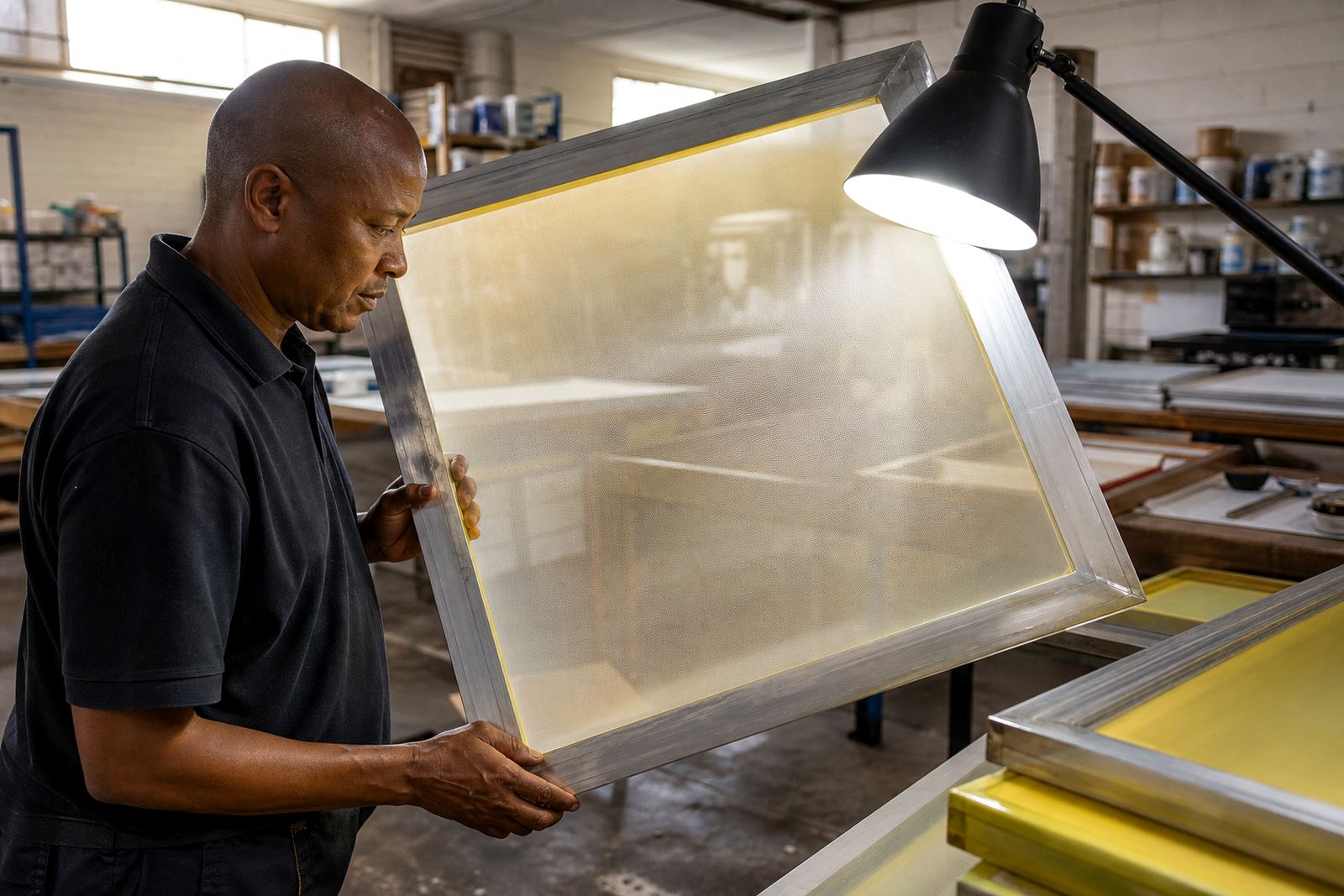
We also recommend regular tension checks, especially on screens used for repeat production. If the mesh starts to lose tension, the print can show soft edges or slight image movement. Re-stretching is often more practical than replacing the whole frame when the aluminium is still sound. For shops running frequent batches, a scheduled screen inspection can save time and keep the output more consistent.
- Clean ink out before it hardens in the weave
- Store screens where they will not warp or bend
- Check tension before repeat runs
- Re-stretch frames when the mesh starts to slacken
What To Check Before You Order 165T Mesh
When ordering 165T mesh, it helps to know the artwork size, the substrate, the ink type and the press setup. If the design includes fine text or small detail, send through the file details and let us match the mesh count to the job. The frame size matters too, because the wrong size can limit your print area or leave too little mesh margin for proper stretching.
You should also decide whether you need mesh only, a pre-stretched frame, or a full screen prep service. If you are working on ongoing jobs, batch screen prep and repeat order service can help keep your production moving. For customers across South Africa, our Germiston base supports supply to the East Rand, Midrand, Johannesburg, Pretoria, Durban, Cape Town and Gqeberha through the enquiry form on our contact page.
- Artwork detail level and smallest text size
- Ink type and intended substrate
- Frame size and print area needed
- Whether you need new stretching or re-stretching
- Any repeat-run or batch prep requirements
Why Print Shops Choose a Finer Mesh Count
Finer mesh counts are often chosen by print shops that need more control than coverage. 165T gives a practical balance for detailed work because it supports cleaner stencil edges while still allowing normal production handling. That makes it a useful screen for businesses that print custom jobs, short runs and artwork with finer elements that need to stay neat from screen to screen.
MeshMaster is based in Germiston, Gauteng and works with screen printers across South Africa who need screen-printing mesh and pre-stretched aluminium frames prepared with care. Our team handles new frame stretching, re-stretching, mesh count matching, tension checking, frame clean prep, mesh bonding and dispatch packing, so screens can go out ready for the next stage of production.
Key facts
| Mesh count | 165T |
|---|---|
| Use case | Detailed artwork, fine text and controlled image clarity |
| Frame type | Aluminium frame options available |
| Finish | Suitable for stretching and re-stretching |
| Power or gas needed | None |
| Ordering method | Enquiry form on our contact page |