What 90T Mesh Means On Press
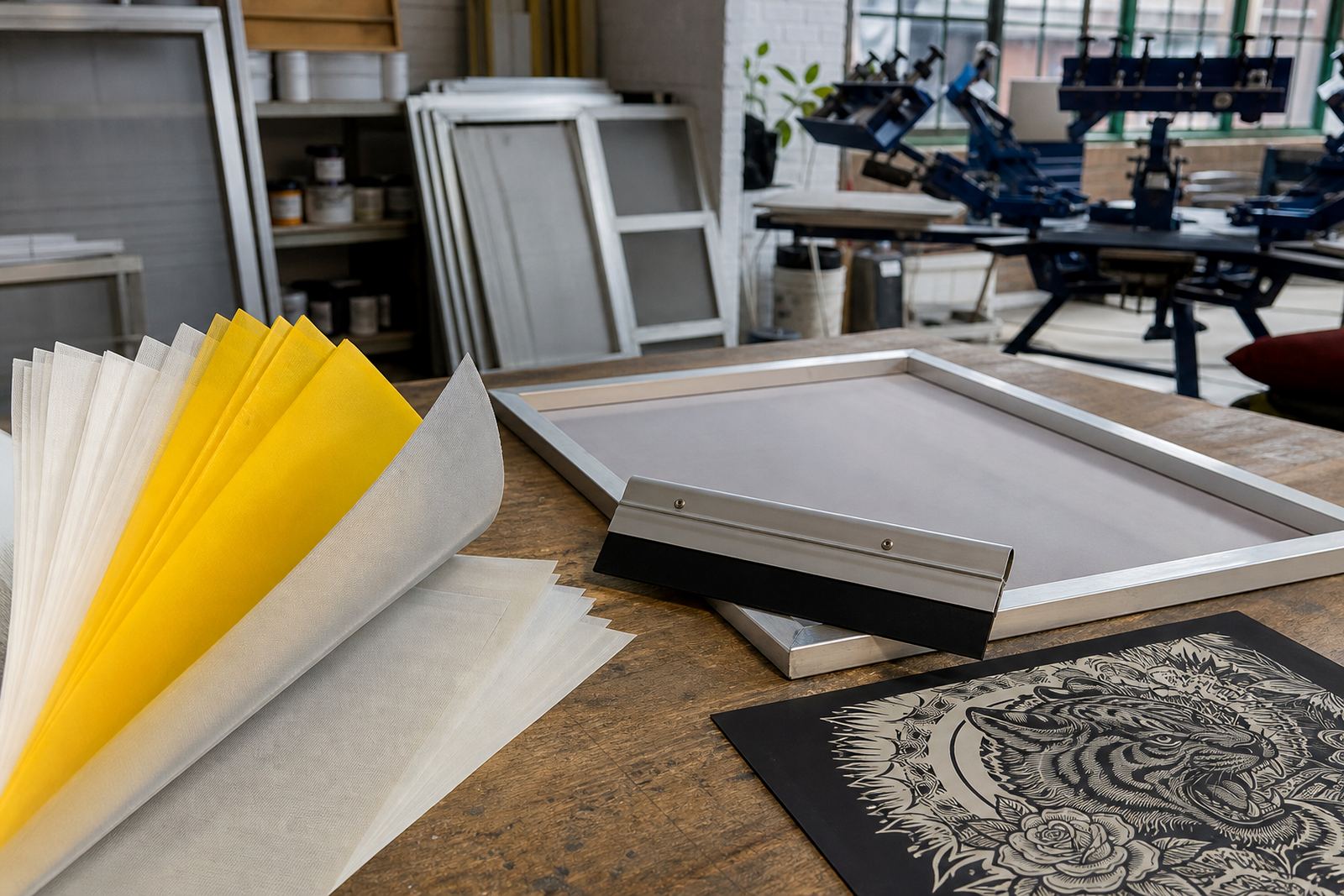
90T mesh is a finer screen-printing mesh count used for detail work where you want cleaner edges and a more controlled laydown of ink. In practical terms, the finer opening holds a thinner stencil image and helps keep fine text, halftones and smaller line work clearer on the garment or substrate.
For shops in Johannesburg, Pretoria, Durban, Cape Town and Gqeberha, 90T is often chosen when the job calls for precision rather than heavy ink deposit. It is commonly used with light fabrics, finer artwork and prints where sharp definition matters more than a thick print. If the design has very small detail, 90T helps reduce the chance of filling in the image. That said, the mesh still needs the right stencil thickness, squeegee pressure and off contact to perform well.
As a general guide, finer mesh counts like 90T are suited to water-based inks, thinner plastisols and fine detail jobs. They are not the first choice for heavy white underbases or very open artwork that needs a lot of ink deposit. Matching the mesh count to the job is part of good screen prep, and it saves time on the press later.
Sizes, Frame Options And Ordering Choices
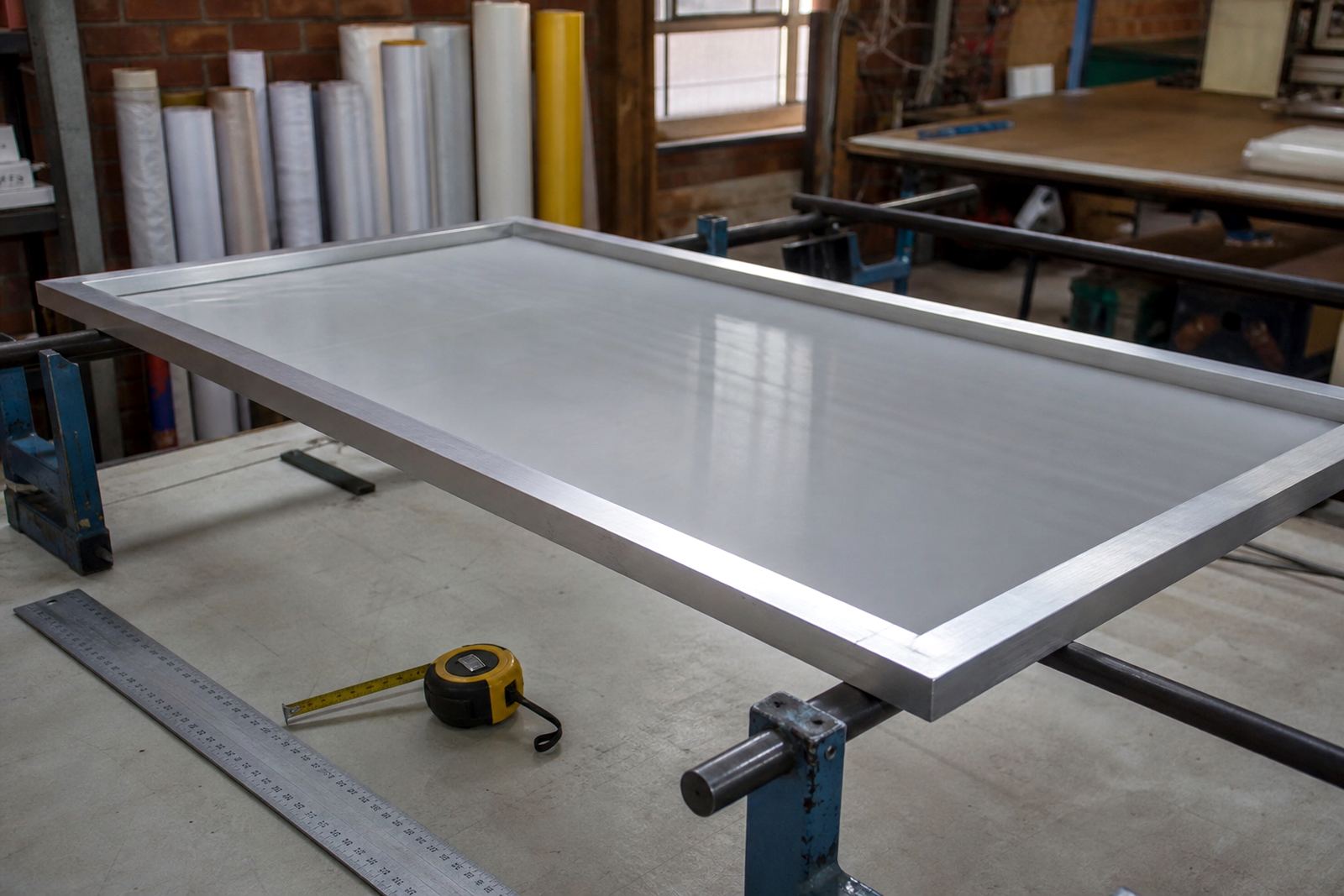
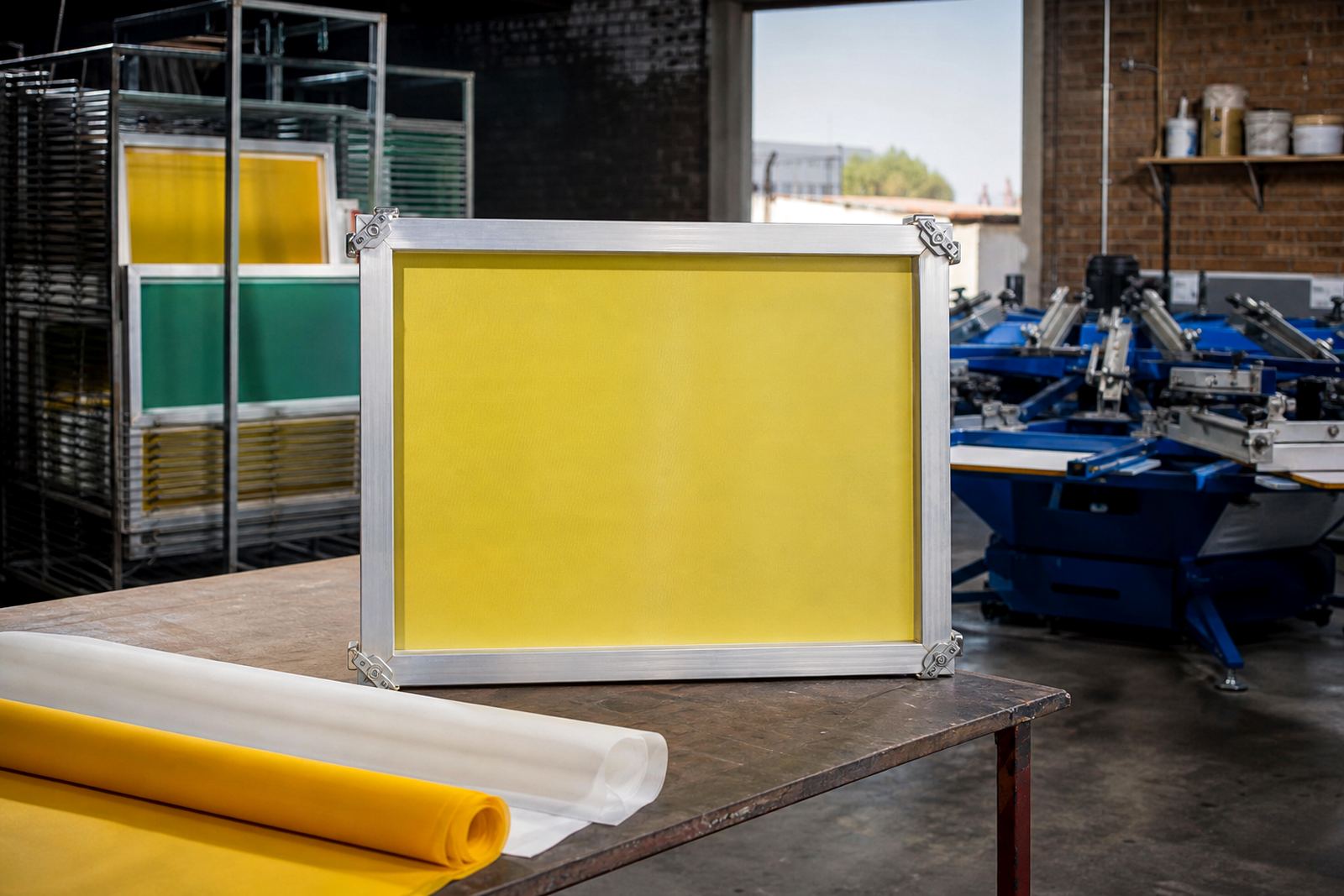
MeshMaster supplies 90T mesh on pre-stretched aluminium frames for standard shop use and custom frame sizing where the print room needs a specific opening. We work from Germiston and supply across South Africa, including East Rand supply, Midrand delivery and regional deliveries for recurring shop orders.
When ordering, the frame should suit your press layout and the size of the artwork. A larger print area gives you more room for placement, while a smaller frame can be easier to handle for short runs and detailed work. The mesh itself is selected for the job, but the frame size should still allow proper clamping, tension stability and enough border space for a clean print area.
Options usually depend on the screen setup you need:
- Pre-stretched aluminium frames for repeat work and cleaner handling
- Custom frame sizing for special press layouts or larger artwork
- New frame stretching for fresh screens
- Frame re-stretching when an existing frame is still sound
- Batch screen prep for multiple screens with the same mesh count
For shops that run mixed jobs, it helps to keep a clear record of the mesh count, frame size and intended ink type. That makes repeat ordering easier and avoids confusion when a job comes back months later.
Where 90T Mesh Works Best
90T mesh suits print work that needs fine image definition and measured ink transfer. It is a practical choice for smaller type, halftones, detailed artwork and prints where the finish needs to stay crisp. If the job is for light-coloured garments or smooth surfaces, this mesh count can give very neat results when the stencil and exposure are correct.
It is often considered for:
- Fine detail prints on T-shirts and lighter textile work
- Small text, logos and line art that need sharp edges
- Halftone work where clean dot structure matters
- Controlled ink transfer on smoother substrates
- Repeat production where a consistent image is needed across multiple screens
In warmer inland conditions and humid coastal areas, screen behaviour can shift during the day. Ink can dry faster on the screen in hot weather, while moisture can affect storage and curing consistency. That is why print shops often keep finer mesh screens sealed properly between runs and avoid leaving ink sitting in the screen for too long. On jobs where the ink needs to stay mobile, plan your setup and print speed before you start.
Stretching, Tension And Setup Matters
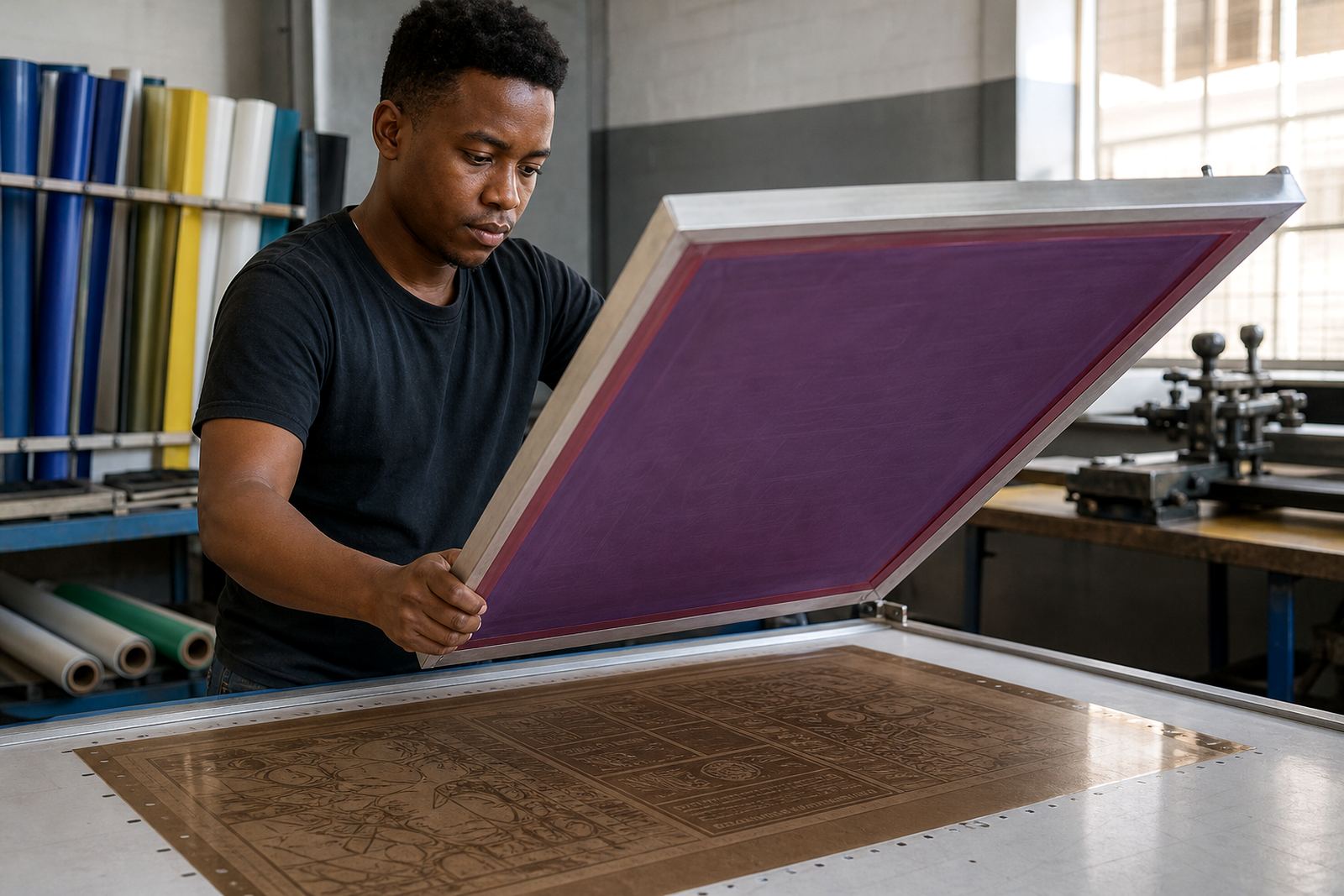
A 90T mesh screen only performs well if the tension is right. Good tension helps the mesh snap back after the squeegee pass, which gives you a cleaner print and better registration. Low tension can cause blurred edges, ink spread and uneven pressure across the screen. High tension is useful, but only if the frame is built to hold it without warping.
Our team handles new frame stretching and tension checking for screens that need reliable press performance. Thabo Mokoena leads frame stretching, with support from the rest of the workshop and logistics team for dispatch and repeat orders. If a frame is being re-stretched, the aluminium must be inspected first so the corners, bond and overall structure still support the mesh correctly. A damaged frame will not hold tension properly and it can throw off the whole screen.
Power and gas needs are not part of the mesh itself, but your setup should still be planned around the rest of the print process. Exposure units, washout areas and drying equipment may use electricity or heating, so many shops keep a backup plan for load-shedding and uneven supply. If your production area is in a municipal industrial zone, also check your local rules for washout disposal and water handling, especially where screen cleaning happens every day.
Care, Cleaning And Servicing Between Runs
Finer mesh needs regular care because dried ink, emulsion residue and rough handling can shorten its working life. After a run, the screen should be cleaned soon after use, not left until the next day if it can be avoided. Once ink dries in the mesh, it becomes harder to remove and can block the open areas that make 90T useful in the first place.
Keep an eye on these maintenance points:
- Remove ink fully after each job and clean the stencil area carefully
- Check for mesh damage, loose corners or signs of frame movement
- Store screens upright and away from dust, moisture and direct sun
- Avoid harsh scraping that can break threads or distort the mesh
- Inspect tension if the print starts to look soft or uneven
In coastal conditions, humidity can affect storage and can leave screens feeling different from one week to the next. In Gauteng, dust and dry air can also build up on stored screens and frames. A simple inspection before the next run saves time and helps keep the screen ready for production. Lerato Maseko handles customer support and repeat order service, so if you are matching an older screen to a fresh one, it helps to keep the original mesh count and frame size on file.
What To Check Before You Place An Order
Before ordering 90T mesh, it helps to confirm the artwork, the substrate and the press setup. Mesh count is only one part of the screen choice. The stencil thickness, ink type and print size also need to fit the job. If you are not sure whether 90T is the right call, our technical team can help with screen setup advice and mesh count matching.
Useful details to have ready include:
- The artwork size and whether the design has fine lines or halftones
- The substrate type, such as textile, smooth board or other printable surface
- The ink type you plan to use
- The frame size you need for your press
- Whether you need new frame stretching or frame re-stretching
- How many screens you need for the batch
Johan van der Merwe oversees dispatch packing, so screens are prepared with transport in mind for deliveries to Johannesburg, Pretoria, Durban, Cape Town and Gqeberha. If you need a repeat order, keeping the same mesh count and frame details on record makes the next run faster to organise.
For customers in Germiston and across South Africa, ordering through the enquiry form on our contact page is the best way to send through your requirements. A clear brief helps us match the mesh, frame and tension to the work you are planning.
Key facts
| Mesh count | 90T |
|---|---|
| Product type | Screen-printing mesh for fine detail work |
| Frame material | Pre-stretched aluminium frame options |
| Use case | Sharp image definition and controlled ink transfer |
| Service options | New frame stretching, re-stretching, tension checking |
| Supply area | Germiston, Gauteng and deliveries nationwide |