What 77T Mesh Means in Daily Screen Printing
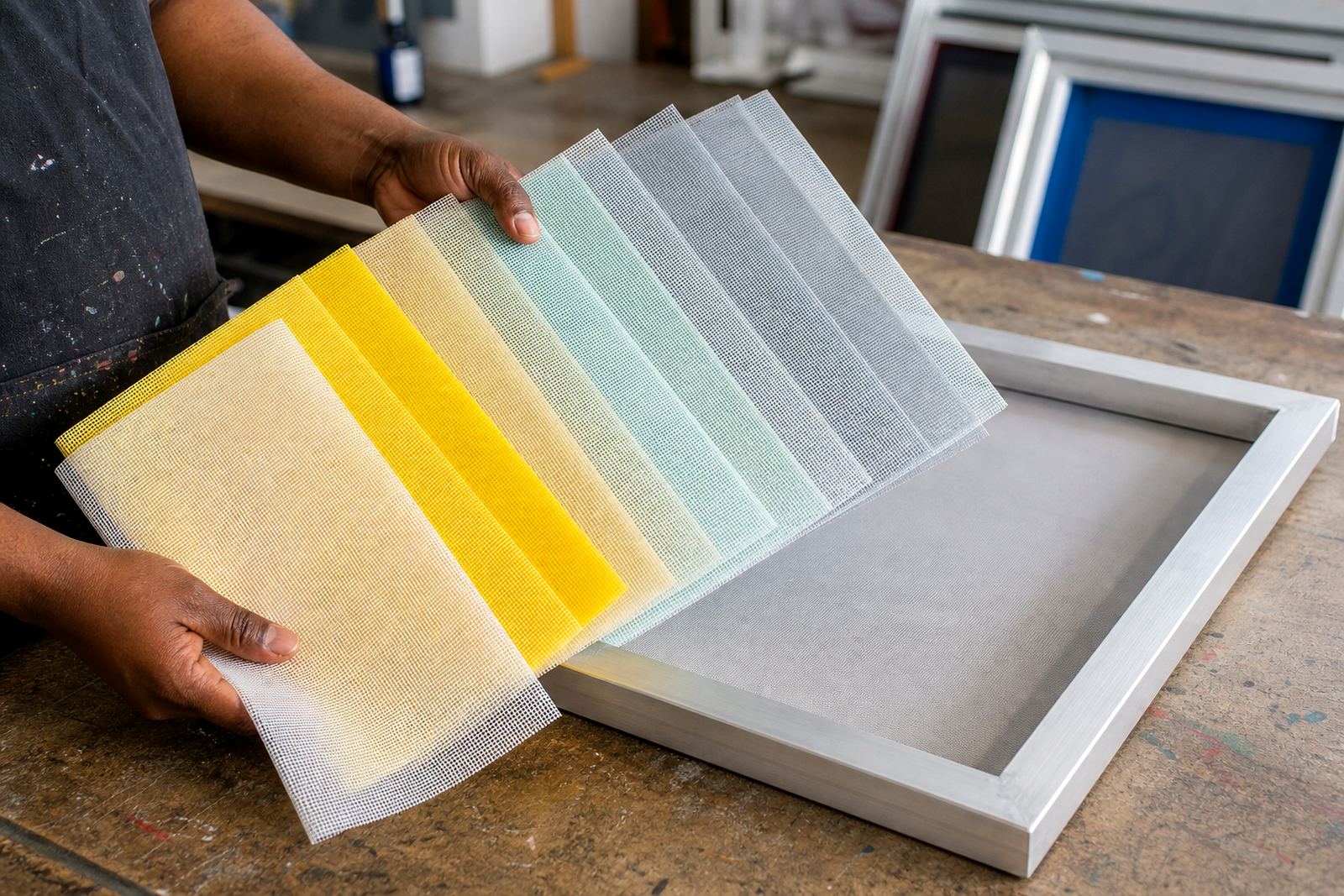
77T mesh is a medium-fine screen-printing mesh used when the print needs better detail and a cleaner edge than a coarse mesh can provide. In practical terms, it sits in that useful middle ground where the mesh still releases ink well, but gives you more control over halftones, small lettering and sharper spot colours. Many South African print shops keep this count on hand for jobs that move between clothing, tote bags, signage panels and general promotional work.
The mesh count refers to the number of threads in a set area, so the higher the count, the finer the weave. With 77T, you get enough open area for everyday printing, while still supporting finer artwork and smoother stencil edges. It is a sensible option when the customer wants cleaner results but the artwork does not need an ultra-fine mesh that will fight thick inks or slow production down.
Sizes, Frame Options and Matching the Right Stretch
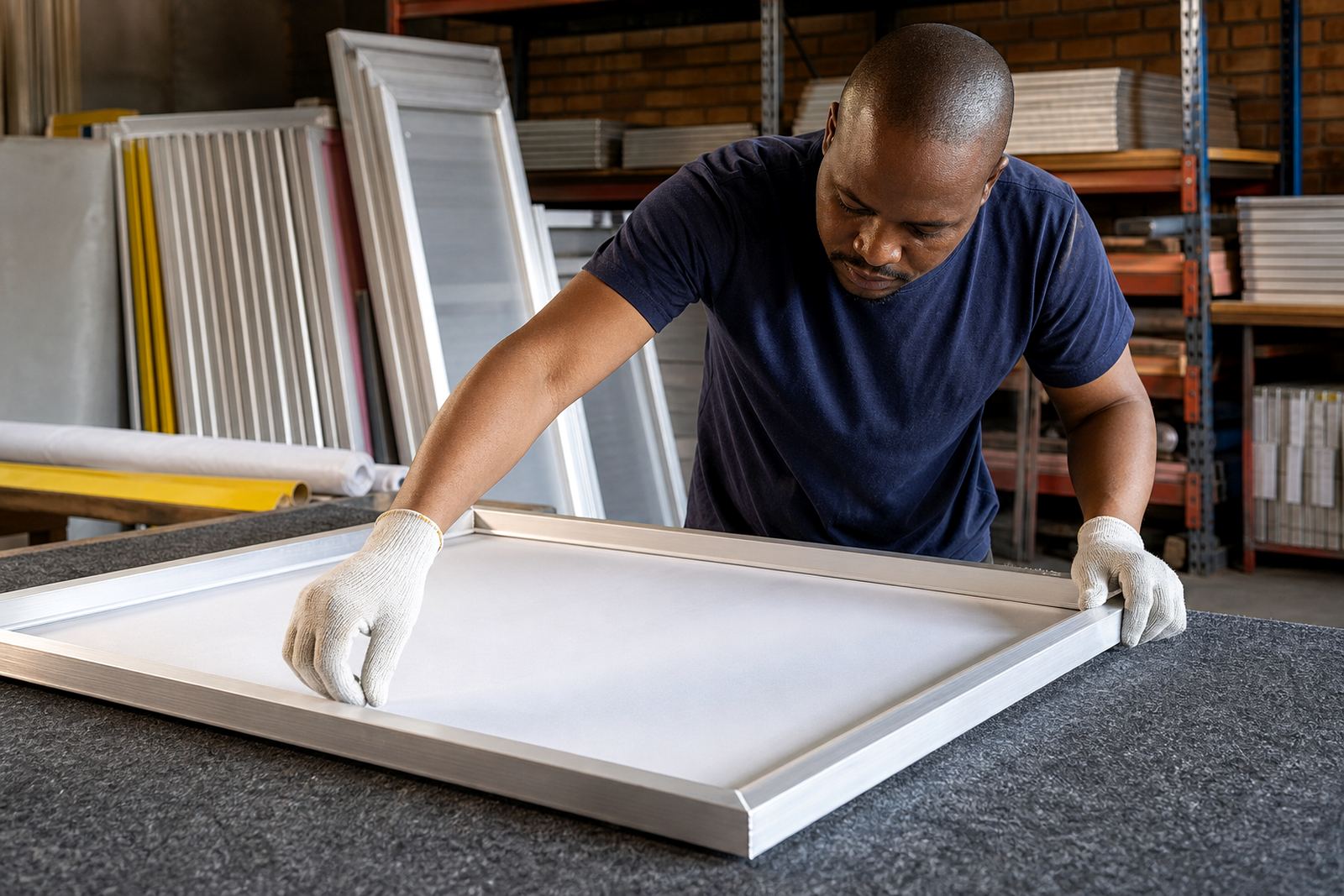
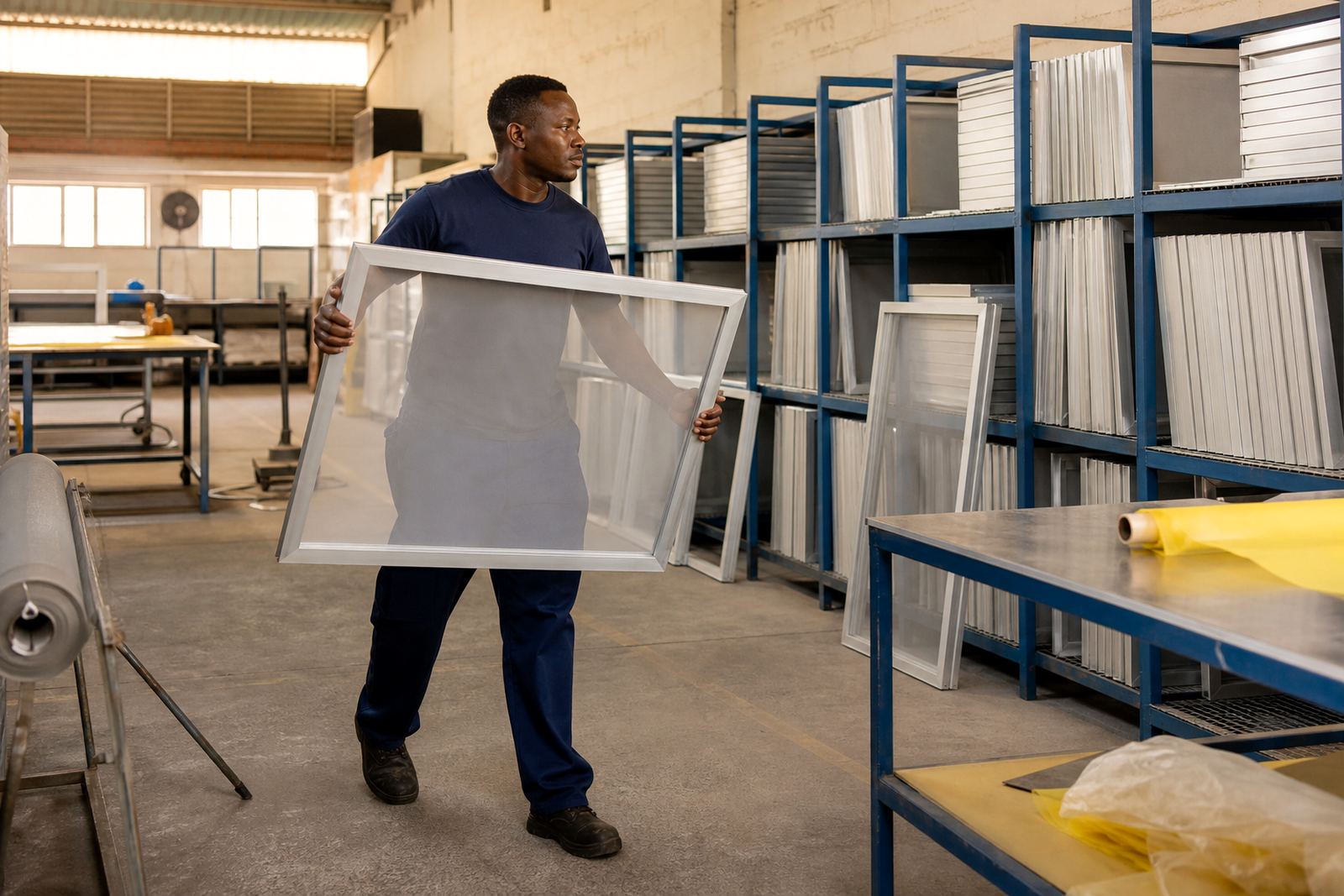
77T mesh is normally supplied on pre-stretched aluminium frames or as mesh for re-stretching existing frames. For shops in Germiston, Johannesburg and the East Rand, aluminium frames are often preferred because they stay stable through regular use, handle repeated wash-up better, and do not swell like timber in humid conditions. That matters on jobs stored near Durban or coastal routes, where moisture can change a screen quicker than expected.
When ordering, it helps to match the mesh to the frame opening and the artwork style. Smaller frames are useful for test prints and short runs, while larger frames suit repeat production and wider artwork. If you need a custom frame size, the stretch has to be even from corner to corner so the mesh holds tension properly after curing. Uneven stretch causes image drift, poor registration and premature wear along the edges.
- Custom frame sizing for standard workshop formats
- Pre-stretched aluminium frames for cleaner handling
- Re-stretching for serviceable frames that still have a sound body
- Mesh count matching for artwork, ink type and print method
Where 77T Mesh Works Best on Press
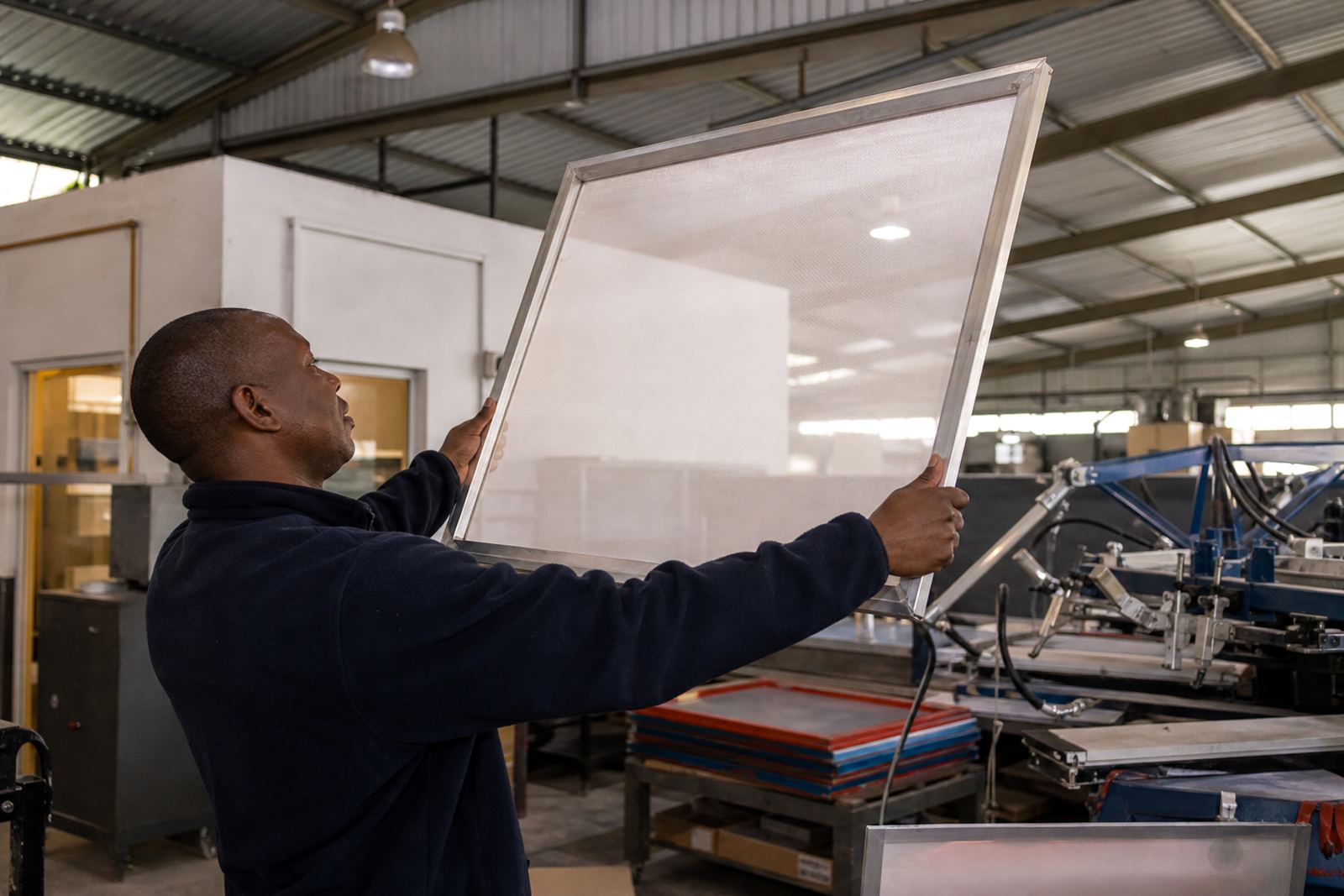
This mesh count suits general printing where you want a cleaner edge than a lower count can deliver. It is often used for solid spot colours, cleaner small text, linework, and finer graphic elements that need a bit more control. On garment work, it can help reduce excess ink deposit and cut down on messy edges around lettering or fine logos. On flatstock, it gives a neater finish for labels, light signage and presentation items.
It is also useful when you need one screen to handle a mix of jobs without constant remaking. For print shops that move between short runs and repeat work, 77T can become a dependable middle choice. It is not the answer for every setup though. Very heavy ink deposits, coarse textures and some specialty effects may call for a lower count, while extremely fine detail or halftone work may need a finer mesh. The right choice depends on the art, the substrate and the ink body you are using.
- General garment printing with cleaner edges
- Small text and line detail
- Light flatstock and promotional items
- Repeat work where consistency matters
Installation, Stretching and Workshop Requirements
77T mesh does not need power or gas to function, but the stretching and fitting process must be done properly to get the best life from the screen. Good tension starts with a clean frame, correct adhesive bonding and even pull across the full surface. If the mesh is installed badly, the screen will lose register faster and the print edge will move as the run goes on. That is where proper frame prep and tension checking matter.
In a working print shop, installation usually begins with frame cleaning, edge prep and a careful bond before the mesh is pulled to spec. Once stretched, the screen should be checked for uniform tension and inspected for pinholes, damage or weak spots near the corners. No special utility supply is required, but a clean workshop area, basic hand tools and suitable drying space for frame prep are important. If you are running in a load-shedding affected area, plan your stretch and curing steps around your shop schedule so screens are not handled before the bond has settled properly.
Care, Cleaning and Reuse Between Orders
Looking after 77T mesh starts after the first print, not when it starts looking tired. Proper wash-up, controlled ink removal and prompt cleaning after production all help preserve tension and reduce staining. Water-based and plastisol type inks need different cleaning habits, but the principle is the same: do not let ink dry hard in the weave. Once dried in, it becomes harder to clear and can damage the mesh over time.
After each job, inspect the screen for stretched corners, blocked apertures and any weak areas around the frame bond. If the mesh has lost tension or the print starts to blur at the edges, it may be time for re-stretching or replacement. Frames that are still straight and sound can often be reused, which is helpful for shops keeping costs under control. On coastal routes or in humid months, store screens off the floor and away from direct damp. A dry rack and decent airflow make a big difference, even if the workshop is busy and cramped.
- Wash out ink before it sets hard in the weave
- Check corners and edge bond after each run
- Store screens flat or racked in a dry area
- Replace or re-stretch when tension drops off
What to Confirm Before You Order 77T Mesh
Before placing an order, check the artwork detail, the ink type, the substrate and the frame size you need. A clean print depends on matching all four properly. If the job includes fine lettering, halftones or tidy edge work, 77T may be a better fit than a coarser mesh. If the ink is heavy or highly textured, ask whether this count will still release enough ink for the finish you want. That decision is often made on the art side, not just the press side.
It also helps to confirm whether you need new stretched screens or mesh only for re-stretching existing frames. If your shop runs repeated orders, batch screen prep and repeat order service can save time. For print shops in Johannesburg, Pretoria, Durban, Cape Town and Gqeberha, the practical question is usually not just what counts as suitable but what will hold up through the next round of printing with less faff. If you are unsure, check mesh count, frame size, intended ink and the number of screens you need before you send the enquiry.
- Artwork detail and smallest line thickness
- Ink type and deposit required
- Frame size and whether you need custom sizing
- New screen or re-stretch on an existing frame
Supply from Germiston Across South Africa
MeshMaster supplies screen-printing mesh and pre-stretched aluminium frames from Germiston, Gauteng, with delivery and supply support into Johannesburg, Pretoria, Durban, Cape Town and Gqeberha. The team handles new frame stretching, frame re-stretching, tension checking, mesh count matching, screen inspection and dispatch packing for working print shops that need practical support and regular stock.
Whether you are setting up a new run or replacing a worn screen, 77T mesh is a dependable option for cleaner general printing. If you need advice on the right count, the right frame or the right setup for your press, send an enquiry through the contact page and the team can help you match the screen to the job before it goes out.
Key facts
| Mesh count | 77T |
|---|---|
| Typical use | General printing with cleaner edges and finer detail than lower counts |
| Frame option | Pre-stretched aluminium frame or mesh for re-stretching |
| Print behaviour | Moderate ink deposit with improved edge control |
| Best suited substrates | Garments, tote bags, light flatstock and promotional items |
| Service options | Custom frame sizing, mesh count matching, tension checking and re-stretching |