What the 64cm Frame Is Used For
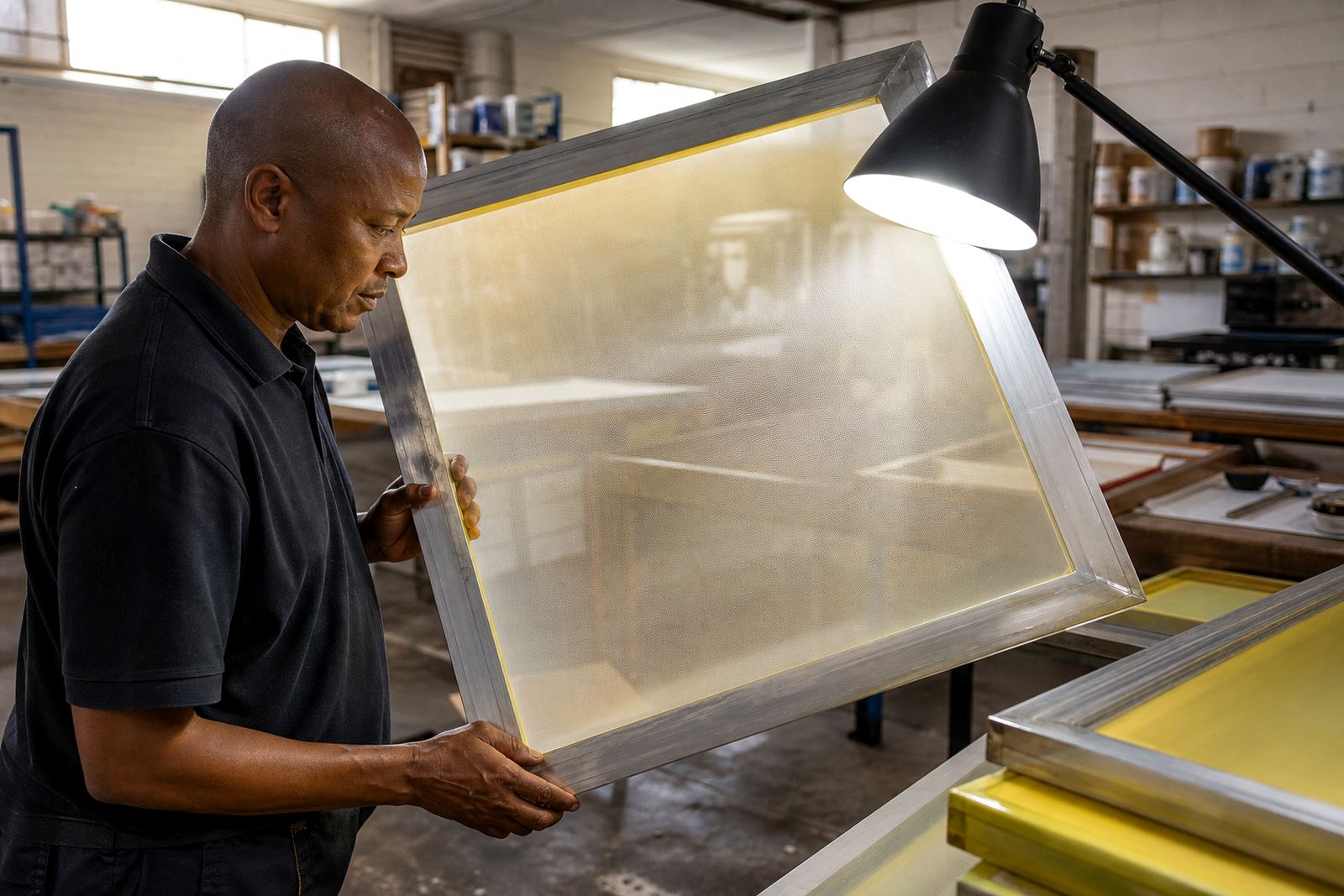
The 64cm frame is a medium format screen frame used in day to day printing where a smaller, easy to handle screen gives better control on the press. It is commonly chosen for single-colour jobs, repeat runs and workshop work where you need reliable registration without taking up too much space. In a busy Germiston or Johannesburg print room, that size is often easier to move, store and clean than larger frames.
This frame size works well for garments, paper products and flat stock such as labels, light boards and packaging sheets, depending on the mesh count fitted and the image size. It is also a practical option for schools, small print shops and production teams that change artwork often. Because the frame is pre-stretched, the screen arrives ready for coating once you have checked the mesh and frame condition.
Size, Mesh Counts and Print Area Options
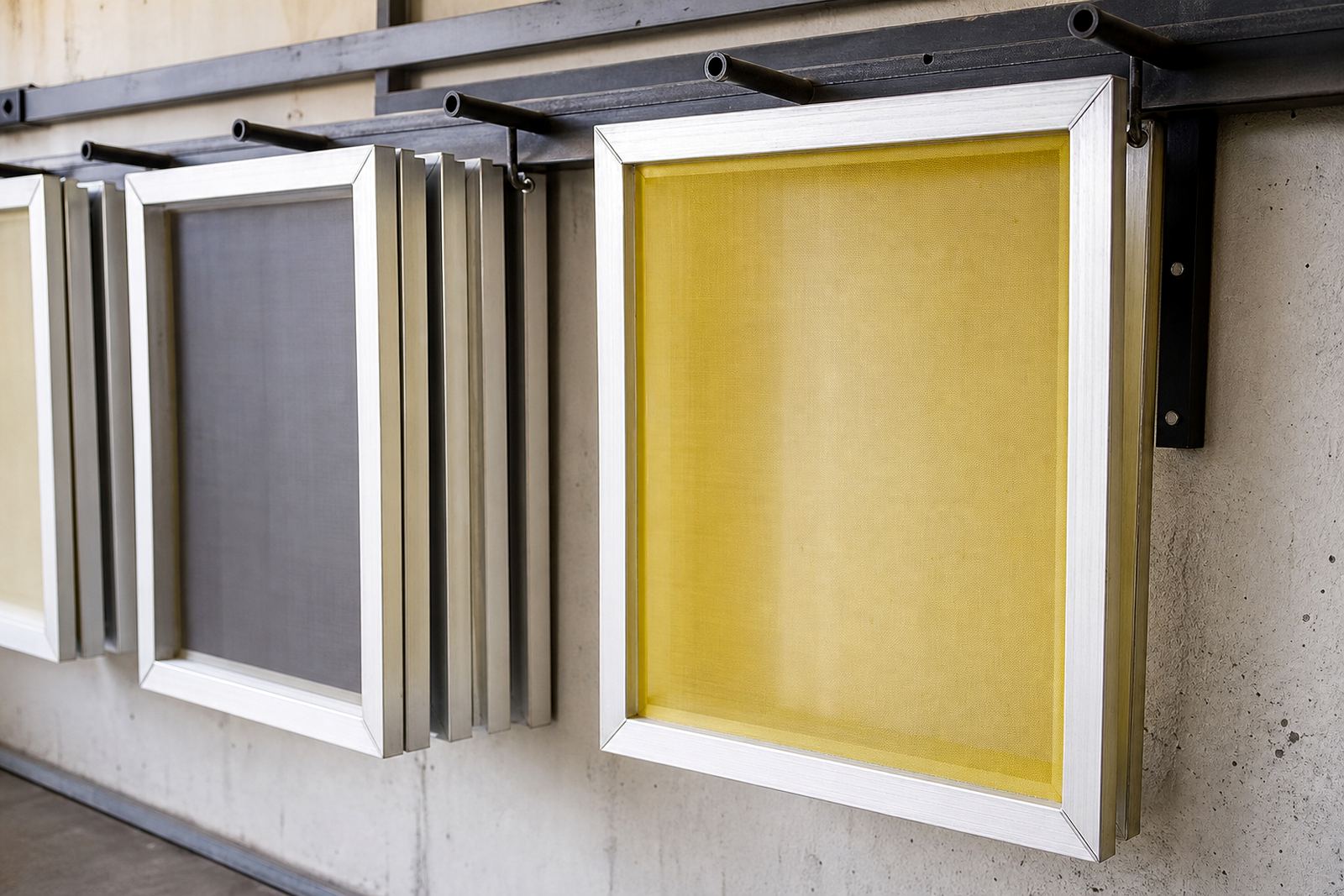
A 64cm frame can be supplied with different mesh counts to suit the job. Lower mesh counts are usually used for heavier ink deposits and bold prints, while higher mesh counts are better for finer detail, halftones and thinner ink layers. The right choice depends on the garment or substrate, the ink type and the level of detail in the artwork.
- Lower mesh counts for thicker inks and strong coverage
- Medium mesh counts for general purpose garment printing
- Higher mesh counts for fine detail, paper work and smoother ink release
- Mesh count matching for repeat work or specific production standards
The usable print area depends on the frame profile, the mesh stretch and the artwork size, so it is worth checking both the outer frame size and the internal clear area before placing an order. If your shop works with mixed jobs, one frame size can be used across several setups, which keeps things simple when stock changes at short notice.
Why Screen Shops Choose This Frame Size
This size suits print shops that want a frame that is big enough for everyday commercial work but not awkward on the press. It gives good handling for spotting, easy alignment and cleaner screen prep, especially when the team is setting up several screens in one shift. For Durban coastal conditions or humid periods in Cape Town, a well stretched aluminium frame also helps reduce warping and keeps the screen more predictable during printing.
The frame is useful where jobs change often and the operator needs a consistent screen that can be cleaned, reclaimed and reused. If you run a small to medium workshop, the 64cm frame often becomes a regular go-to size because it balances work area and ease of movement. It is practical for new printers and experienced teams alike, and it is easy to keep in rotation with other standard sizes.
- Easy to handle on manual and production setups
- Suitable for repeat orders and batch work
- Good for mixed garment and flat stock printing
- Works well where storage space is limited
Installation, Tension and What It Needs to Run
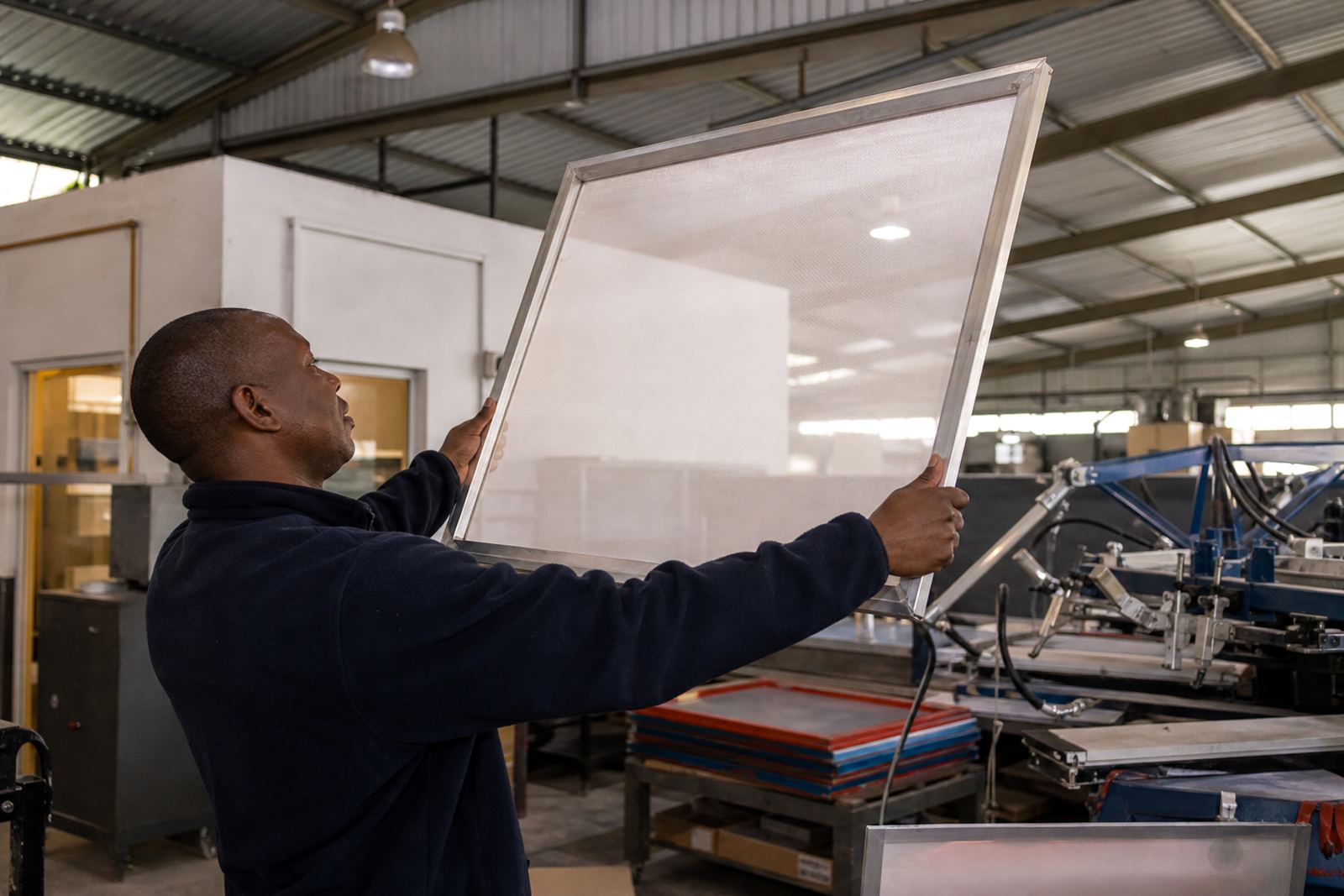
The 64cm frame does not need power or gas. It is a manual screen-printing component that is fitted into your existing frame stretching or printing setup. Once the mesh is stretched and bonded correctly, the screen is ready for coating, drying and exposure in the normal way. You only need the usual workshop tools, a clean prep area and a press or print table suited to your job.
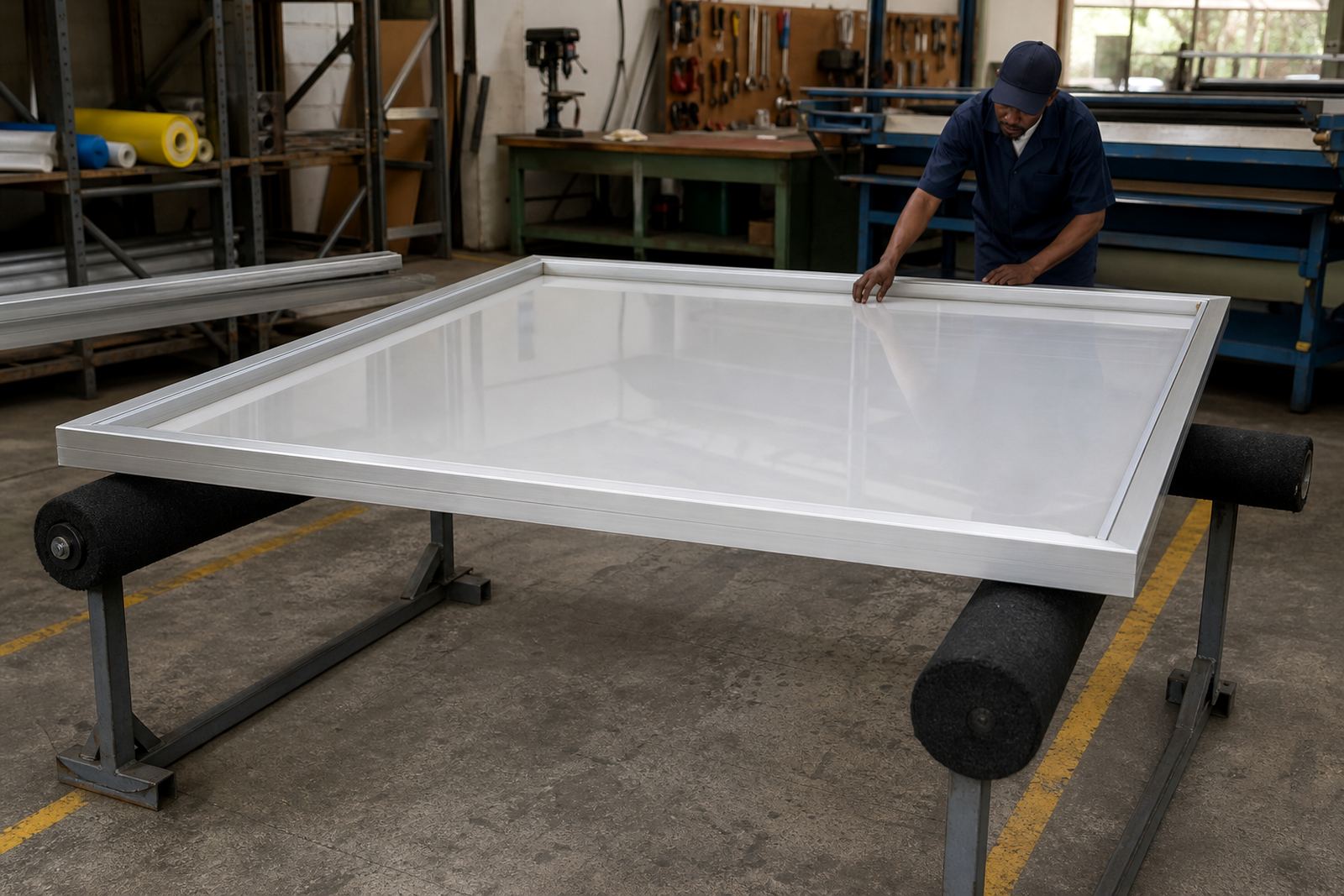
Good tension is important because it helps the screen keep its shape, improves ink control and supports cleaner prints over longer runs. Too little tension can cause poor snap back and uneven edges, while too much tension can put strain on the mesh or frame. Our frame stretching and tension checking services are there to help shops that want consistent results across different mesh counts and re-orders.
Care, Cleaning and Re-Stretching Support
Like any working screen, a 64cm frame lasts longer when it is cleaned properly after each job. Ink residue, emulsion build-up and solvent left on the mesh can affect tension and print quality over time. A light but thorough clean after printing helps the frame stay in better condition, especially where the same screen is used again and again for a repeat job.
For shops in Gauteng, the East Rand and coastal areas, frame care also means checking for corrosion, glue breakdown or mesh slippage after storage. Aluminium frames are usually a good choice where temperature changes, humidity and workshop dust are part of normal conditions. If the screen starts losing tension or the mesh edge begins to lift, re-stretching may be the better option than starting over.
- Rinse and clean off ink promptly after use
- Keep frames flat and out of direct heat where possible
- Check corners, mesh edges and bonding lines regularly
- Use re-stretching when the frame is still sound but the mesh has lost tension
What to Confirm Before You Order
When ordering a 64cm frame, it helps to confirm the exact size you need, the mesh count, the type of printing you plan to do and whether you need a new stretch or a re-stretch on an existing frame. If you are matching screens for a set, make sure the tension and mesh count are kept consistent across the batch. That saves time during setup and helps avoid small print differences from screen to screen.
You should also check whether the job needs a standard frame, custom sizing, mesh bonding or batch screen prep. If the screen is going to be used for garments, paper or flat stock, tell us what ink system and detail level you are working with so we can guide the mesh choice. If you are close to an order change or doing repeat work, it is worth confirming the delivery area too, whether that is Germiston, Midrand, Pretoria, Durban, Cape Town or Gqeberha.
Our team can help with mesh count matching, tension checking, clean prep and dispatch packing. That makes it easier to keep your print room moving, even when the order book is full and the stock needs to turn over quickly. A clear order note now can save a lot of time later, especially when the screens must fit the same press and setup each time.
Key facts
| Product type | Pre-stretched aluminium screen-printing frame |
|---|---|
| Frame size | 64cm |
| Typical use | Garments, paper and flat stock |
| Mesh options | Selected mesh counts for detail, coverage and ink release |
| Service options | New frame stretching, re-stretching, tension checking and mesh count matching |
| Needs | No power or gas required |