What 100T mesh is used for
100T mesh sits in the finer end of screen printing stock and is chosen when the job calls for more detail than a medium mesh can usually give. It is a sensible choice for text, line work, halftones and designs where sharp edges matter more than heavy ink deposit. In practical terms, it helps printers move cleanly through artwork that would look too open on a coarser screen.
For shops in Johannesburg, Pretoria, Durban, Cape Town and Gqeberha, 100T mesh is often kept on hand for repeat work and detailed branding. It suits printers who already know the job needs a finer screen before setup starts, because that saves time on tests and reduces the chance of smudging or over-inking.
- Fine detail and small lettering
- Halftones and lighter tonal work
- Cleaner edges on controlled print runs
- Jobs where excessive ink deposit is not wanted
Size options and frame pairings
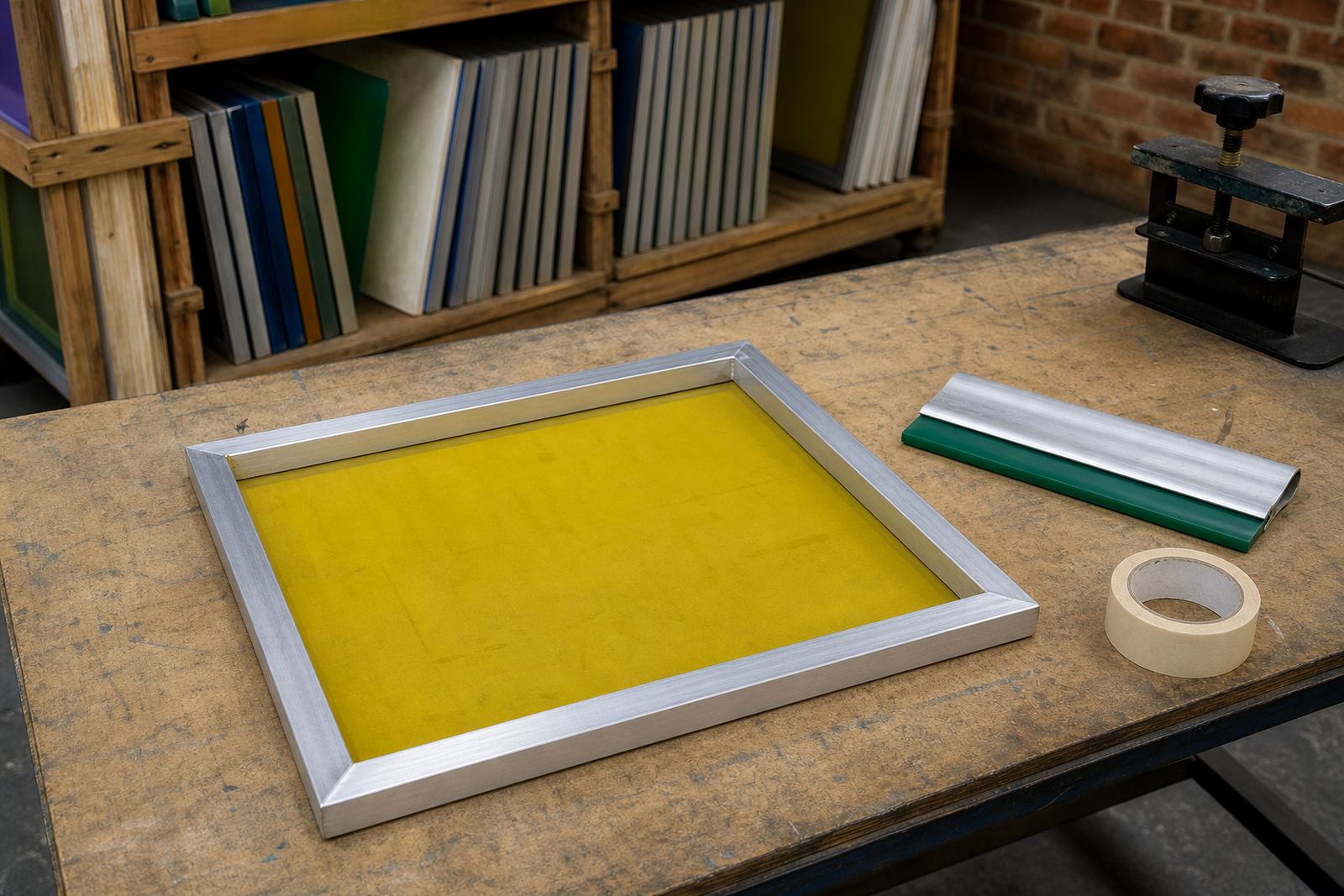
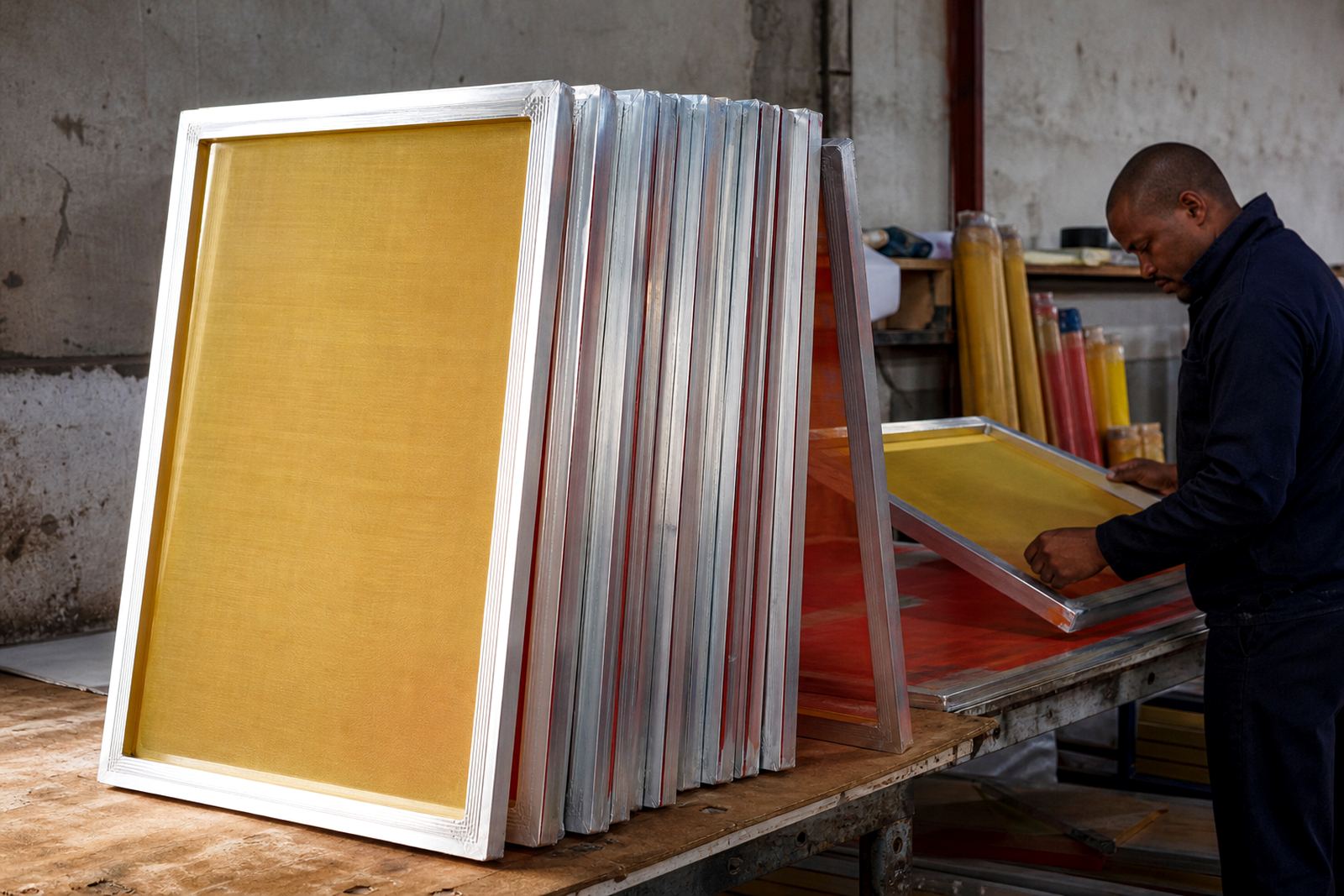
100T mesh is commonly supplied as cut mesh for stretching onto frames, or as pre-stretched aluminium frames ready for screen prep. The right frame size depends on the artwork area, the number of prints needed, and how much margin the printer wants around the image. A good frame should give enough room for registration, tape clearance and comfortable handling during setup.
At MeshMaster in Germiston, mesh is matched to the frame and the job requirement, whether the order is for a single screen or a batch of repeated screens. Aluminium frames are a practical choice for South African conditions because they handle day to day use well and are easier to keep square when the workshop is warm, humid or affected by load-shedding interruptions.
- Available as mesh only or on pre-stretched frames
- Suitable for standard shop formats and custom frame sizing
- Best matched to artwork area, not just overall frame size
- Can be used for new frames or frame re-stretching work
Where 100T mesh suits best
This mesh is a good fit for print jobs that need neat detail without going into very high mesh counts that can slow ink flow too much for the ink system being used. It is often selected for label work, fine logos, small type and lighter graphics where the printer still wants a practical screen that behaves well during pull and flood. It also helps when the artwork has more detail than a general purpose mesh can comfortably carry.
For water-based inks, plastisol and other common screen-printing ink types, the final result depends on the full setup, but 100T gives a strong starting point for finer work. It is not the first choice for heavy deposits on coarse fabrics, and that is the point. It gives control. If the job calls for thicker laydown, a different count may be better.
- Small fonts and fine artwork
- Detailed corporate or promotional print work
- Halftone and image-heavy screens
- Jobs needing tighter ink control rather than heavy coverage
Stretching, tension and installation basics
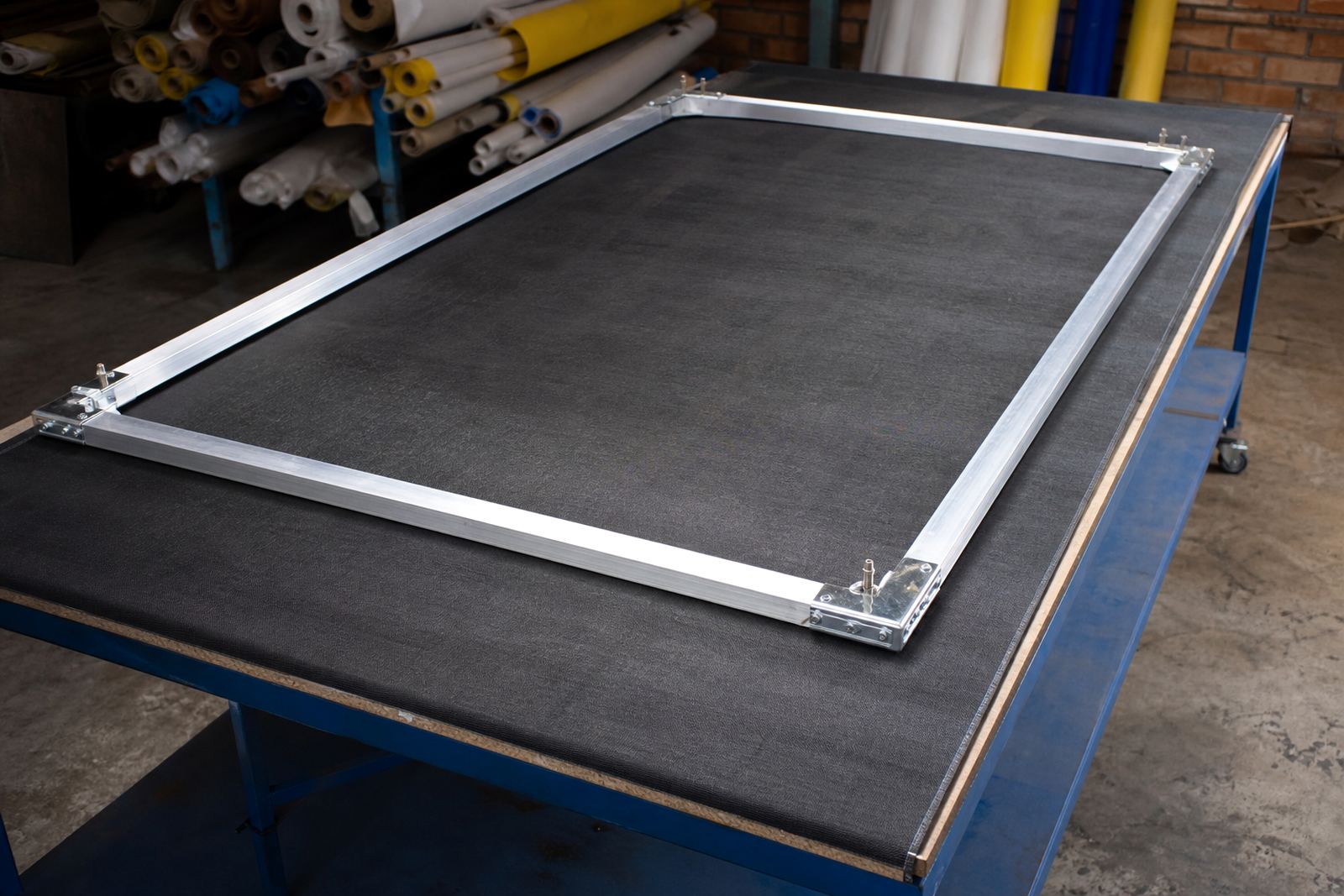
Good screen printing starts with sound stretching and stable tension. A 100T mesh needs even tension across the frame so the print stroke stays consistent and the image does not distort during use. When the mesh is stretched unevenly, fine detail can shift, edges may feather, and repeat prints become harder to keep consistent. That is why frame prep and tension checking are part of a proper screen setup.
For installation, no power or gas supply is needed for the mesh itself, though the workshop still needs a clean area, proper drying space and enough ventilation for adhesives and cleaning work. Frames should be clean, dry and free of old adhesive before bonding. If the screen will be used in a busy shop, it is worth checking that the frame is square and that the mesh is bonded evenly all the way around. A little care at the start saves rework later.
- Even tension is essential for fine detail printing
- No power or gas is required for the mesh product itself
- Clean frame surfaces help bonding and screen life
- Drying space and ventilation are useful in workshop setup
Care, cleaning and screen life
Mesh life depends on how the screen is handled between jobs. After printing, the screen should be cleaned promptly so ink does not dry into the mesh openings. Fine mesh can clog faster than coarse mesh, especially if the shop leaves screens standing through a hot afternoon or a load-shedding stop. Quick wash-downs, gentle reclaiming and correct drying help keep the screen usable for longer.
For repeated use, inspect the mesh for loose edges, pinholes, damaged threads and areas where tension has dropped. In coastal areas like Durban and Gqeberha, moisture in the air can affect drying times, so screens should be stored in a dry, dust-free place. If a frame starts losing tension or the mesh looks tired, frame re-stretching or a new stretch may be the better option instead of pushing the screen too far.
- Clean screens soon after use
- Store in a dry, dust-free area
- Check for pinholes and loose edges
- Re-stretch when tension drops or the screen starts to misbehave
What to check before ordering 100T mesh
Before placing an order, check the artwork detail, the ink type, the frame size and whether you need mesh only or a complete pre-stretched frame. It also helps to confirm the print surface, because fabric, paper and specialty stock can call for different mesh behaviour. If you are matching existing screens, bring the current mesh count and frame size so the replacement can be aligned properly.
Customers across South Africa can send their requirements through the enquiry form on our contact page, and the team will help with mesh count matching, frame sizing and repeat orders. If the job is for a busy shop in Midrand, an East Rand workshop or a delivery route into Pretoria or Cape Town, it helps to note when the screens are needed so dispatch can be planned properly.
- Artwork detail and size of the print area
- Ink type and substrate
- Frame size and whether you need mesh only or a full frame
- Any matching screen you want copied or replaced
How MeshMaster supports screen shops
MeshMaster works from Germiston, Gauteng and supplies screen-printing mesh and pre-stretched aluminium frames to print shops across Johannesburg, Pretoria, Durban, Cape Town and Gqeberha. The service includes new frame stretching, frame re-stretching, mesh count matching, tension checking, frame clean prep, mesh bonding, custom frame sizing, batch screen prep, screen inspection, dispatch packing, repeat order service and screen setup advice. That means a shop can order the mesh, have it matched to the frame and receive it ready for use with less back and forth.
For printers who need dependable supply and practical advice, 100T mesh is often part of a wider screen plan rather than a single purchase. A smooth order usually starts with the right count, the right frame and a clear idea of the job ahead. If you are working to a deadline, say so early, because screen prep takes better shape when the order details are complete and the workshop knows what the print run is meant to do.
Key facts
| Product | 100T screen-printing mesh |
|---|---|
| Mesh count | 100T, suited to fine detail work |
| Format | Mesh only or pre-stretched aluminium frame |
| Typical use | Small type, fine lines, halftones and controlled ink deposit |
| Power or gas needed | None for the mesh product itself |
| Support services | Frame stretching, re-stretching, tension checking and mesh count matching |