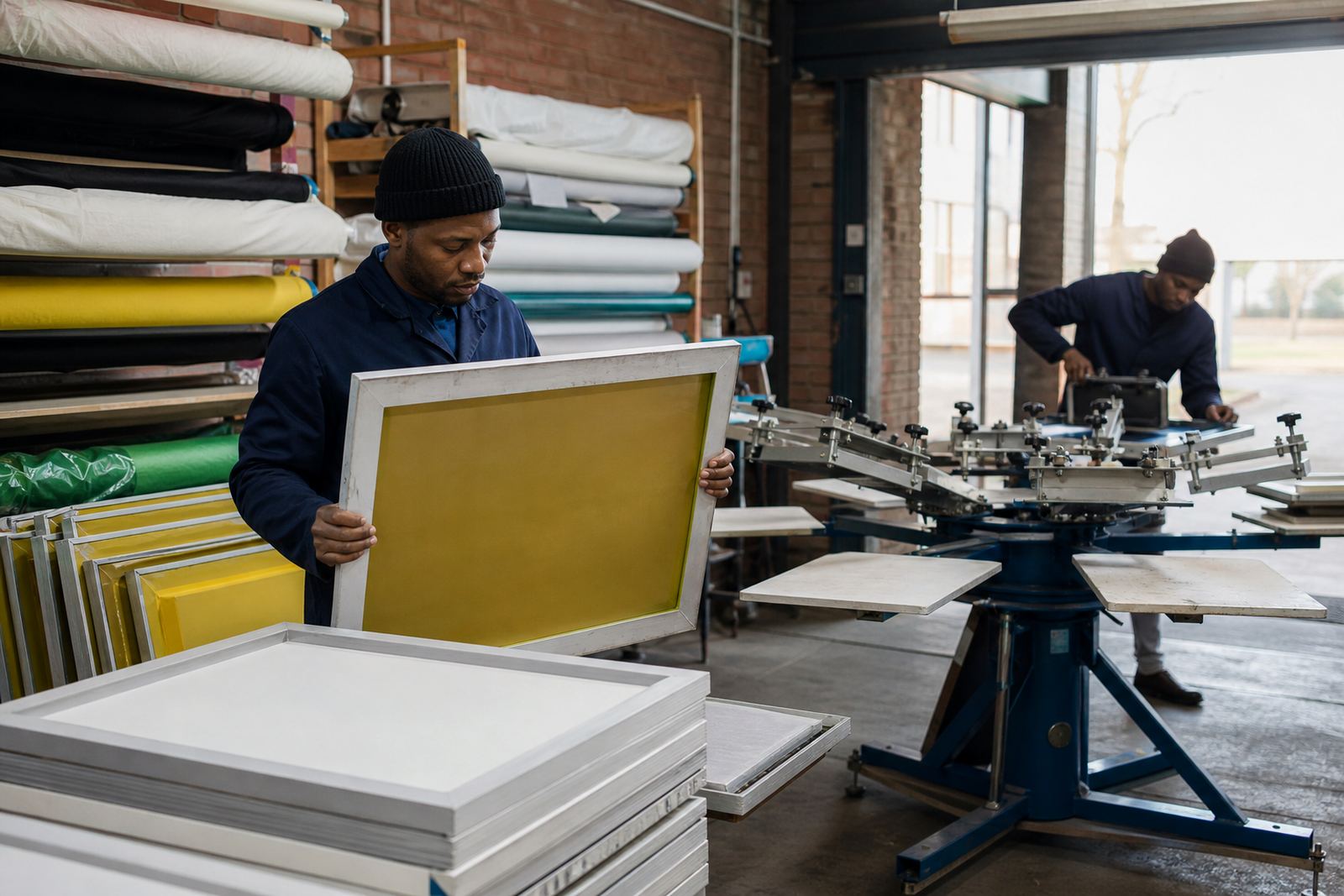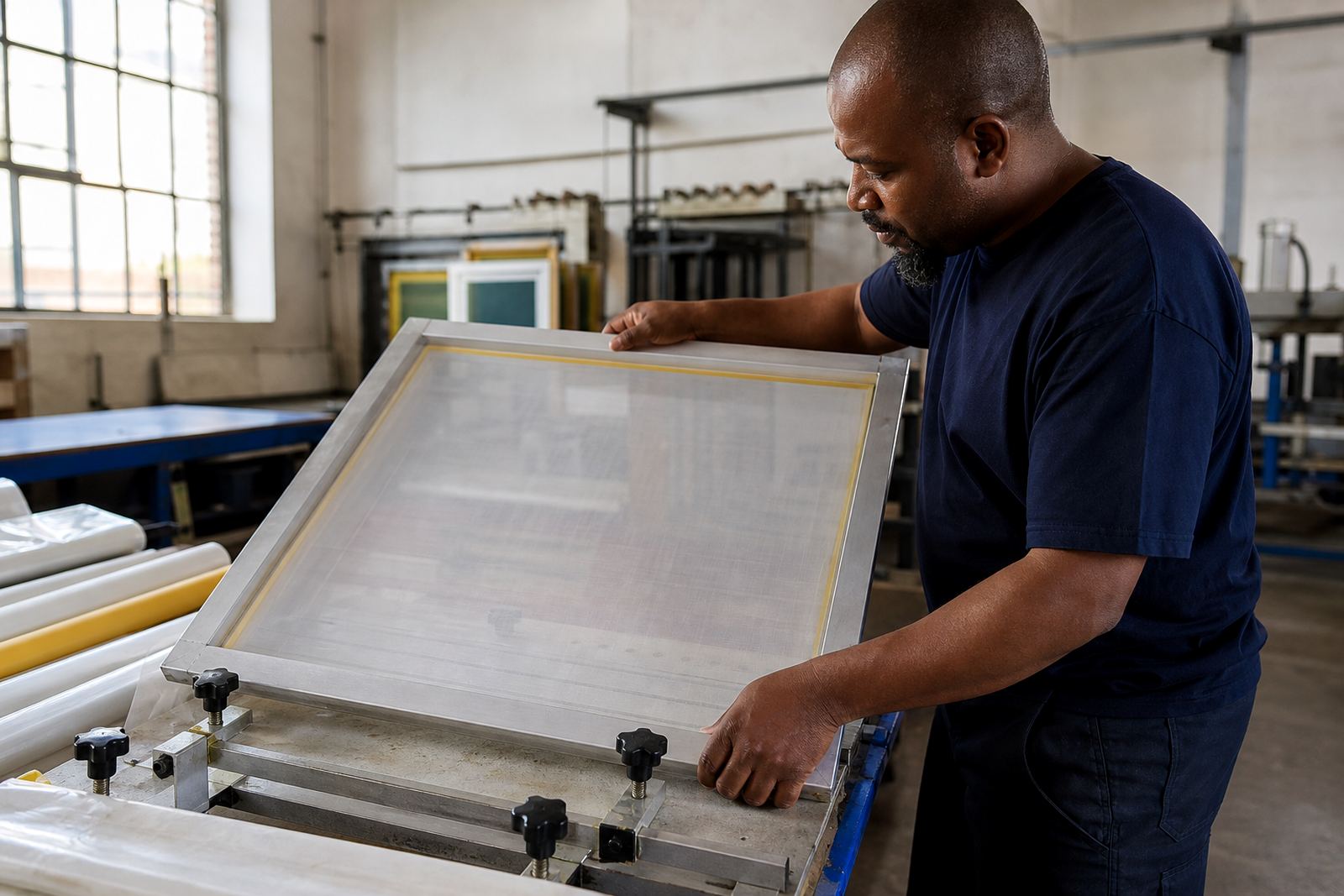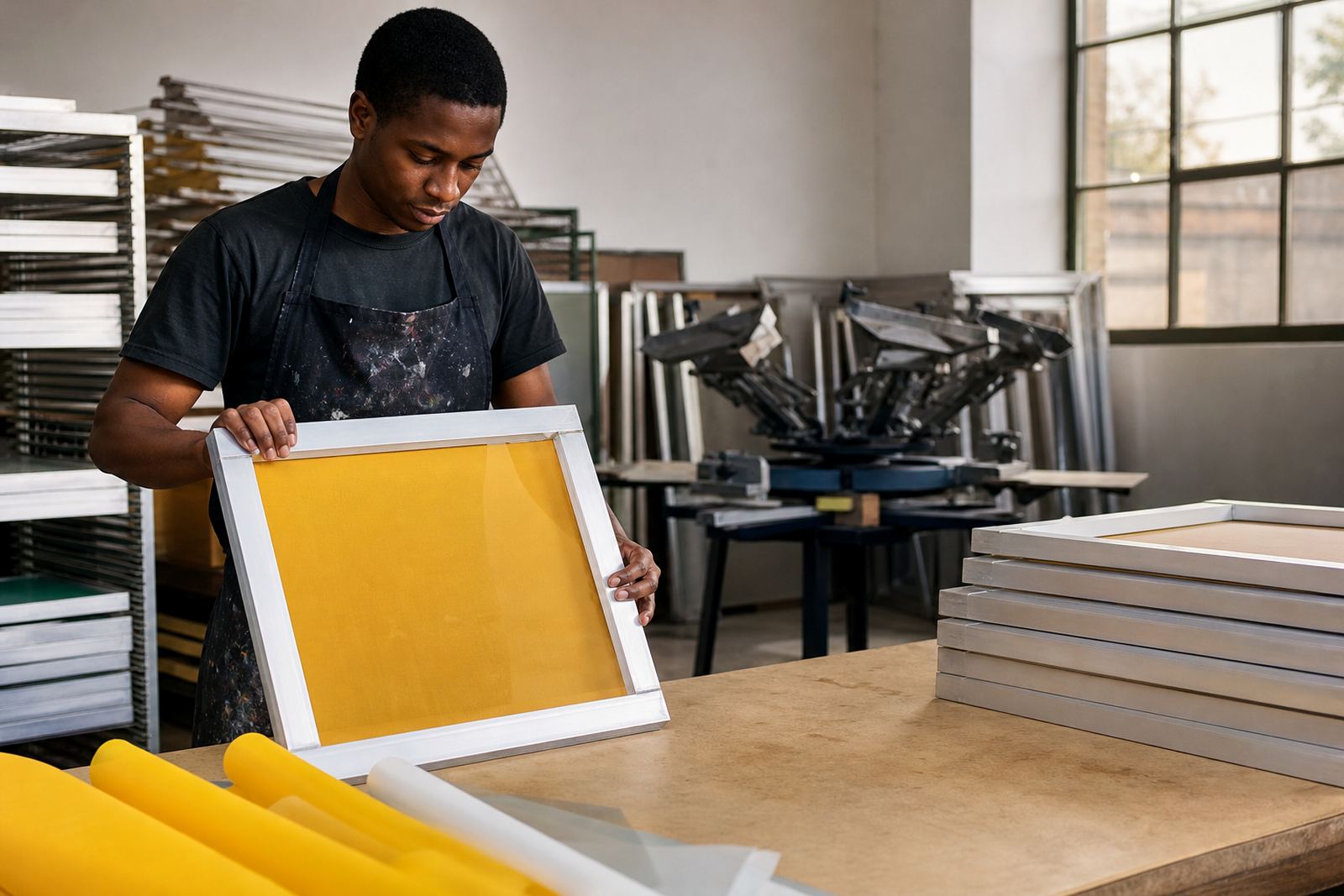
Keep the Same Screen Format from Job to Job
Repeat orders work best when the screen build stays the same from one run to the next. That means keeping the mesh count, frame size, coating method and tension target aligned with the original job. If the previous screens printed cleanly and held detail well, we use those same set-up notes to help you order again without starting from scratch.
This is useful for shops running regular garment work, packaging, labels or signage panels where the artwork changes less than the print method. A repeat order can save time in setup and reduce the risk of a fresh screen behaving differently on press. It also helps when you need screens for the same job in different branches or when multiple print runs have to match across Gauteng, Durban or Cape Town.
What We Check Before a Repeat Order Goes Ahead
Before we prepare a repeat order, we look for the details that affect print consistency. If you have an old job reference, screen size or mesh count on file, that gives us a good starting point. If you do not have those details, we can still help by checking the print type and the substrate so the right screen spec is selected.
- Mesh count and thread type for the detail level required
- Frame size and profile for the press or manual table in use
- Stretching tension and whether the screen still needs a check
- Mesh condition after cleaning, storage or long lay-off periods
- Whether a fresh frame is needed or the old frame can be re-stretched
For many repeat jobs, it is the small details that matter most. A screen that looked fine last month can shift slightly after heat, cleaning solvents or storage in a warm storeroom. We account for that before packing.
How to Place a Repeat Order Through the Enquiry Form
The easiest way to reorder is through the enquiry form on our contact page. Include the job name, the screen size if you have it, and whether you want new frame stretching, re-stretching or only mesh count matching. The more exact the details, the faster we can match the screen specification.
It also helps to mention where the screens are going. A shop in Johannesburg may need a different turnaround plan from a branch in Durban or Gqeberha, especially when dispatch needs to fit around collection times, road freight or local delivery runs. If the order is part of a batch for ongoing work, say so in the form so we can pack and label it accordingly.
- Tell us the repeat job name or previous order reference
- List the mesh count or print finish if you know it
- Say whether you need full screens, re-stretched frames or spare frames
- Note if the screens must be matched across several press stations
Matching Mesh and Tension for Ongoing Work
Repeat orders are not only about getting the same size frame. The mesh count and tension have a direct effect on ink flow, stencil detail and print feel. A finer mesh can help with detail and lighter ink deposit, while a lower or heavier mesh count may suit thicker inks or stronger coverage, depending on the job. We work from established screen-printing practice to keep the repeat set-up in line with the original result.
When the job has already been proved on press, it is usually best not to change the mesh unless there is a reason. If the original screen gave good release and clean edges, the repeat should follow that same path. If a print has changed because the artwork, ink or substrate has shifted, we can advise on the likely screen adjustment before anything is stretched.
When to Re-Stretch Instead of Ordering a New Frame
In many cases a repeated job does not need a completely new frame. If the aluminium frame is still sound, re-stretching may be the better choice. That keeps the same frame footprint while refreshing the mesh and tension. It is often useful when a shop already has a proven frame size for a regular customer or contract run.
New frame stretching is the better route when the old frame has bent corners, damaged joints or signs of wear that affect flatness. In South African print rooms, stored screens can also take a knock from humidity, heat and general handling, especially near the coast or in busy dispatch areas. A quick inspection can show whether the frame still has enough life for another run or whether a fresh build will save trouble later.
Packing, Labelling and Dispatch for Repeat Runs
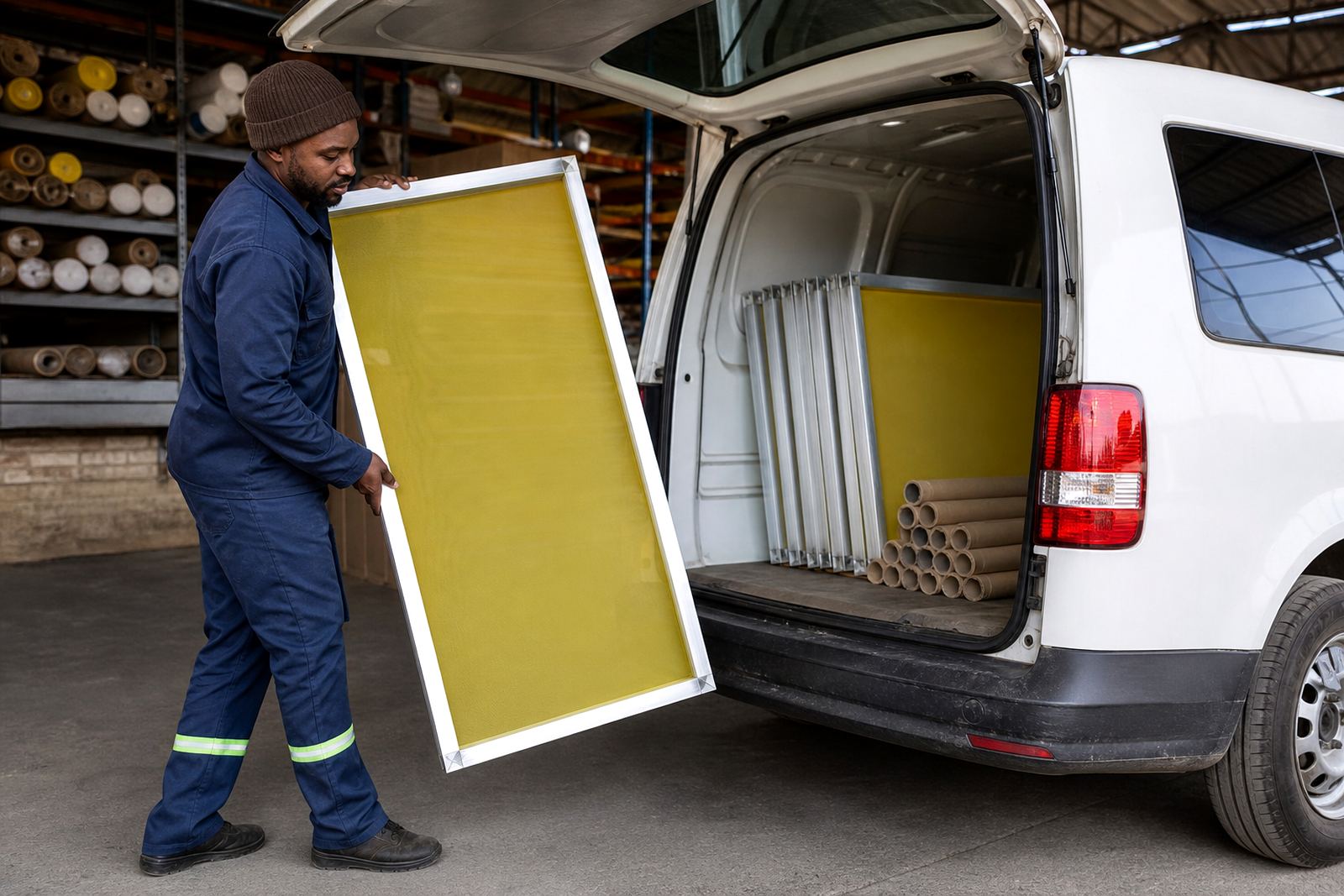
Once a repeat order is prepared, it should be packed so the screens arrive ready for use. That means protecting the mesh from scratches, keeping frames from rubbing together and labelling each screen clearly when more than one is going out. Good packing matters when the same job is split between a main shop and a satellite branch, or when screens need to move between Germiston, Midrand and other delivery points.
We also keep repeat orders practical for ongoing work by grouping related items together where needed. If you regularly reorder the same format, it helps to keep the notes consistent from one enquiry to the next. That way, the next batch can be checked against the last one without guessing.
- Wrap mesh surfaces so they do not mark in transit
- Separate stacked frames to avoid edge damage
- Label repeat sets for press station or artwork sequence
- Keep storage dry, clean and out of direct sun
Useful for Regular Jobs, Rush Reprints and Seasonal Peaks
Repeat order support is especially useful when orders come in waves. Many print shops need the same screen format again for reprints, seasonal promotions or work that returns every few weeks. Having a known screen spec on hand makes it easier to respond when a customer asks for the same result again, even if the turnaround is tight.
It also helps when load-shedding, stock movement or staff changes interrupt the normal flow of work. A repeat screen order with the right notes makes it easier for the next person on shift to pick up where the last run stopped. For ongoing jobs, that kind of continuity matters more than trying to rebuild every screen from the start.