
Start with the print job you want to run
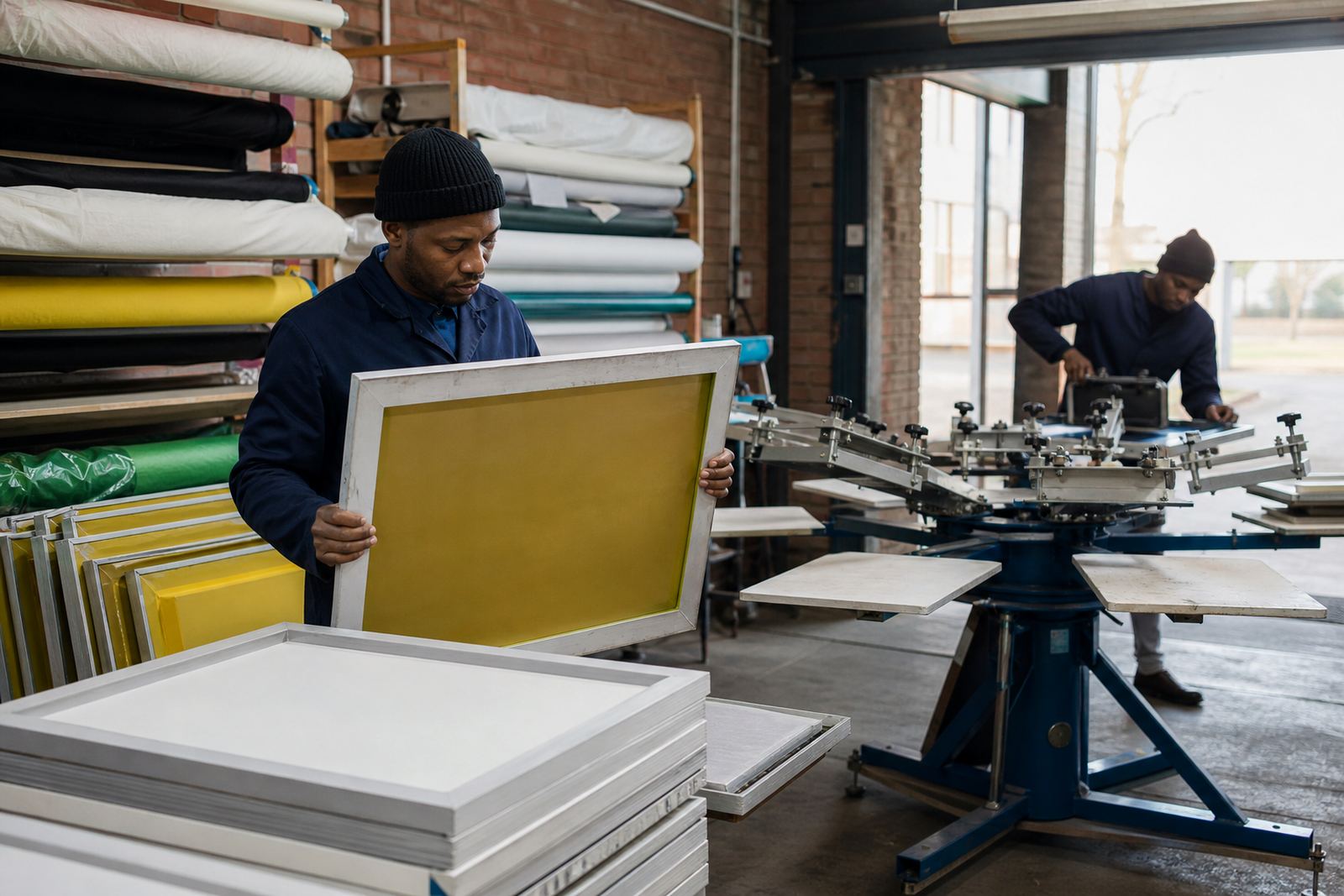
Begin by telling us what you are printing and how the screen will be used. Textile work, poster ink work, fine detail printing and heavier coverage all call for different mesh counts and frame preparation. If you are unsure which count suits the job, give us the substrate, the ink type and the level of detail on the artwork, then we can guide you from there.
For most orders, it helps to describe whether you need open mesh for heavier deposits or a finer mesh for sharper detail. If the screen is for a repeat run, mention what worked well before and what did not. That saves time and helps us match the next screen properly.
Details we need for mesh supply
When ordering mesh, please include the information below so we can prepare the right material and avoid delays.
- Mesh count or a description of the print detail you are aiming for
- Mesh width or the size of the sheet you need
- Whether the mesh is for textile, graphic or general screen work
- How many metres or sheets you need
- Any preference for tension level if you are replacing mesh on existing frames
If you do not know the exact mesh count, that is fine. Describe the design line work, ink deposit and the level of detail. Fine halftones, small text and sharp edges usually need a tighter mesh, while thicker ink deposits often need a more open count. We can help you narrow it down before the order is processed.
What to send for pre-stretched aluminium frames
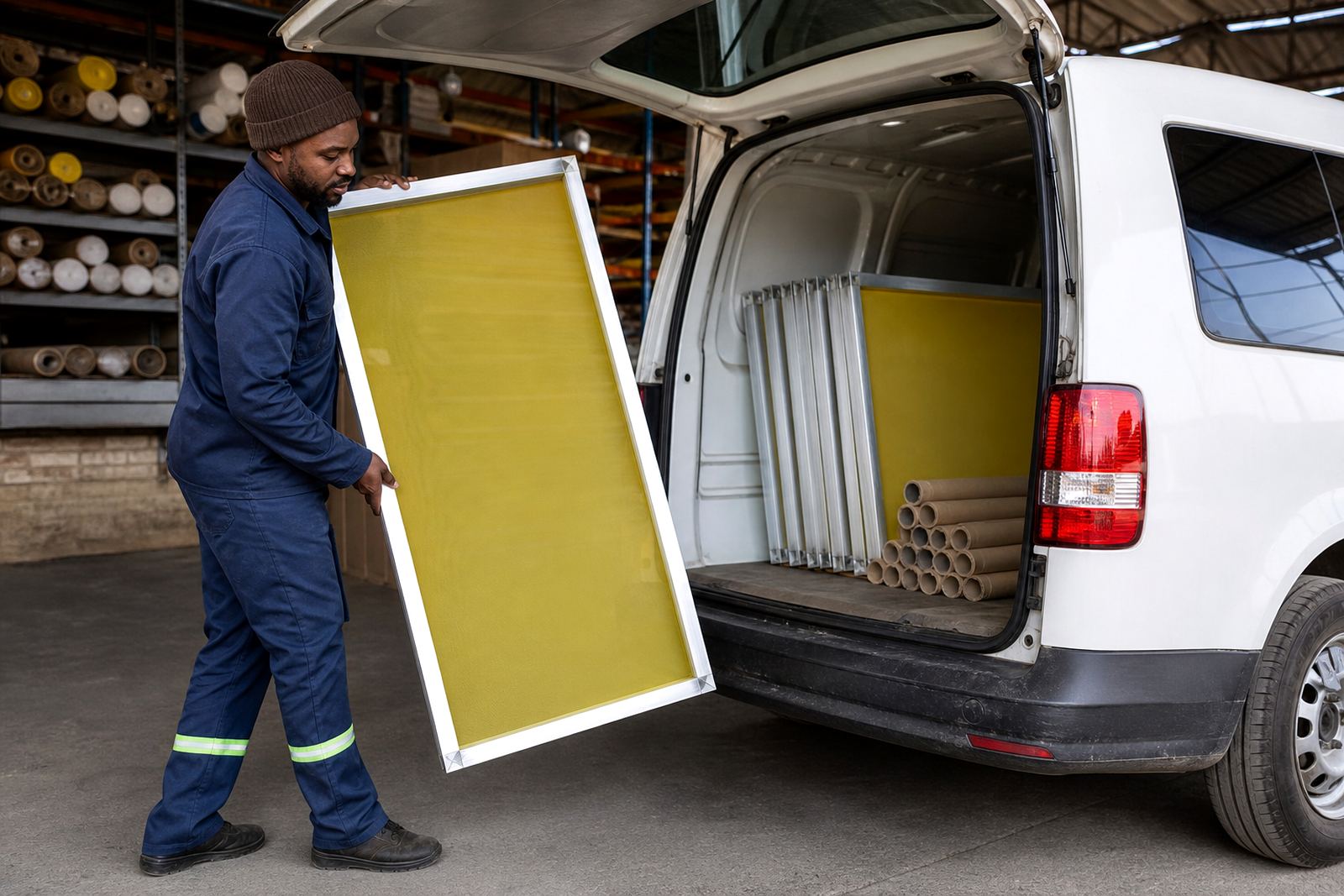
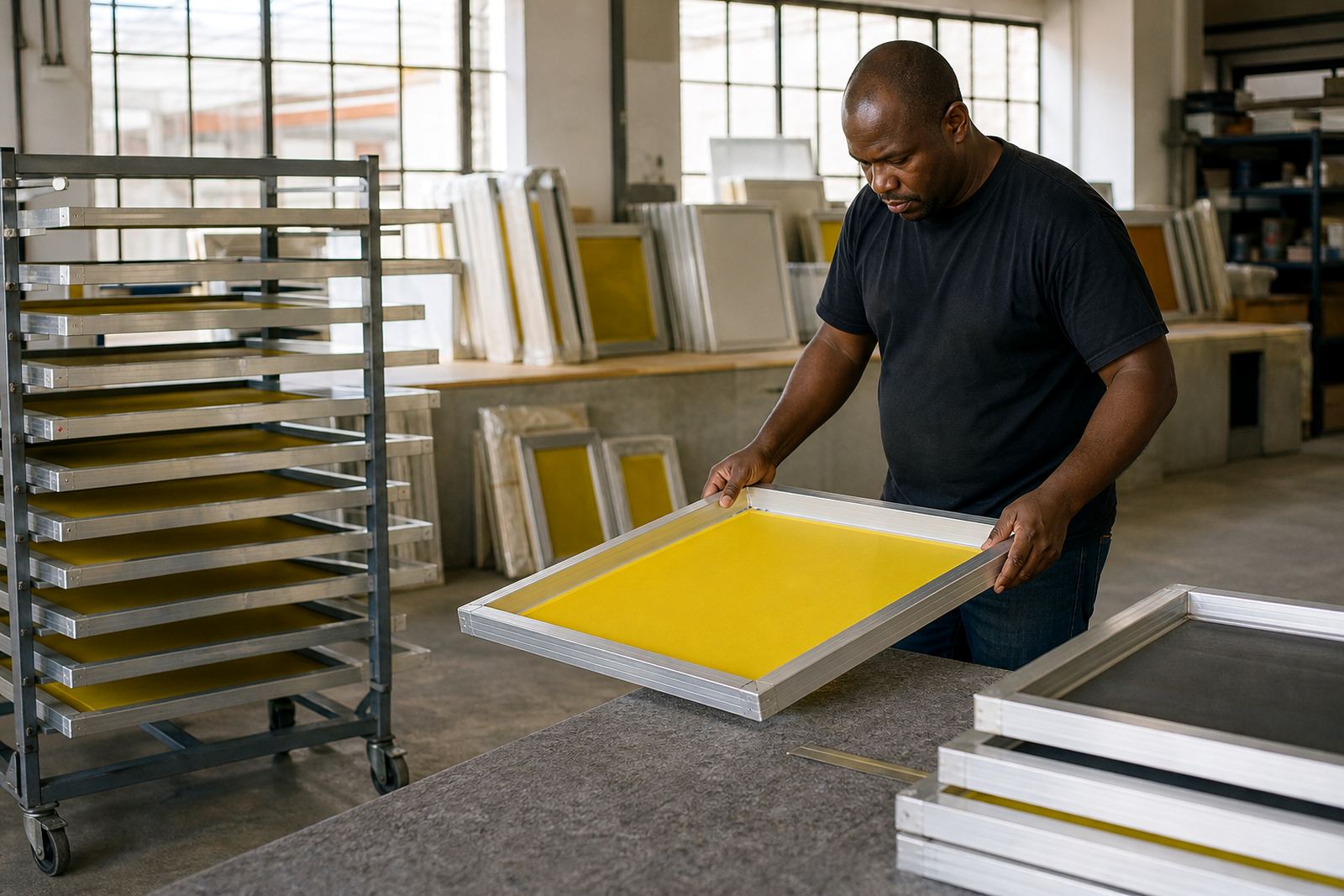
For pre-stretched aluminium frames, we need the finished outside size, the profile height if you know it, and the type of screen work the frame will carry. Please also note whether the frame must suit manual printing, repeated production runs or a smaller workshop setup. That helps us prepare the frame at the right size and tension for the work ahead.
If you are ordering several frames, send the sizes in a list and mark which ones are for the same repeat job. A clear list avoids mix-ups and makes dispatch packing easier. It also helps if you note whether the frames must match existing frames already in use at your shop.
- Finished frame size in millimetres or metres
- Number of frames needed
- Use case, such as textile or graphic printing
- Any size matching requirements for repeat jobs
- Delivery area, such as East Rand, Midrand or a coastal route
How to request re-stretching or tension checking
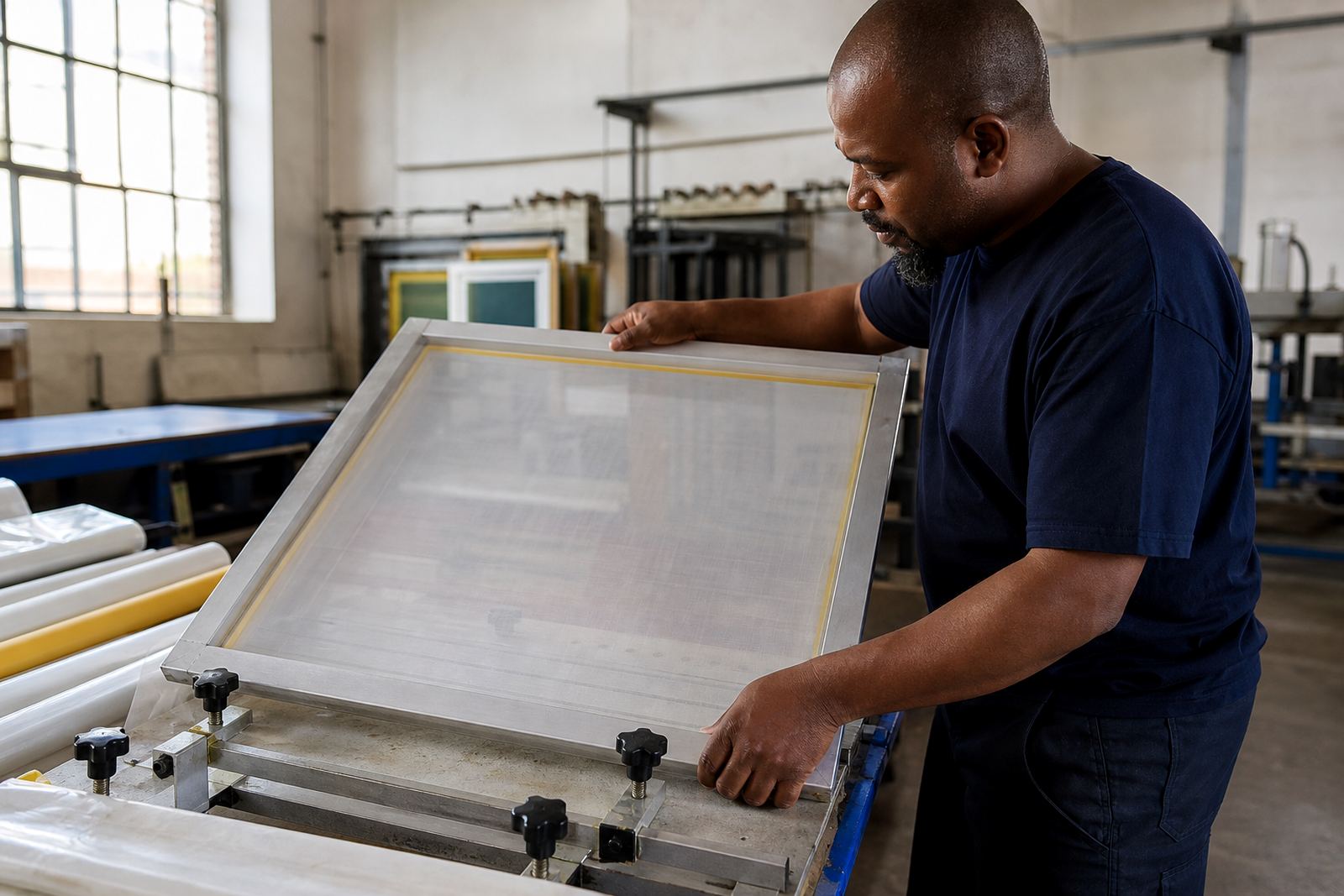
For re-stretching, send us the current frame size and tell us what issue you are seeing. Common reasons include sagging mesh, uneven tension, worn bonding, or a screen that no longer holds registration well. If the frame has been cleaned already, mention that too. Clean prep matters because ink build-up, adhesive residue and loose debris can affect the stretch and the bond.
If you want a tension check before re-use, tell us whether the screen is for fine detail, solid prints or repeat production. A screen that feels acceptable by hand may still be too loose for steady results. On hot days or in coastal humidity, a screen can behave differently, so it helps to note where the work will be used, especially if it is going to Durban, Cape Town or Gqeberha.
Make the enquiry easier to process
Use the enquiry form on our contact page and include as much of the following as you can. Short, clear notes help us quote the right service and prepare the order without back-and-forth.
- Your name and company name if applicable
- What you need: mesh, new frame, re-stretching or advice
- Sizes, counts and quantities
- Any deadline or collection preference
- Your delivery area or branch area
If you are sending several jobs at once, group them by screen size or by print type. That makes batch screen prep easier to plan. It also helps our logistics team pack the order properly for Johannesburg Delivery, Pretoria Delivery, Durban Delivery, Cape Town Delivery, Gqeberha Delivery, Germiston Supply, East Rand Supply or Midrand Delivery.
What happens after we receive your order details
Once we have your details, we check the mesh count, frame size and tension requirements against the intended job. If anything is unclear, we will ask for more information before proceeding. That way the frame or mesh arrives ready for screen setup, not halfway there.
For repeat orders, keep the same wording each time if the job has not changed. That makes the process faster and reduces the chance of a wrong count or wrong size being supplied. If your print shop works around load-shedding schedules or needs a tight turnaround, mention that upfront so we can plan dispatch and packing with that in mind.
Whether you need a single screen or a regular supply arrangement, clear information at the start helps us keep the order clean and on spec. It also means you can get back to printing sooner, which is usually the main thing.